Healthcare organizations increasingly depend on digital devices and connected technologies to support clinical operations, patient care, diagnostics, communication, administration, and access to healthcare information. Clinical tablets, smartphones, laptops, workstations, and other endpoints may access sensitive patient and organizational information. This creates a broad digital attack surface that requires security controls across device management, endpoint security, and mobile threat protection. Healthcare IT and security teams need continuous visibility into device health, security posture, vulnerabilities, applications, policies, and emerging threats while ensuring that clinical teams can securely access the devices and applications required for their work. Managing these environments through disconnected tools can make it difficult to maintain consistent security policies, identify vulnerable endpoints, detect mobile threats, and maintain continuous security readiness. Healthcare organizations therefore need an integrated approach that combines centralized device management, endpoint security monitoring, mobile threat protection, compliance visibility, and security intelligence.
Case Study Snapshot
- Type
- Sector Solution
- Industry
- Healthcare
- MOBISEC Solutions
- mobiHEALCyber AuditorMobiGUARD
- Published
- 21 October 2026
The Problem
Protecting Patient Data, Clinical Devices, and Digital Healthcare Operations
Sensitive Patient Data
Healthcare devices and endpoints may access sensitive patient and organizational information, making secure device usage and data protection critical.
Distributed Device Fleet
Hospitals, clinics, laboratories, and healthcare facilities may operate devices across multiple departments and locations, increasing device management complexity.
Clinical Mobile Devices
Tablets and smartphones used by healthcare personnel require centralized management, application control, security policies, and continuous monitoring.
Endpoint Vulnerabilities
Healthcare endpoints may contain outdated software, vulnerabilities, misconfigurations, or security weaknesses that can increase organizational risk.
Mobile Security Threats
Phishing, malicious applications, suspicious links, and unsafe network connections can expose mobile users and sensitive healthcare information.
Unauthorized Applications
Unapproved or malicious applications installed on enterprise devices can introduce security and privacy risks.
Limited Security Visibility
Security teams need a consolidated view of device health, endpoint security posture, vulnerabilities, mobile threats, and compliance status.
Compliance Requirements
Healthcare organizations require continuous visibility into security controls, device compliance, audit information, and organizational security policies.
Remote Device Management
Devices operating across different healthcare facilities require centralized administration, policy enforcement, and security monitoring.
Real-Time Threat Detection
Security teams need timely alerts when suspicious activity, vulnerabilities, or security threats are identified.
How We Solved It
Integrated Device, Endpoint & Mobile Security for Healthcare
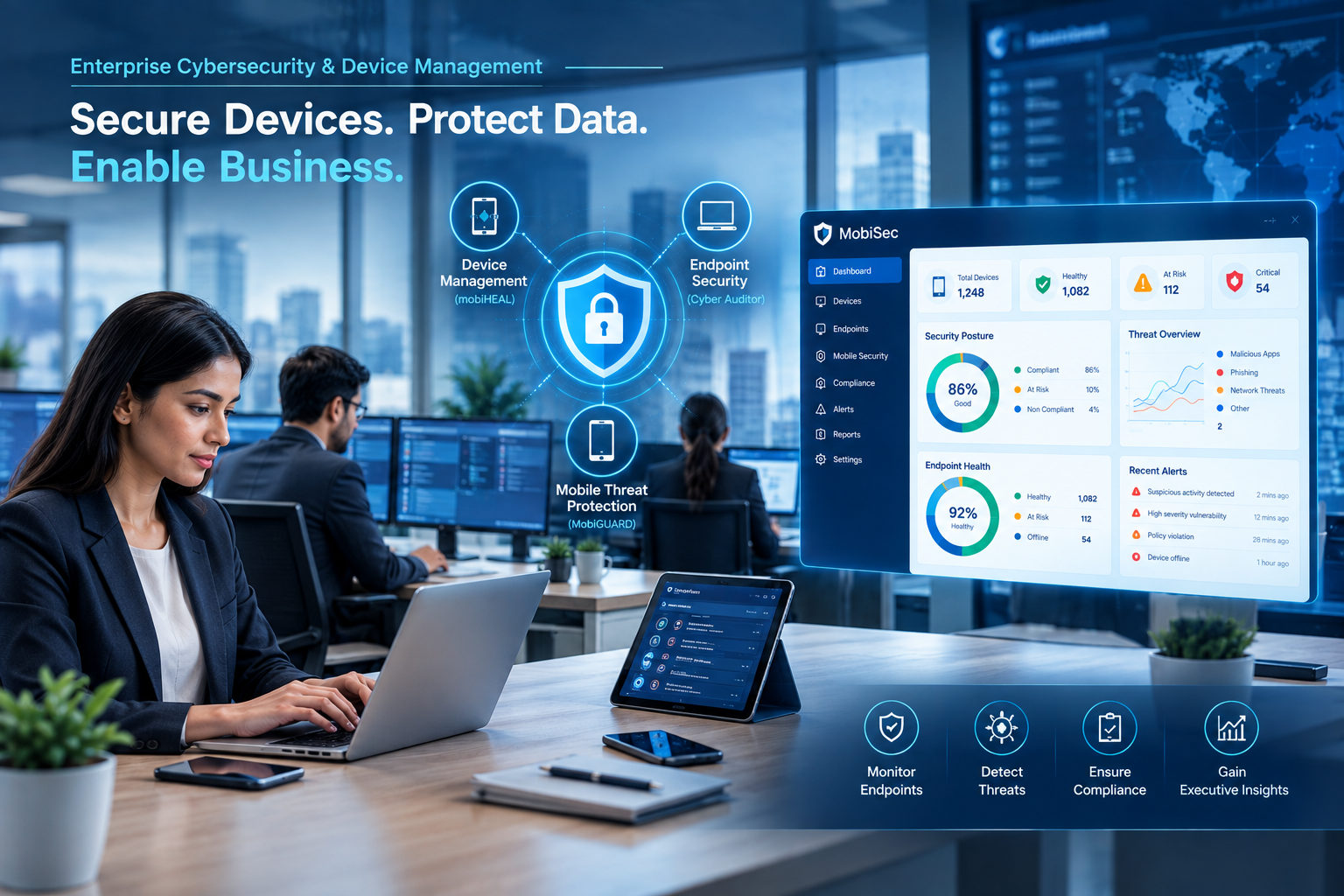
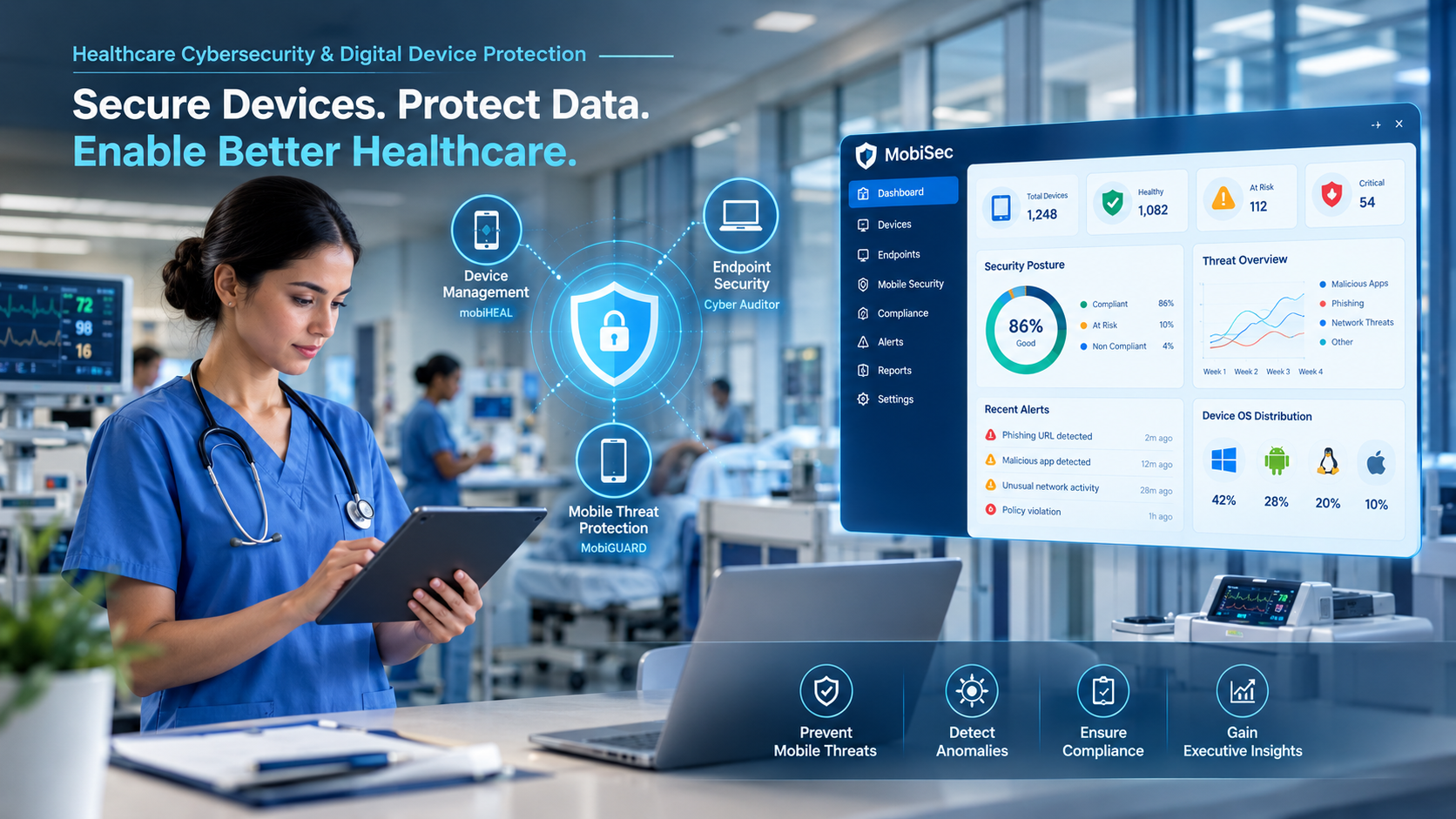
MobiSec provides a layered healthcare security approach by combining mobiHEAL, Cyber Auditor, and MobiGUARD to address different parts of the healthcare organization's digital attack surface. mobiHEAL provides centralized management and control of enterprise mobile and clinical devices. Healthcare administrators can manage device enrollment, enforce security policies, control applications and device functionality, distribute approved content, and remotely manage devices. Cyber Auditor provides continuous endpoint security visibility across supported Windows, Linux, Android, macOS, and other enterprise endpoints. It monitors endpoint health, vulnerabilities, security posture, compliance, and anomalies through centralized security intelligence. MobiGUARD adds mobile threat protection by monitoring mobile environments for malicious applications, phishing activity, suspicious behavior, unsafe network connections, and other mobile security threats. Together, these solutions provide healthcare organizations with an integrated approach to device governance, endpoint security, mobile threat protection, compliance monitoring, and centralized security intelligence.
Centralized Device Management
Manage clinical tablets, smartphones, and other supported mobile devices through centralized enrollment, policy assignment, monitoring, and administration.
Device Security Policies
Apply centralized security policies to control device functionality, applications, access, and security configurations.
Application Management
Control and manage approved applications across healthcare mobile devices.
Content Management
Distribute approved documents, training materials, and other organizational content to managed devices.
Remote Device Protection
Remotely lock, locate, or wipe managed devices when they are lost, stolen, or require immediate security action.
Endpoint Health Monitoring
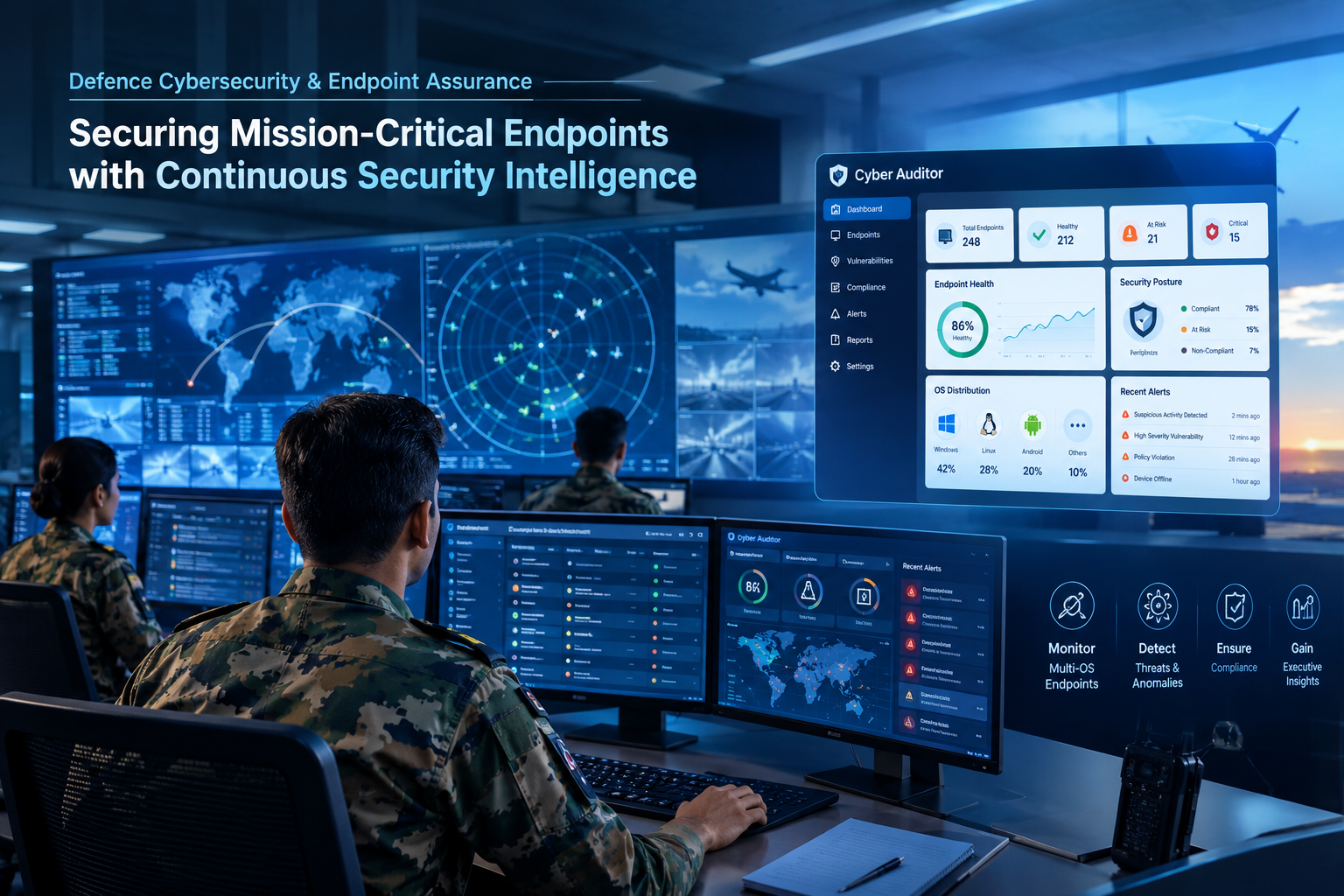
Continuously monitor endpoint health and security posture across supported healthcare endpoints.
Vulnerability Monitoring
Identify vulnerabilities and CVEs across monitored endpoints and help security teams prioritize security risks.
Security Anomaly Detection
Detect suspicious endpoint activity, security anomalies, policy violations, and emerging security risks.
Mobile Threat Detection
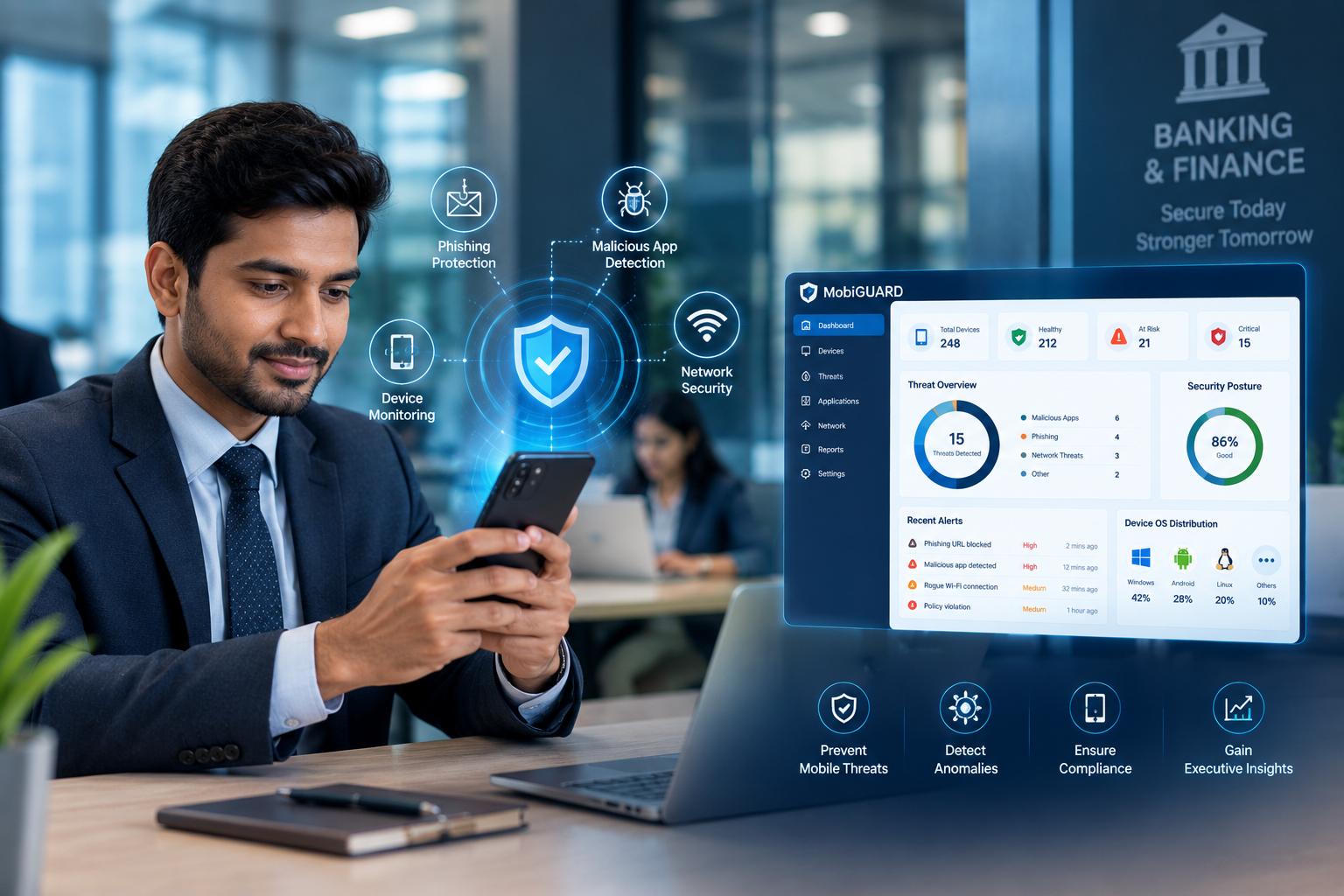
Detect phishing attempts, malicious applications, suspicious activity, and unsafe network connections on mobile devices.
Malicious Application Detection
Identify potentially malicious or risky applications that may compromise mobile devices and sensitive healthcare information.
Network Threat Protection
Monitor mobile network connections and identify risky or malicious network environments.
Centralized Security Dashboard
Consolidate device health, endpoint security posture, vulnerabilities, mobile threats, compliance information, and security events.
Compliance Monitoring
Monitor device and endpoint security posture against defined organizational security policies and compliance requirements.
Real-Time Security Alerts
Generate alerts for vulnerabilities, suspicious activities, policy violations, mobile threats, and other security events.
Security Analytics and Reporting
Provide security analytics, risk information, compliance reporting, and executive-level security visibility.
Unified Security Intelligence
Combine device management, endpoint security, mobile threat defense, and compliance visibility into a unified security environment.
The Outcome
A More Secure and Manageable Digital Healthcare Environment
The combination of mobiHEAL, Cyber Auditor, and MobiGUARD enables healthcare organizations to address device management, endpoint security, and mobile threats through a layered security approach. Instead of managing clinical devices and security risks through fragmented processes, IT and security teams can gain centralized visibility into device health, security posture, vulnerabilities, applications, policies, and mobile threats. Continuous monitoring helps security teams identify emerging risks earlier, while centralized device management enables consistent security policies across managed devices. Real-time threat detection and security alerts provide greater awareness of phishing attempts, malicious applications, suspicious activity, vulnerabilities, and other security risks. The integrated approach also supports stronger security governance by bringing operational device information and cybersecurity intelligence together through centralized dashboards, alerts, analytics, and reporting. The result is a more proactive and unified approach to protecting healthcare devices, digital operations, and sensitive information.
Patient Data Protection
Stronger device, endpoint, and mobile security controls help reduce exposure of sensitive healthcare information.
Centralized Device Governance
Healthcare IT teams gain centralized control over managed mobile devices, policies, applications, and device security.
Improved Endpoint Visibility
Security teams gain continuous visibility into endpoint health, vulnerabilities, security posture, and compliance.
Faster Threat Identification
Real-time monitoring and security alerts help identify emerging vulnerabilities, anomalies, and mobile threats sooner.
Reduced Mobile Security Risk
MobiGUARD helps protect mobile users against malicious applications, phishing activity, suspicious behavior, and unsafe network connections.
Consistent Security Policies
Centralized policy management helps healthcare organizations maintain consistent security controls across managed devices.
Improved Compliance Readiness
Continuous monitoring, security assessments, and reporting provide better visibility into security and compliance requirements.
Reduced Manual Administration
Centralized device management and automated security monitoring reduce dependence on manual device and security assessments.
Stronger Security Operations
Combining device management with endpoint and mobile threat intelligence provides security teams with a comprehensive view of the healthcare security environment.
Improved Healthcare Resilience
Continuous security monitoring and centralized device control support resilient clinical and digital healthcare operations.
The Difference
Before vs After
Fragmented Healthcare Device & Security Management
Manual clinical device management
With MobiSec Integrated Security
Centralized device management with mobiHEAL
Fragmented Healthcare Device & Security Management
Inconsistent device security configurations
With MobiSec Integrated Security
Centralized security policies and configuration management
Fragmented Healthcare Device & Security Management
Limited device health visibility
With MobiSec Integrated Security
Continuous device health and compliance monitoring
Fragmented Healthcare Device & Security Management
Uncontrolled application installation
With MobiSec Integrated Security
Centralized application management and restrictions
Fragmented Healthcare Device & Security Management
Lost or stolen devices create additional exposure
With MobiSec Integrated Security
Remote lock, locate, and wipe capabilities
Fragmented Healthcare Device & Security Management
Periodic endpoint security assessments
With MobiSec Integrated Security
Continuous endpoint security monitoring with Cyber Auditor
Fragmented Healthcare Device & Security Management
Vulnerabilities identified during periodic audits
With MobiSec Integrated Security
Continuous vulnerability and CVE monitoring
Fragmented Healthcare Device & Security Management
Limited endpoint anomaly visibility
With MobiSec Integrated Security
Real-time anomaly detection and security alerts
Fragmented Healthcare Device & Security Management
Mobile threats detected after exposure
With MobiSec Integrated Security
Proactive mobile threat detection with MobiGUARD
Fragmented Healthcare Device & Security Management
Risky applications may remain undetected
With MobiSec Integrated Security
Malicious application detection and protection
Fragmented Healthcare Device & Security Management
Unsafe mobile networks may go unnoticed
With MobiSec Integrated Security
Network threat monitoring and protection
Fragmented Healthcare Device & Security Management
Security information spread across different systems
With MobiSec Integrated Security
Centralized security dashboards and intelligence
Fragmented Healthcare Device & Security Management
Manual compliance assessment
With MobiSec Integrated Security
Continuous compliance and security posture monitoring
Fragmented Healthcare Device & Security Management
Manual security reporting
With MobiSec Integrated Security
Centralized security analytics and reporting
Fragmented Healthcare Device & Security Management
Reactive security operations
With MobiSec Integrated Security
Proactive and risk-driven security management
In Summary
Building a More Secure Digital Healthcare Ecosystem
Healthcare organizations need to protect sensitive patient information while maintaining reliable access to the digital tools used by clinical, administrative, and field teams. MobiSec's integrated approach combines mobiHEAL, Cyber Auditor, and MobiGUARD to address security across different layers of the healthcare device environment. mobiHEAL provides centralized management and control of mobile and clinical devices. Cyber Auditor continuously monitors endpoint health, vulnerabilities, compliance, and security posture. MobiGUARD adds mobile threat protection against malicious applications, phishing, suspicious activity, and unsafe network connections. Together, these solutions provide healthcare IT and security teams with centralized device management, continuous endpoint visibility, proactive mobile threat detection, security alerts, compliance monitoring, and security intelligence. The result is a more unified and proactive approach to protecting healthcare devices, digital operations, and sensitive information while supporting stronger security governance and operational resilience.