What Is Cybersecurity Compliance in India?
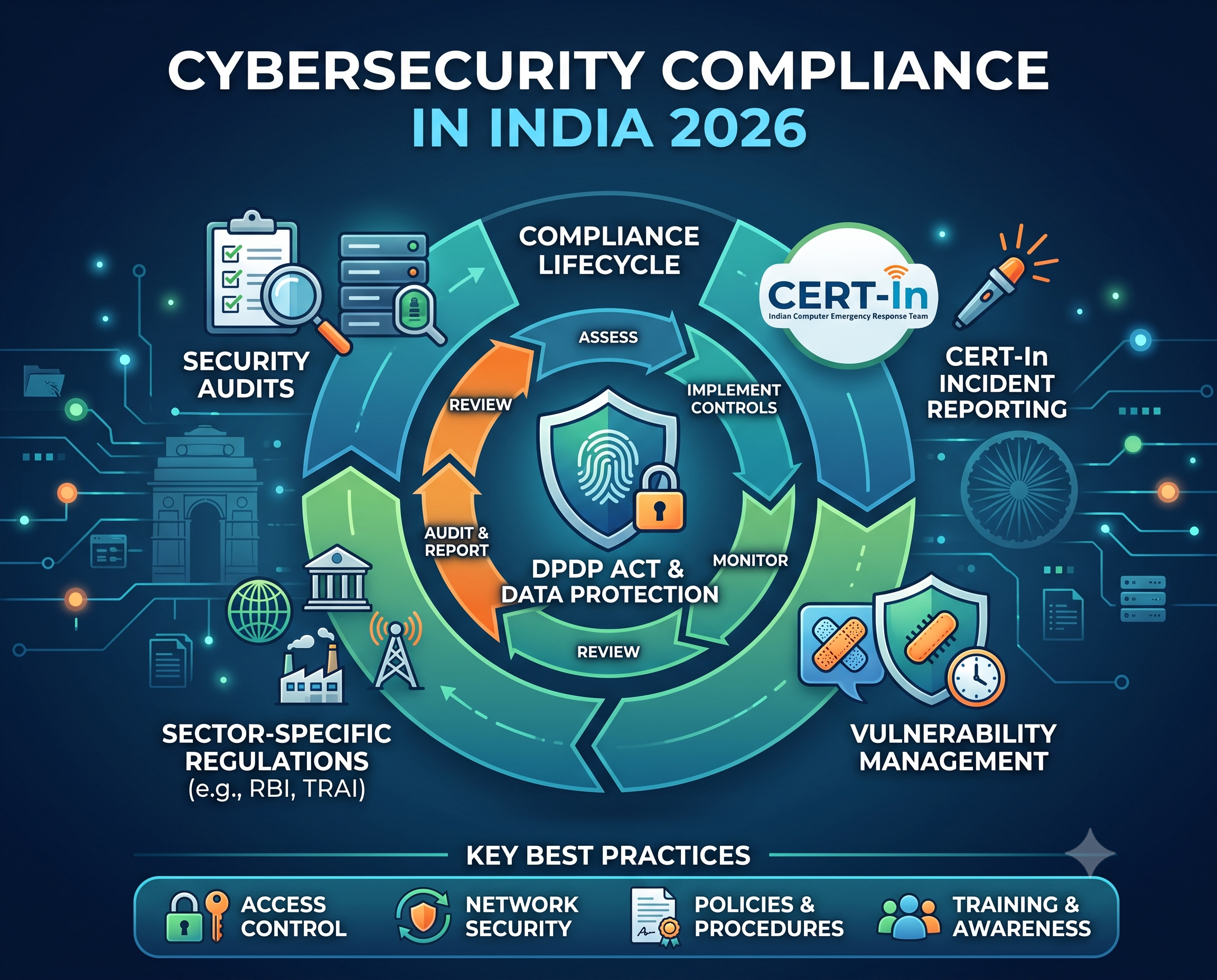
Cybersecurity compliance in India refers to the policies, controls, processes, technical safeguards, reporting obligations, audits, and governance practices that organisations must follow under applicable Indian laws, regulations, directions, and sector-specific frameworks.
There is no single cybersecurity compliance framework that applies identically to every organisation in India. Requirements can vary depending on the organisation's industry, size, services, type of data handled, technology environment, and whether it falls under the jurisdiction of a sectoral regulator.
In 2026, organisations increasingly need to consider cybersecurity, personal data protection, incident reporting, operational resilience, vulnerability management, auditability, and security governance together rather than treating them as separate activities.
Why Cybersecurity Compliance Matters in 2026
Indian organisations operate in an environment where cyber threats, digital services, cloud adoption, remote work, mobile devices, artificial intelligence, and interconnected systems continue to expand.
Compliance helps organisations establish minimum security expectations and demonstrate that appropriate controls and processes are in place.
- Protect sensitive business and personal data
- Reduce cybersecurity risk
- Improve incident detection and response
- Support regulatory obligations
- Strengthen customer and partner trust
- Improve security governance
- Establish accountability for security controls
- Improve audit readiness
- Support business continuity and resilience
- Reduce the impact of security incidents
Major Cybersecurity Compliance Frameworks in India
The Indian cybersecurity compliance landscape consists of multiple laws, directions, rules, and sector-specific frameworks. The applicable requirements depend on the organisation and its activities.
- Information Technology Act and related rules
- CERT-In Cyber Security Directions
- Digital Personal Data Protection Act and Rules
- RBI cybersecurity and information security requirements
- SEBI Cybersecurity and Cyber Resilience Framework
- Sector-specific cybersecurity requirements
- Contractual and customer security requirements
- Internal information security policies and standards
CERT-In Cybersecurity Requirements
CERT-In, the Indian Computer Emergency Response Team, plays an important role in India's national cybersecurity framework.
The CERT-In Cyber Security Directions issued in April 2022 introduced requirements relating to cyber incident reporting, maintenance of logs, time synchronisation, and other information security practices.
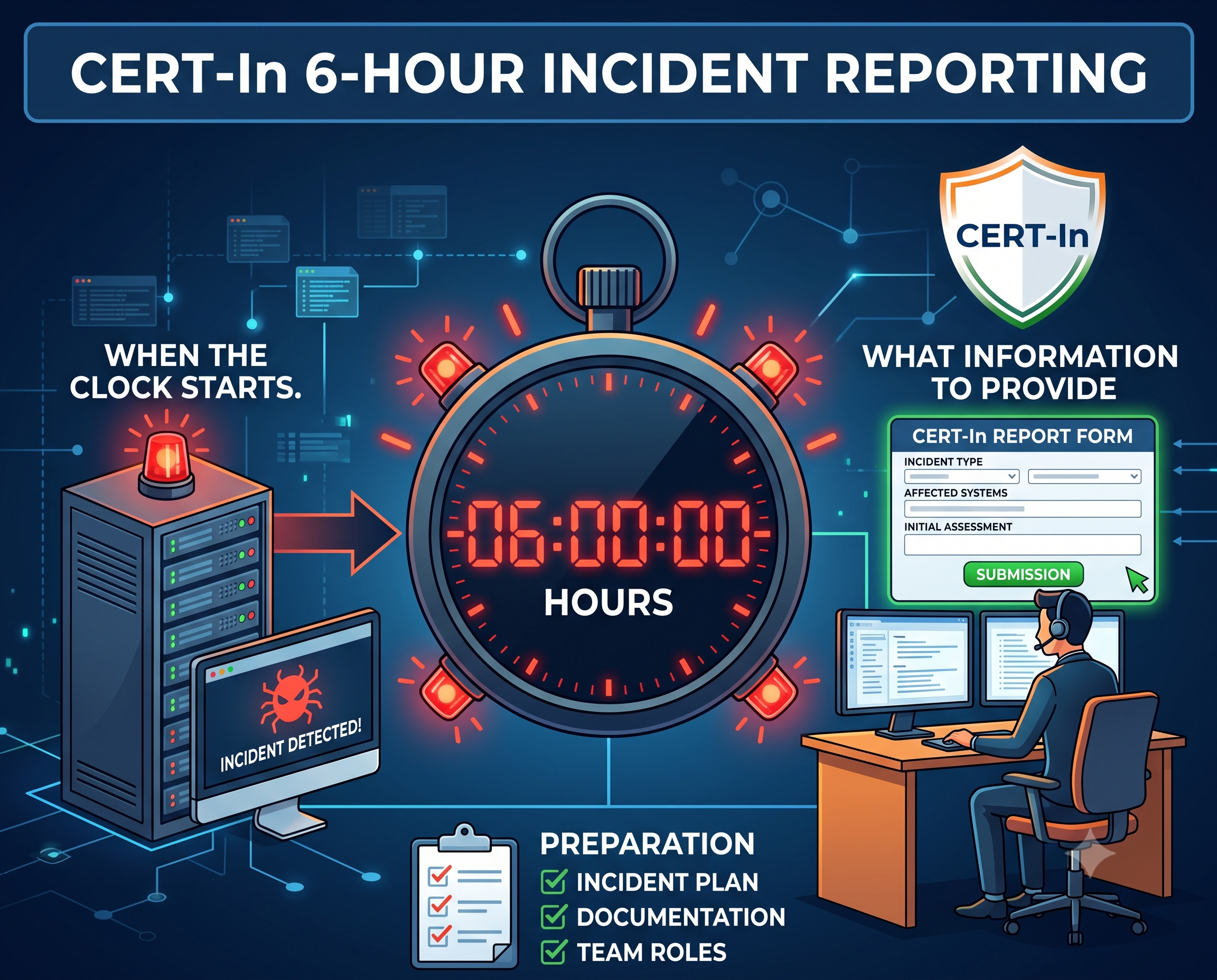
One of the most important requirements is that specified cyber incidents must be reported to CERT-In within 6 hours of the organisation noticing the incident or being brought to notice about the incident.
CERT-In Incident Reporting
Organisations covered by the applicable directions should have a documented process for identifying potentially reportable incidents and escalating them to the appropriate security and management teams.
- Define reportable cyber incidents
- Monitor security events continuously
- Record incident detection times
- Maintain incident response procedures
- Define escalation responsibilities
- Preserve relevant evidence
- Prepare incident information quickly
- Report applicable incidents within the required timeframe
- Continue investigation after initial reporting
- Maintain complete incident records
CERT-In Log Retention Requirement
The CERT-In directions also include requirements relating to maintaining logs of ICT systems for a specified period. Organisations should therefore establish appropriate log collection, retention, protection, and retrieval processes.
Effective logging is important not only for compliance but also for security investigations, threat detection, incident response, and forensic analysis.
CERT-In Time Synchronisation
Accurate timestamps are important when reconstructing cybersecurity incidents. The CERT-In directions require covered entities to connect ICT system clocks to specified Network Time Protocol sources or sources traceable to them, subject to the applicable requirements.
Accurate time synchronisation helps security teams correlate events across endpoints, servers, applications, network devices, and other systems.
Digital Personal Data Protection Framework
The Digital Personal Data Protection Act, 2023 establishes a framework governing the processing of digital personal data in India. The Digital Personal Data Protection Rules, 2025 provide additional implementation details.
The DPDP framework introduces obligations and responsibilities for organisations processing digital personal data and establishes rights for individuals whose personal data is processed.
The rules published in 2025 include provisions covering areas such as notices, security safeguards, personal data breach notifications, rights of data principals, and other implementation requirements.
Why DPDP Matters for Cybersecurity
Data protection and cybersecurity are closely connected. Organisations cannot effectively protect personal data without implementing appropriate technical and organisational security measures.
- Identify personal data processed by the organisation
- Understand why personal data is collected and processed
- Implement appropriate security safeguards
- Control access to personal data
- Monitor systems handling sensitive information
- Maintain incident response procedures
- Establish data retention and deletion processes
- Maintain records required for compliance
- Prepare for personal data breach response
- Review third-party data processing arrangements
DPDP Compliance vs Cybersecurity Compliance
DPDP compliance and cybersecurity compliance are related but are not the same thing.
DPDP focuses specifically on the processing and protection of digital personal data, while cybersecurity compliance can cover a much broader range of systems, assets, services, risks, and regulatory requirements.
- DPDP: Focuses on digital personal data
- Cybersecurity: Covers broader information and technology security
- DPDP: Includes obligations relating to data principals and data processing
- Cybersecurity: Includes controls such as endpoint security, network security, access management, vulnerability management, and monitoring
- DPDP: Applies based on the scope of personal data processing
- Cybersecurity: Requirements may also arise from sector regulators and other applicable directions
RBI Cybersecurity Requirements
Financial institutions and payment-related organisations can be subject to extensive cybersecurity, technology risk, information security, and operational resilience requirements issued by the Reserve Bank of India.
The applicable requirements depend on the type of regulated entity and the services it provides.
RBI requirements can include areas such as information security governance, access control, vulnerability management, application security, audit, monitoring, incident management, business continuity, and disaster recovery.
Cybersecurity Areas Relevant to Financial Organisations
- Information security governance
- Access management
- Application security
- Network security
- Vulnerability and patch management
- Security monitoring
- Incident response
- Business continuity
- Disaster recovery
- Security audits
- Third-party risk management
- Security awareness
Financial organisations should map their security controls against the specific RBI directions applicable to their entity rather than relying on a generic cybersecurity checklist.
SEBI Cybersecurity and Cyber Resilience Framework
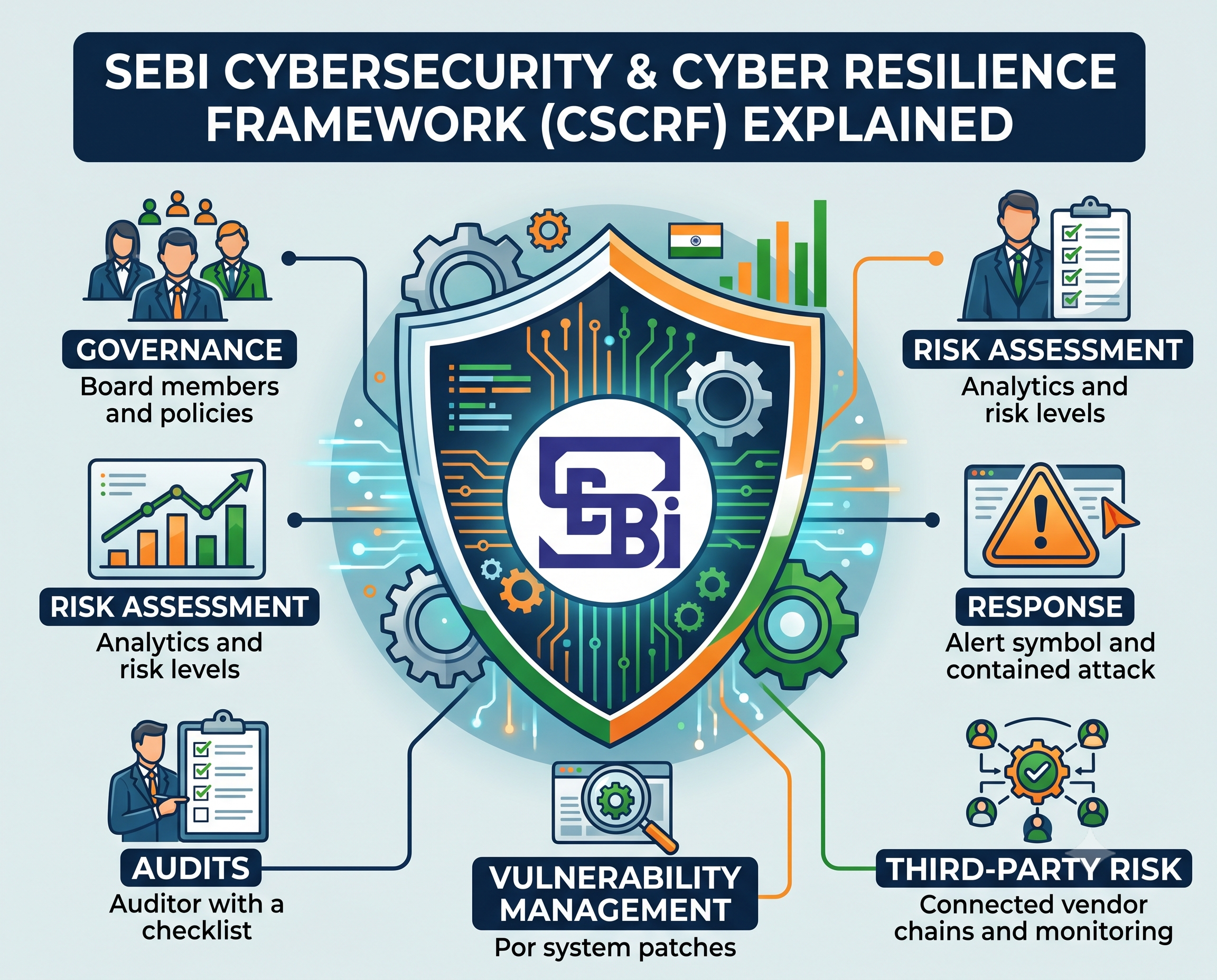
SEBI has established the Cybersecurity and Cyber Resilience Framework, commonly known as CSCRF, for applicable SEBI-regulated entities.
The framework is designed to strengthen cybersecurity and cyber resilience and includes requirements covering governance, security controls, risk management, audits, vulnerability assessment and penetration testing, patch management, asset inventory, cloud services, logging, data security, outsourcing, and other security areas.
SEBI has also issued clarifications and technical updates to support implementation of the framework.
Key Areas Covered by SEBI CSCRF
- Cybersecurity governance
- Cyber risk management
- Asset inventory
- Critical system identification
- Vulnerability assessment
- Penetration testing
- Patch management
- Cybersecurity audits
- Cyber resilience
- Log management
- Data security
- Cloud security
- Third-party and outsourcing risk
- Software Bill of Materials where applicable
- Incident management
- Security monitoring
Applicable SEBI-regulated entities should assess their specific category and map the applicable CSCRF standards and mandatory guidelines to their security program.
Sector-Specific Cybersecurity Compliance
Cybersecurity requirements can differ significantly between industries. A technology company, bank, healthcare organisation, securities-market entity, government organisation, and payment service provider may have different regulatory obligations.
- Banking and financial services
- Insurance
- Capital markets
- Payment services
- Healthcare
- Telecommunications
- Government and public-sector organisations
- Critical infrastructure
- Technology and SaaS
- E-commerce and digital services
Organisations should identify all regulators and contractual obligations applicable to their business before building a cybersecurity compliance program.
Cybersecurity Governance and Compliance
Effective cybersecurity compliance starts with governance. Organisations need clear ownership, accountability, policies, risk management processes, and mechanisms for measuring security performance.
- Board and management oversight
- CISO or security leadership
- Cybersecurity policy
- Risk management framework
- Asset ownership
- Security roles and responsibilities
- Third-party risk management
- Security awareness
- Incident response governance
- Compliance monitoring
- Internal audits
- Security metrics
Cybersecurity Risk Assessment
A cybersecurity risk assessment helps organisations understand which systems, applications, data, users, and business processes are exposed to security threats.
- Identify critical business assets
- Identify sensitive data
- Identify threats and vulnerabilities
- Assess likelihood and potential impact
- Determine risk levels
- Prioritise remediation
- Assign control owners
- Track remediation activities
- Review risks periodically
Risk assessments should be updated when organisations introduce major technologies, applications, cloud services, business processes, or significant changes to their threat environment.
Asset Inventory and Cybersecurity Compliance
An organisation cannot effectively protect assets that it does not know exist. Maintaining an accurate asset inventory is therefore an important foundation for cybersecurity and compliance.
- Laptops and desktops
- Mobile devices
- Servers
- Network devices
- Cloud resources
- Applications
- Databases
- Endpoints
- Virtual machines
- Business-critical systems
- Third-party services
Asset inventories should ideally include ownership, business criticality, operating system, security status, location, and other information required for security management.
Vulnerability and Patch Management
Vulnerability management is a core component of cybersecurity compliance. Organisations should identify security weaknesses, assess their risk, prioritise remediation, and track vulnerabilities until they are resolved or formally accepted.
Patch management complements vulnerability management by ensuring that security updates are evaluated, tested, deployed, and verified within appropriate timeframes.
- Discover vulnerabilities
- Prioritise vulnerabilities based on risk
- Identify affected assets
- Apply security patches
- Verify remediation
- Track exceptions
- Document compensating controls
- Monitor newly discovered vulnerabilities
- Measure remediation performance
VAPT and Cybersecurity Compliance
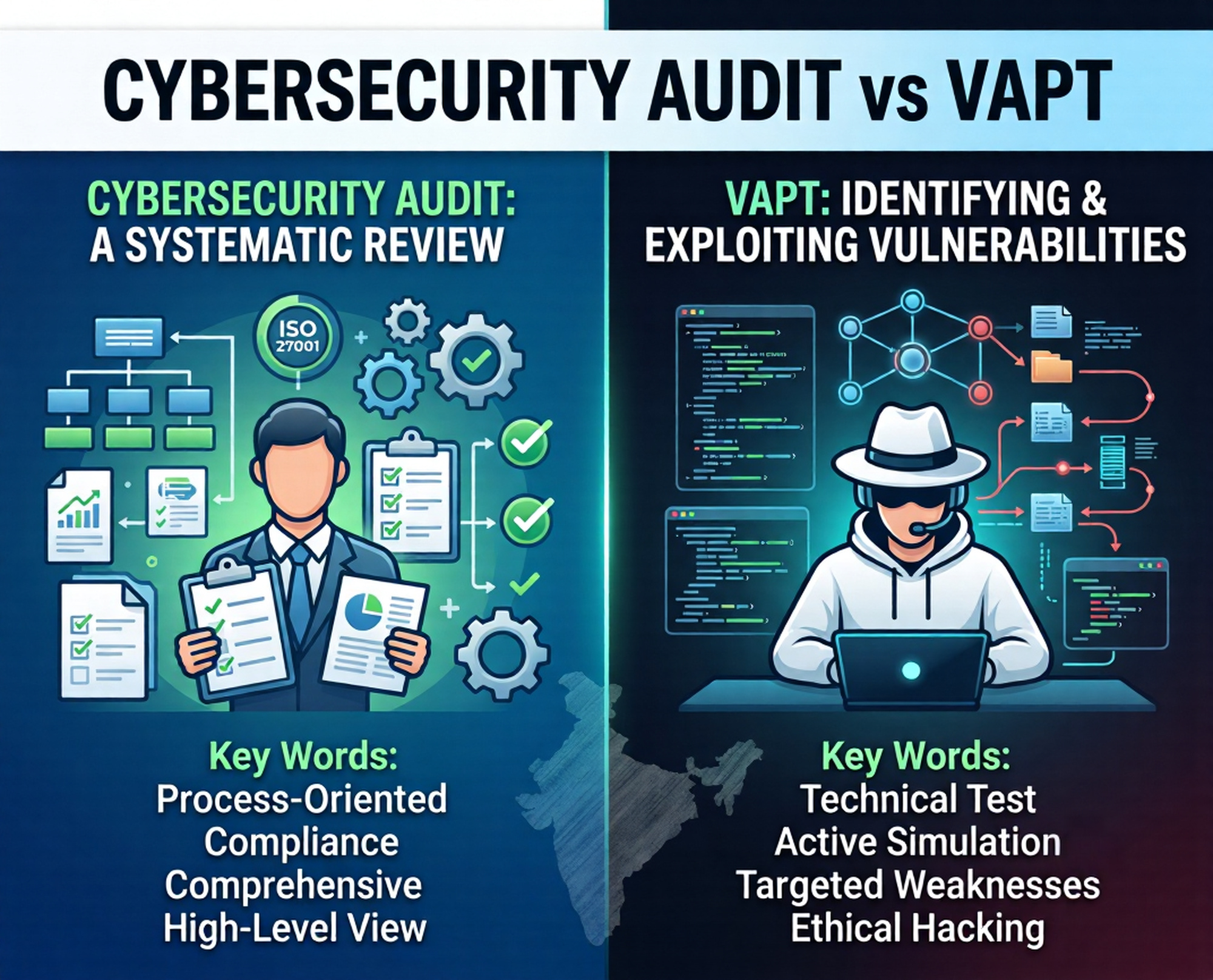
Vulnerability Assessment and Penetration Testing, commonly called VAPT, can help organisations identify weaknesses in networks, applications, systems, and other technology environments.
VAPT requirements may arise from regulatory frameworks, contractual obligations, internal security policies, or risk management requirements.
VAPT should be treated as part of a broader security program rather than as a one-time activity that replaces continuous vulnerability management.
Cybersecurity Audit in India
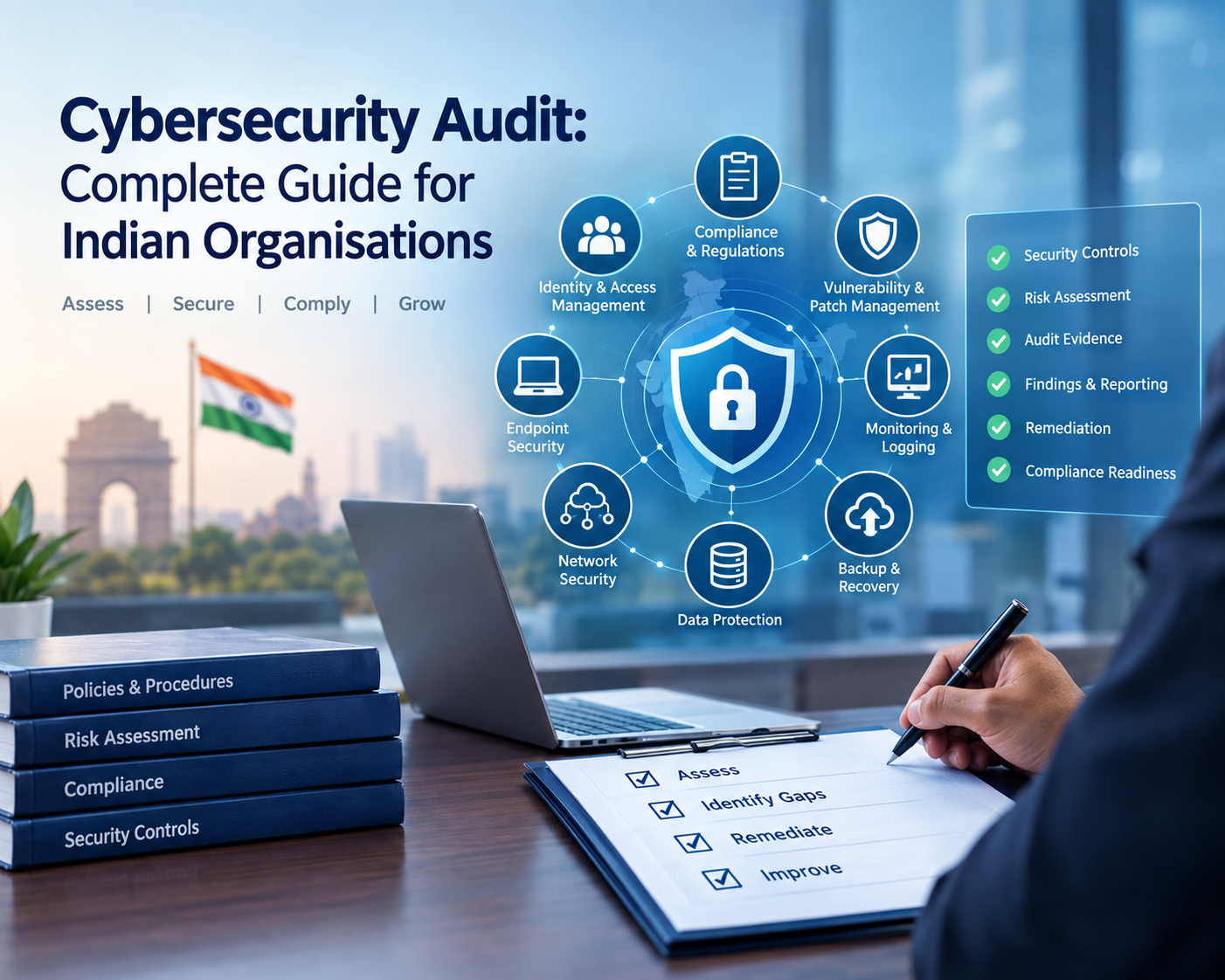
A cybersecurity audit evaluates whether an organisation's security controls, policies, processes, and governance mechanisms are appropriately designed and operating effectively.
Depending on the organisation and applicable regulations, cybersecurity audits may cover areas such as access control, vulnerability management, security monitoring, incident response, data protection, business continuity, and compliance.
What a Cybersecurity Audit Can Evaluate
- Information security governance
- Access control
- Identity management
- Endpoint security
- Network security
- Application security
- Vulnerability management
- Patch management
- Security monitoring
- Incident response
- Data protection
- Backup and recovery
- Third-party security
- Cloud security
- Compliance documentation
Incident Response and Compliance
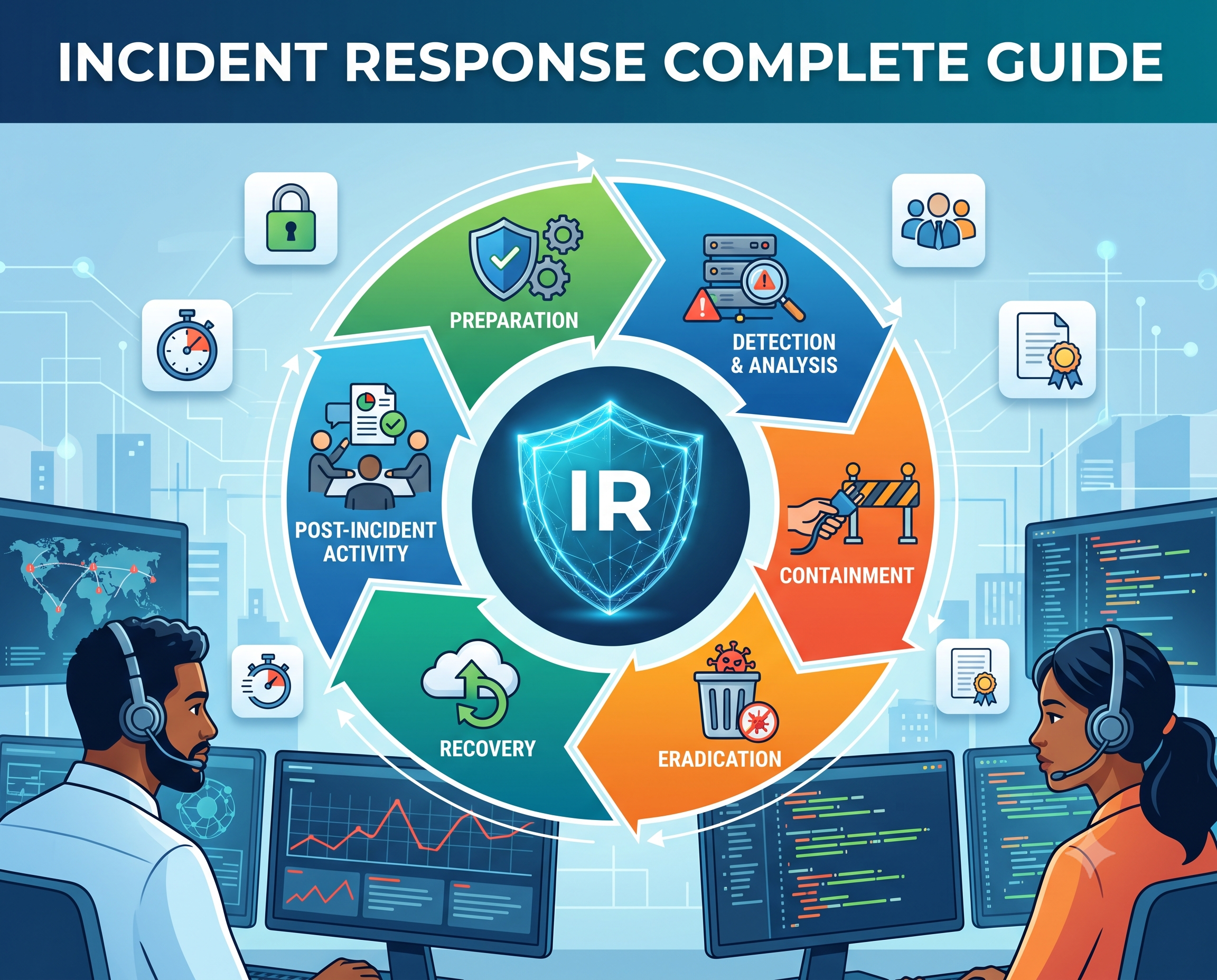
Cybersecurity compliance increasingly requires organisations to demonstrate that they can detect, investigate, contain, and recover from security incidents.
A documented incident response plan should define responsibilities, escalation procedures, investigation processes, containment actions, evidence handling, recovery procedures, and communication requirements.
- Incident detection
- Incident classification
- Severity assessment
- Escalation
- Containment
- Investigation
- Evidence preservation
- Regulatory reporting
- Recovery
- Post-incident review
For organisations covered by CERT-In requirements, incident response processes should also support timely reporting of applicable cyber incidents.
Security Monitoring and Continuous Compliance
Traditional compliance programs often rely heavily on periodic assessments. However, an organisation's security posture can change every day as new vulnerabilities, devices, users, applications, configurations, and threats appear.
Continuous security monitoring provides greater visibility into security events and changes across the environment.
- Continuous endpoint monitoring
- Security event monitoring
- Vulnerability monitoring
- Configuration monitoring
- User and identity monitoring
- Network monitoring
- Threat detection
- Incident alerting
- Compliance evidence collection
- Security posture reporting
Continuous monitoring can help organisations identify control gaps earlier and maintain better evidence for audits and compliance assessments.
Endpoint Security and Compliance
Endpoints are often one of the largest and most distributed components of an enterprise technology environment. Laptops, desktops, mobile devices, and other endpoints can contain sensitive information and provide attackers with potential entry points.
Organisations should establish appropriate endpoint security controls based on their risk profile and applicable requirements.
- Device inventory
- Secure configuration
- Patch management
- Endpoint protection
- Malware protection
- Application control
- Access control
- Encryption
- Device monitoring
- Remote management
- Security incident response
Mobile Device Security and Compliance
The growth of mobile workforces has made mobile device security an important part of enterprise cybersecurity.
Organisations should maintain appropriate controls for corporate and managed mobile devices, particularly when employees use mobile devices to access business applications, email, corporate networks, or sensitive data.
- Device enrollment
- Device inventory
- Screen lock policies
- Encryption
- Application management
- Remote security policies
- Access control
- Lost device response
- Remote lock or wipe where appropriate
- Security monitoring
- Compliance status monitoring
Third-Party and Vendor Security
Organisations frequently depend on cloud providers, SaaS platforms, managed security providers, software vendors, contractors, and other third parties.
Third-party security can therefore have a direct impact on an organisation's cybersecurity compliance and risk posture.
- Vendor security assessment
- Contractual security requirements
- Data protection requirements
- Access restrictions
- Security monitoring
- Incident notification requirements
- Vulnerability management
- Audit rights where appropriate
- Business continuity requirements
- Vendor offboarding
Cloud Security and Compliance
Cloud environments introduce additional considerations around identity, configuration, data protection, logging, access management, and shared responsibility.
Organisations should understand which security responsibilities belong to the cloud provider and which remain with the organisation.
- Cloud identity management
- Multi-factor authentication
- Least privilege
- Cloud configuration management
- Data encryption
- Logging and monitoring
- Vulnerability management
- Backup and recovery
- Cloud workload security
- Third-party access management
Security Awareness and Employee Responsibility
Technology controls alone cannot eliminate cybersecurity risk. Employees can unintentionally create security incidents through phishing, weak passwords, insecure file sharing, unsafe application usage, or other behaviours.
Security awareness programs should therefore form part of an organisation's broader compliance and risk management strategy.
- Phishing awareness
- Password security
- Multi-factor authentication
- Data handling
- Device security
- Safe remote working
- Incident reporting
- Social engineering awareness
- Secure use of corporate applications
Cybersecurity Compliance Documentation
Compliance requires more than implementing technical controls. Organisations should maintain documentation that demonstrates how security requirements are governed and implemented.
- Cybersecurity policy
- Information security policy
- Incident response plan
- Business continuity plan
- Disaster recovery plan
- Asset inventory
- Risk register
- Vulnerability management records
- Patch management records
- Security audit reports
- VAPT reports
- Incident records
- Security awareness records
- Third-party assessment records
- Remediation evidence
Cybersecurity Compliance Evidence
Compliance evidence demonstrates that security controls are not only documented but also implemented and operating.
Organisations should establish a process for collecting and securely maintaining evidence throughout the year rather than attempting to recreate evidence immediately before an audit.
- Security configuration records
- Patch reports
- Vulnerability reports
- Access reviews
- Security monitoring reports
- Incident response records
- Audit reports
- VAPT reports
- Training records
- Backup test results
- Risk assessments
- Remediation records
Common Cybersecurity Compliance Challenges
- Treating compliance as a one-time audit exercise
- Incomplete asset inventories
- Poor vulnerability visibility
- Inconsistent patch management
- Insufficient security logging
- Lack of continuous monitoring
- Unclear incident response responsibilities
- Weak third-party risk management
- Poor documentation
- Insufficient security awareness
- Unresolved audit findings
- Lack of management visibility
- Failure to track regulatory changes
How to Build a Cybersecurity Compliance Program in 2026
- Identify all laws, regulations, directions, and contractual requirements applicable to the organisation
- Create an inventory of systems, devices, applications, data, and third-party services
- Classify critical systems and sensitive information
- Perform a cybersecurity risk assessment
- Map regulatory requirements to security controls
- Establish cybersecurity governance and ownership
- Implement vulnerability and patch management
- Implement appropriate endpoint, network, identity, and application security controls
- Establish continuous security monitoring
- Create and test an incident response plan
- Conduct required audits and security assessments
- Maintain compliance evidence
- Track remediation activities
- Review the compliance program regularly
Cybersecurity Compliance Checklist for Indian Organisations
- Identify applicable regulatory requirements
- Identify critical assets and sensitive data
- Maintain an accurate asset inventory
- Implement access controls
- Use strong authentication
- Implement endpoint security
- Maintain vulnerability management
- Maintain patch management
- Enable appropriate security logging
- Implement continuous security monitoring
- Maintain an incident response plan
- Define regulatory reporting procedures
- Conduct security assessments and VAPT where applicable
- Perform cybersecurity audits where required
- Protect personal data
- Assess third-party security
- Maintain tested backups
- Conduct security awareness training
- Maintain compliance documentation
- Track and remediate security findings
Cybersecurity Compliance for Small and Mid-Sized Organisations
Cybersecurity compliance is not limited to large enterprises. Small and mid-sized organisations can also face security, contractual, and regulatory requirements depending on their industry and services.
Smaller organisations can begin by establishing foundational controls and gradually mature their cybersecurity program.
- Maintain an accurate asset inventory
- Enable strong authentication
- Keep systems patched
- Deploy endpoint security
- Use secure backups
- Centralise important security logs
- Establish incident response procedures
- Conduct vulnerability assessments
- Train employees
- Review third-party access
- Document security policies
- Monitor security posture continuously
Cybersecurity Compliance for Large Enterprises
Large enterprises typically operate more complex technology environments involving multiple offices, cloud platforms, business applications, endpoints, vendors, and security teams.
Enterprise compliance therefore requires centralised governance combined with continuous visibility across distributed environments.
- Centralised security governance
- Enterprise asset management
- Continuous security monitoring
- Risk-based vulnerability management
- Identity and access governance
- Security operations
- Incident response
- Third-party risk management
- Data protection
- Regulatory reporting
- Security audits
- Compliance dashboards
- Continuous control monitoring
How Continuous Security Control Monitoring Improves Compliance
Continuous security control monitoring helps organisations move from periodic compliance checks toward ongoing visibility of security controls.
Instead of discovering security gaps only during an annual audit, organisations can monitor important controls throughout the year and identify deviations earlier.
- Detect configuration changes
- Monitor endpoint compliance
- Track missing security updates
- Identify unauthorised software
- Monitor security policy violations
- Track vulnerable systems
- Identify inactive security controls
- Generate compliance evidence
- Prioritise remediation
- Improve audit readiness
Frequently Asked Questions About Cybersecurity Compliance in India
What is cybersecurity compliance in India?
Cybersecurity compliance in India is the process of meeting applicable cybersecurity, data protection, incident reporting, governance, audit, and sector-specific regulatory requirements.
Is there one cybersecurity law that applies to every company in India?
No. Cybersecurity obligations can arise from multiple laws, CERT-In directions, sector-specific regulators, contractual requirements, and internal security standards. The applicable requirements depend on the organisation and its activities.
What is CERT-In compliance?
CERT-In compliance refers to meeting applicable requirements issued by the Indian Computer Emergency Response Team, including requirements relating to cyber incident reporting, logging, time synchronisation, and other information security practices.
What is the CERT-In 6-hour requirement?
Specified cyber incidents covered by the CERT-In directions must be reported within 6 hours of the organisation noticing the incident or being brought to notice about the incident.
What is DPDP compliance?
DPDP compliance refers to meeting applicable obligations under India's Digital Personal Data Protection framework relating to the processing and protection of digital personal data.
Do all Indian companies need a cybersecurity audit?
Audit requirements depend on the organisation, applicable regulator, industry, contractual obligations, and other circumstances. Organisations should identify the specific requirements applicable to their business rather than assuming that one audit requirement applies to every company.
Is VAPT mandatory for every organisation?
VAPT requirements depend on applicable regulations, industry frameworks, contractual obligations, and organisational risk requirements. VAPT should be performed according to the requirements applicable to the organisation and its technology environment.
How often should cybersecurity compliance be reviewed?
Compliance should be monitored continuously, while formal assessments and audits should be conducted according to applicable regulatory requirements, organisational risk, and internal policies.
How can organisations improve cybersecurity compliance?
Organisations can improve compliance by maintaining accurate asset inventories, mapping regulations to controls, continuously monitoring security posture, managing vulnerabilities, maintaining incident response procedures, conducting appropriate security assessments, and keeping reliable compliance evidence.
Key Takeaways
- Cybersecurity compliance in India is based on multiple laws, directions, regulations, and sector-specific frameworks
- CERT-In requirements are important for organisations covered by its directions
- Specified cyber incidents must be reported to CERT-In within the applicable six-hour timeframe
- The DPDP framework adds important obligations around digital personal data
- Financial and securities-sector organisations may have additional RBI and SEBI cybersecurity requirements
- Cybersecurity audits and VAPT help organisations identify and address security weaknesses
- Incident response should be integrated with regulatory reporting processes
- Continuous security monitoring improves visibility and audit readiness
- Asset, vulnerability, patch, identity, and endpoint management are important compliance foundations
- Compliance should be treated as an ongoing security program rather than a once-a-year audit exercise
Conclusion
Cybersecurity compliance in India in 2026 requires organisations to look beyond individual regulations and build a coordinated security and governance program.
CERT-In requirements, data protection obligations, sector-specific regulations, cybersecurity audits, vulnerability management, incident response, and continuous security monitoring all contribute to an organisation's overall security posture.
The strongest compliance programs combine regulatory knowledge with practical security controls. Organisations that continuously monitor their systems, manage vulnerabilities, protect sensitive data, maintain incident response capabilities, and preserve reliable compliance evidence are better positioned to meet regulatory expectations and respond effectively to evolving cyber threats.
For Indian organisations, cybersecurity compliance should therefore be treated as a continuous process of identifying risk, implementing controls, monitoring security, responding to incidents, measuring effectiveness, and improving resilience.
Recommended Solution
See how MOBISEC solves this in practice
Topics