What Is Incident Response?
Incident response is the structured process an organisation follows to prepare for, detect, investigate, contain, eradicate, and recover from cybersecurity incidents. The objective is to reduce the impact of an incident, restore normal operations, protect critical systems and data, and prevent similar incidents from happening again.
A cybersecurity incident can involve malware, ransomware, phishing, credential theft, unauthorised access, data exposure, compromised endpoints, suspicious network activity, insider threats, or other events that may affect the confidentiality, integrity, or availability of organisational resources.
Effective incident response combines people, processes, and technology. Security teams need clearly defined responsibilities, documented procedures, reliable security monitoring, appropriate investigation capabilities, and a communication process that allows incidents to be handled quickly and consistently.
Why Is Incident Response Important?
No organisation can assume that every cybersecurity threat will be prevented. Even organisations with strong preventive controls may experience compromised credentials, vulnerable applications, malware infections, misconfigured systems, or sophisticated attacks.
Incident response provides a structured way to handle these situations instead of relying on ad hoc decisions during a security crisis.
- Reduces the time required to detect and respond to security incidents
- Limits the potential impact of an attack
- Helps security teams contain compromised systems
- Supports investigation and evidence collection
- Improves coordination between security, IT, legal, and management teams
- Helps organisations recover affected systems and services
- Supports regulatory and compliance requirements
- Provides lessons that can strengthen future security controls
What Is a Cybersecurity Incident?
A cybersecurity incident is an event that threatens or may threaten the security of information systems, devices, applications, networks, accounts, or data.
Not every security alert is a confirmed incident. Security teams generally investigate suspicious activity first and determine whether the event represents a genuine security incident.
Common Examples of Cybersecurity Incidents
- Ransomware infection
- Malware or spyware infection
- Phishing and credential theft
- Unauthorised account access
- Brute-force attacks
- Data leakage or data exposure
- Compromised employee devices
- Suspicious administrator activity
- Unauthorised software installation
- Exploitation of a known vulnerability
- Insider security incidents
- Distributed denial-of-service attacks
What Is the Incident Response Lifecycle?
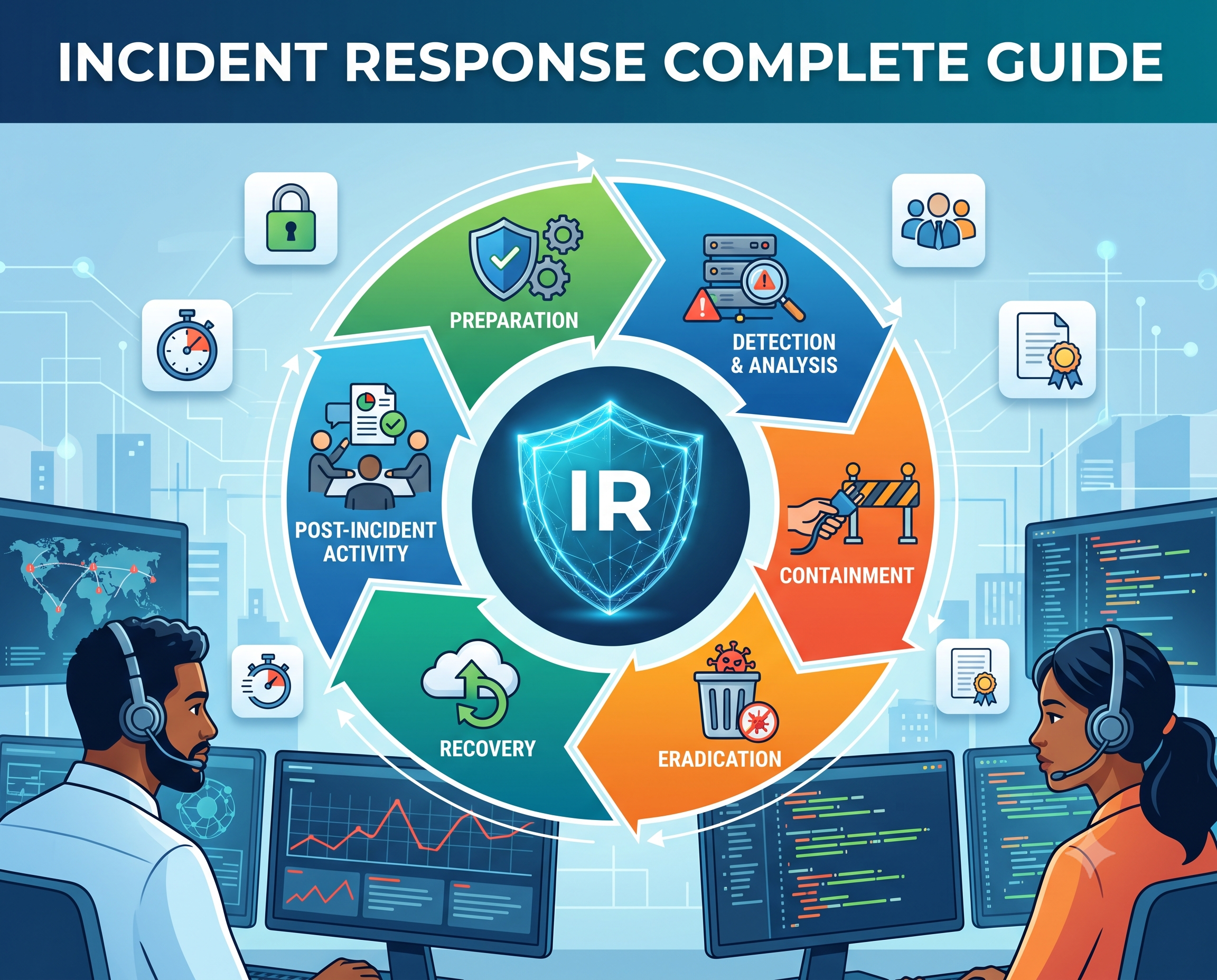
The incident response lifecycle provides a repeatable framework for managing cybersecurity incidents. While different organisations and security frameworks may use different terminology, the process generally includes preparation, detection and analysis, containment, eradication, recovery, and lessons learned.
A well-designed lifecycle ensures that incident response does not stop after an attacker is removed. Organisations should also identify why the incident occurred, determine what controls failed, and improve their security posture.
Preparation
Preparation is the foundation of effective incident response. Organisations should establish the people, processes, technologies, documentation, and communication mechanisms required before an incident occurs.
- Create and maintain an incident response plan
- Define incident response roles and responsibilities
- Establish escalation procedures
- Maintain asset and system inventories
- Implement security monitoring and logging
- Define backup and recovery procedures
- Prepare communication and notification processes
- Conduct incident response exercises
- Train security and IT personnel
- Regularly review and update response procedures
Preparation also includes defining what constitutes a security incident and establishing severity levels so that security teams can prioritise incidents appropriately.
2. Detection and Analysis
The detection and analysis phase begins when suspicious activity is identified. Alerts may originate from security monitoring platforms, endpoint security tools, network monitoring systems, users, administrators, or external sources.
Security teams investigate the alert to determine whether it represents a genuine incident and assess its scope, severity, affected systems, and potential business impact.
- Identify the initial alert or event
- Validate whether suspicious activity is genuine
- Identify affected users, devices, applications, and systems
- Determine the type of incident
- Assess the potential business impact
- Identify indicators of compromise
- Determine the severity and priority
- Document investigation findings
Accurate analysis is important because an incorrect assessment can result in either an unnecessary response or delayed action against a genuine threat.
3. Containment
Containment focuses on preventing the incident from spreading or causing additional damage. Security teams may isolate compromised endpoints, disable accounts, block malicious network activity, or restrict access to affected systems.
Containment can be divided into short-term and long-term actions. Short-term containment aims to immediately limit the attack, while longer-term containment creates a stable environment for investigation and remediation.
- Isolate compromised devices
- Disable compromised accounts
- Block malicious IP addresses or domains
- Restrict affected network segments
- Stop malicious processes
- Revoke compromised credentials
- Apply temporary access restrictions
- Protect critical systems from further exposure
4. Eradication
After containment, the organisation needs to remove the underlying cause of the incident. Eradication may involve removing malware, closing exploited vulnerabilities, deleting malicious accounts, rotating credentials, or correcting insecure configurations.
The objective is not simply to remove visible symptoms. Security teams should determine how the attacker gained access and whether additional persistence mechanisms remain in the environment.
- Remove malware and malicious files
- Patch exploited vulnerabilities
- Reset or rotate compromised credentials
- Remove unauthorised accounts
- Correct insecure configurations
- Remove attacker persistence mechanisms
- Identify additional compromised systems
- Validate that the original attack vector has been addressed
5. Recovery
Recovery involves safely returning affected systems and services to normal operation. Recovery should be controlled and monitored because systems may still contain weaknesses or attacker activity.
- Restore systems from trusted backups where required
- Rebuild compromised devices when necessary
- Validate security controls
- Monitor restored systems closely
- Confirm that malicious activity has stopped
- Restore business services gradually
- Communicate recovery status to stakeholders
Recovery should balance speed with security. Restoring a compromised system without addressing the underlying weakness can allow the attacker to regain access.
6. Lessons Learned
Lessons learned is the final major phase of the incident response lifecycle. After the incident has been contained and operations restored, the organisation should review what happened and identify improvements.
- Determine the root cause
- Review how the incident was detected
- Evaluate the effectiveness of containment
- Identify security control failures
- Review communication and escalation
- Measure response times
- Identify gaps in monitoring and logging
- Update incident response procedures
- Improve security controls
- Provide additional security training where required
Lessons learned transforms an incident into an opportunity to improve organisational security and response readiness.
What Is an Incident Response Plan?
An incident response plan is a documented set of procedures that explains how an organisation should respond to cybersecurity incidents. It provides security and IT teams with a common operating process during high-pressure situations.
A practical incident response plan should define what happens before, during, and after an incident.
- Incident definitions and severity levels
- Incident response roles
- Escalation procedures
- Contact and communication information
- Detection and investigation procedures
- Containment procedures
- Evidence collection procedures
- Eradication procedures
- Recovery procedures
- Business continuity requirements
- Regulatory and legal considerations
- Post-incident review procedures
What Is an Incident Response Team?
An incident response team is a group of people responsible for coordinating the investigation and response to cybersecurity incidents.
The exact structure depends on the organisation, but incident response may involve security operations, IT administrators, network teams, application teams, management, legal teams, compliance teams, communications teams, and external security specialists.
Key Incident Response Roles
- Incident response manager
- SOC or security analyst
- IT and infrastructure administrator
- Network security specialist
- Endpoint security specialist
- Digital forensics specialist
- Threat intelligence specialist
- Legal and compliance representatives
- Business and executive stakeholders
- Communications or public relations representatives
Clear responsibilities are important because incident response often requires multiple teams to act simultaneously. Every organisation should define who can make containment decisions, who communicates with management, and who is responsible for documenting the incident.
How Does a SOC Support Incident Response?
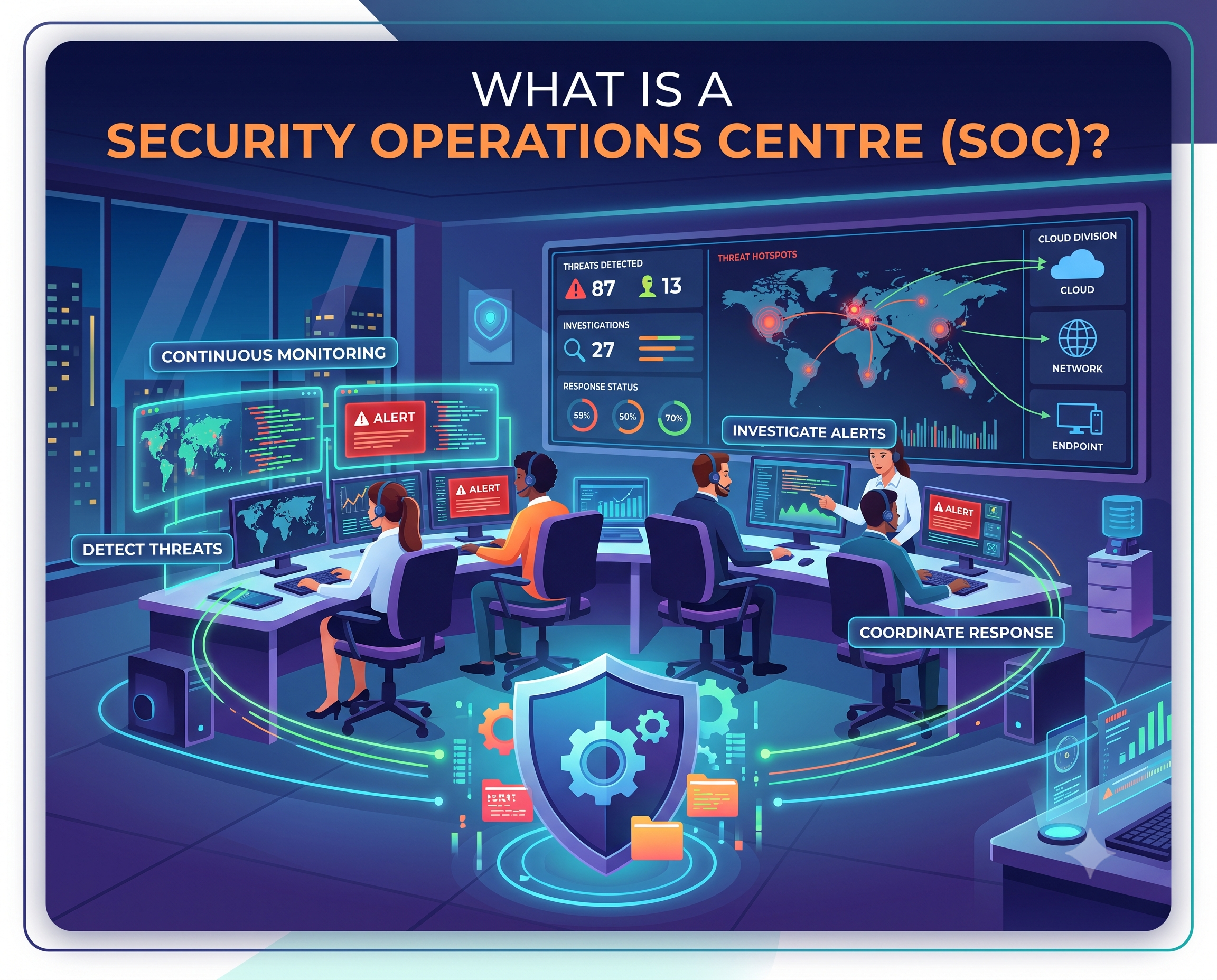
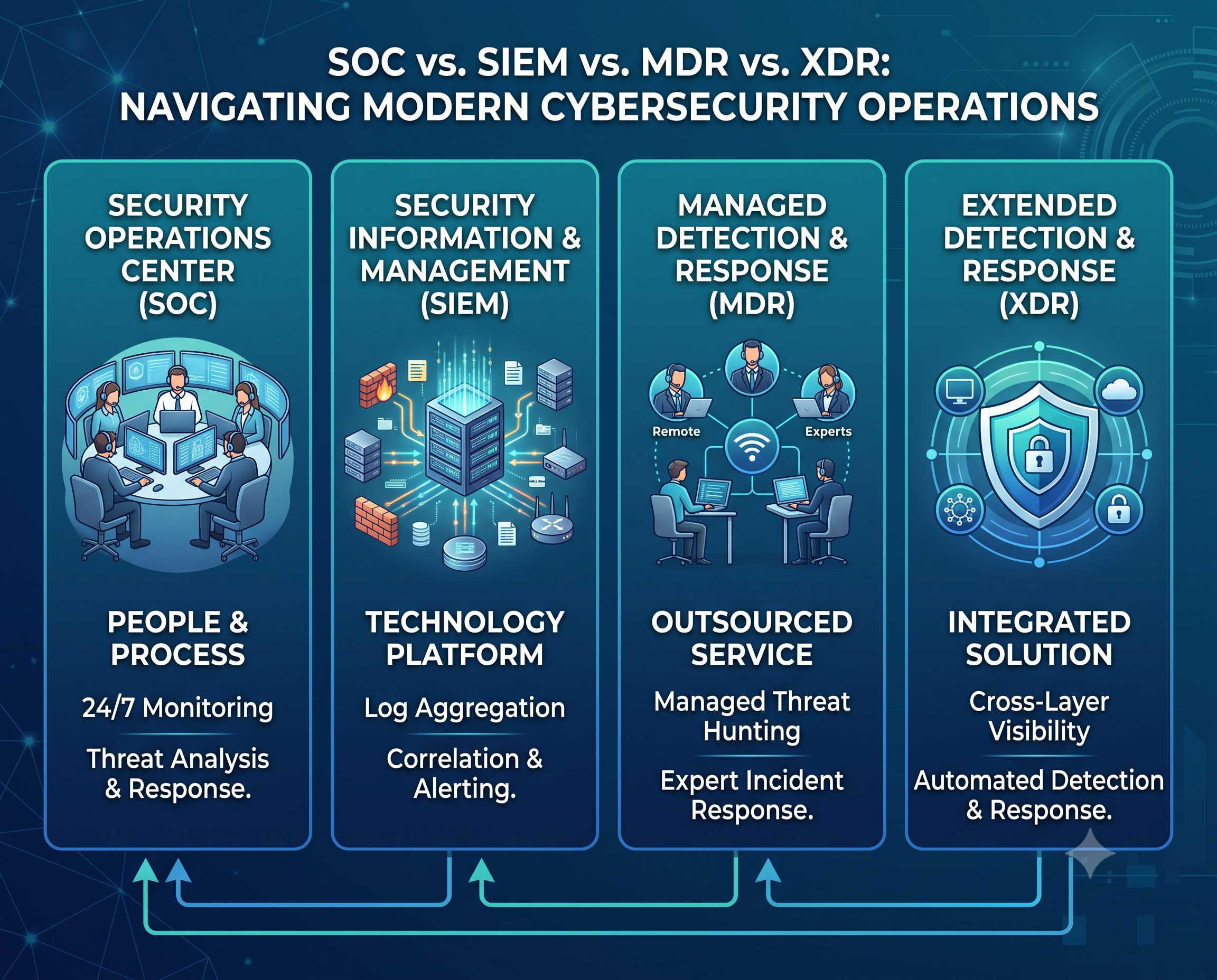
A Security Operations Centre, or SOC, continuously monitors security events and helps organisations identify suspicious activity. The SOC is often one of the first teams involved when a potential cybersecurity incident is detected.
SOC analysts review alerts, correlate security events, investigate suspicious behaviour, determine incident severity, and escalate confirmed incidents to the appropriate response teams.
A mature SOC can help organisations move from reactive incident handling toward continuous security monitoring and faster detection.
How SIEM Supports Incident Response
Security Information and Event Management, or SIEM, platforms collect and correlate security logs and events from multiple sources. This can help security teams identify relationships between seemingly unrelated events.
- Centralised security event collection
- Log aggregation and analysis
- Event correlation
- Security alert generation
- Threat detection
- Investigation support
- Historical event analysis
- Incident investigation and reporting
SIEM does not replace the incident response process. Instead, it provides security teams with visibility and information that can support detection, investigation, and response.
How Endpoint Security Supports Incident Response
Endpoints such as laptops, desktops, and mobile devices can become entry points for attackers. Endpoint security and monitoring tools provide visibility into device activity and can help security teams identify suspicious processes, applications, connections, and configuration changes.
During an incident, endpoint visibility can help teams identify affected devices and take containment actions such as device isolation, process termination, or credential protection.
Incident Response vs Incident Management
Incident response focuses specifically on identifying, investigating, containing, eradicating, and recovering from security incidents. Incident management is a broader operational discipline that may include coordination, business impact management, communication, service restoration, and organisational processes.
In cybersecurity operations, both disciplines can work together. Technical security teams may handle investigation and containment while IT, management, legal, and business teams coordinate wider organisational activities.
Common Types of Incident Response
Malware Incident Response
Malware incidents require teams to identify infected systems, determine the malware's behaviour and scope, contain affected devices, remove malicious components, and investigate the original infection method.
Ransomware Incident Response
Ransomware response focuses on quickly containing affected systems, protecting unaffected systems, identifying the attack path, preserving evidence, and restoring services safely. Organisations should avoid assuming that removing ransomware from one device means the entire environment is secure.
Phishing Incident Response
Phishing incidents may involve compromised credentials, malicious attachments, fraudulent websites, or social engineering. Response actions can include disabling compromised accounts, resetting credentials, removing malicious messages, investigating affected devices, and identifying additional users who may have interacted with the campaign.
Data Breach Incident Response
Data breach response requires determining what information was exposed, which systems and users were affected, how the exposure occurred, and what containment and notification requirements apply.
Account Compromise Incident Response
When an account is compromised, response teams may need to disable or protect the account, reset credentials, revoke active sessions, investigate authentication activity, review privilege usage, and determine whether the attacker accessed additional resources.
What Are Indicators of Compromise?
Indicators of compromise, commonly called IOCs, are pieces of evidence that may indicate malicious activity. They can help security teams identify affected systems and investigate the scope of an incident.
- Malicious IP addresses
- Suspicious domains
- Malware file hashes
- Unexpected executable files
- Unusual authentication activity
- Suspicious processes
- Unauthorised accounts
- Unexpected configuration changes
- Abnormal network connections
- Known attacker infrastructure
IOCs are useful during investigation, but incident response should also consider attacker behaviour and context because indicators can change during an attack.
What Is Incident Severity?
Incident severity helps organisations prioritise security incidents based on factors such as business impact, affected systems, data sensitivity, attack scope, and operational disruption.
Example Incident Severity Levels
- Critical: Major compromise, significant business disruption, widespread ransomware, or exposure of highly sensitive systems or data
- High: Confirmed compromise affecting important systems, privileged accounts, or sensitive information
- Medium: Confirmed security incident with limited scope and manageable business impact
- Low: Minor security event with limited impact and no evidence of significant compromise
Severity definitions should be customised to the organisation's systems, business processes, regulatory requirements, and risk tolerance.
Incident Response Metrics
Incident response metrics help organisations understand how effectively they detect, investigate, contain, and recover from security incidents.
- Mean Time to Detect
- Mean Time to Respond
- Mean Time to Contain
- Mean Time to Recover
- Number of security incidents
- Number of repeated incidents
- Incident severity distribution
- False positive rate
- Time taken for investigation
- Percentage of incidents resolved within target response time
Metrics should be used to identify operational improvements rather than simply measure the performance of individual security analysts.
Incident Response Best Practices
- Maintain a documented and regularly tested incident response plan
- Maintain accurate asset and user inventories
- Centralise security logging where appropriate
- Monitor endpoints, networks, identities, and critical applications
- Define incident severity and escalation procedures
- Use least privilege to reduce the impact of compromised accounts
- Maintain reliable and tested backups
- Keep systems and applications patched
- Regularly review security configurations
- Conduct incident response exercises
- Document investigation and response activities
- Review incidents after recovery
- Continuously improve detection and response capabilities
Common Incident Response Mistakes
- Waiting too long to investigate suspicious activity
- Responding without a documented process
- Failing to isolate compromised systems
- Ignoring evidence collection
- Restoring systems before understanding the attack
- Failing to rotate compromised credentials
- Not investigating the original attack vector
- Poor communication between security and IT teams
- Ignoring lessons learned
- Relying entirely on a single security tool
- Failing to test backups and recovery procedures
How Continuous Security Monitoring Improves Incident Response
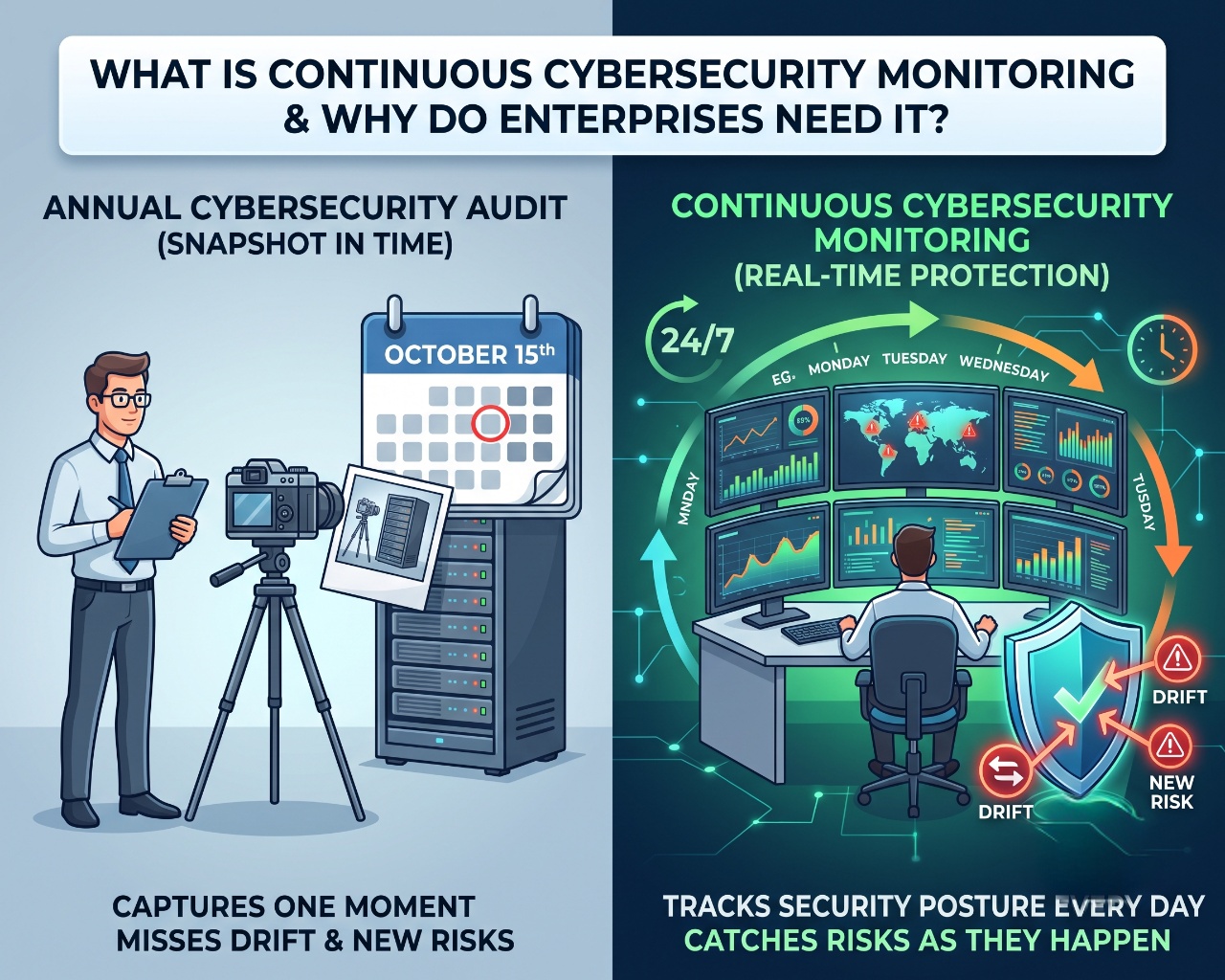
Continuous security monitoring gives organisations greater visibility into changes and suspicious activity across their environment. Instead of relying only on periodic security reviews, teams can identify potential threats closer to the time they occur.
Continuous monitoring can support incident response by providing earlier detection, better historical visibility, faster investigation, and improved understanding of affected systems.
- Earlier identification of suspicious activity
- Improved endpoint visibility
- Faster investigation
- Better incident timelines
- Improved detection of configuration changes
- More effective threat correlation
- Stronger audit evidence
- Improved security readiness
Incident Response and Vulnerability Management
Vulnerabilities can provide attackers with opportunities to gain access to systems and applications. Incident response teams should therefore work closely with vulnerability management teams to identify and address weaknesses discovered during security incidents.
An incident may reveal an unpatched vulnerability, insecure configuration, excessive privileges, or another weakness that should be addressed as part of the remediation process.
Incident Response and Cybersecurity Audits
Cybersecurity audits evaluate security controls, processes, governance, and organisational readiness. Incident response is commonly an important component of an organisation's broader security program because organisations need to demonstrate that they can detect and manage security incidents effectively.
Incident response documentation, response procedures, incident records, testing results, and lessons learned can help organisations demonstrate that security incidents are managed through a defined process.
How to Build an Effective Incident Response Capability
Organisations can develop incident response capabilities progressively by first establishing clear processes and responsibilities and then improving visibility, automation, testing, and monitoring.
- Identify critical assets, systems, applications, and data
- Define cybersecurity incident types and severity levels
- Create an incident response plan
- Assign incident response roles and escalation responsibilities
- Implement security monitoring and centralised logging
- Establish containment and recovery procedures
- Maintain tested backups
- Conduct incident response exercises
- Measure response performance
- Review incidents and continuously improve the process
Incident Response for Modern Enterprises
Modern organisations operate across cloud services, remote work environments, mobile devices, SaaS applications, data centres, and distributed networks. This increases the number of systems that security teams need to monitor during an incident.
An effective incident response capability therefore requires visibility across users, identities, endpoints, applications, networks, and cloud environments. Security teams should be able to understand what happened, which assets are affected, and what actions are required to contain the threat.
Incident Response and Zero Trust
Zero Trust security assumes that access should be continuously evaluated rather than automatically trusted based on network location. This approach can reduce the potential impact of compromised accounts and devices.
Incident response teams can use Zero Trust principles such as least privilege, strong identity controls, device security, segmentation, and continuous monitoring to limit attacker movement and improve containment.
Frequently Asked Questions About Incident Response
What is incident response in cybersecurity?
Incident response is the structured process used to detect, investigate, contain, eradicate, and recover from cybersecurity incidents while reducing business impact and improving future security readiness.
What are the six phases of incident response?
A commonly used incident response lifecycle includes preparation, detection and analysis, containment, eradication, recovery, and lessons learned.
Why is an incident response plan important?
An incident response plan gives security and IT teams documented procedures for handling cybersecurity incidents and helps reduce confusion during high-pressure situations.
What is the role of a SOC in incident response?
A SOC monitors security events, investigates suspicious activity, validates alerts, and escalates confirmed incidents for containment and remediation.
How can organisations improve incident response?
Organisations can improve incident response through continuous security monitoring, strong logging, tested response procedures, reliable backups, security training, incident response exercises, vulnerability management, and regular post-incident reviews.
What is the difference between incident response and incident management?
Incident response focuses on technical security activities such as investigation, containment, eradication, and recovery, while incident management can include broader operational coordination, communication, and business recovery activities.
Key Takeaways
- Incident response provides a structured approach to managing cybersecurity incidents
- Preparation is essential for effective incident response
- Detection and analysis help determine the scope and severity of an incident
- Containment limits further damage and attacker movement
- Eradication addresses the underlying cause of the incident
- Recovery restores systems and business operations safely
- Lessons learned help organisations improve their security posture
- SOC, SIEM, endpoint security, and continuous monitoring can strengthen incident response
- Regular testing and exercises improve response readiness
- Incident response should continuously evolve as the organisation and threat landscape change
Conclusion
Incident response is a critical part of modern cybersecurity because prevention alone cannot eliminate every security risk. Organisations need a repeatable process for detecting suspicious activity, investigating incidents, containing threats, recovering affected systems, and learning from security events.
A strong incident response capability combines trained people, documented processes, reliable security monitoring, effective technology, tested recovery procedures, and continuous improvement. Organisations that invest in these capabilities can reduce the impact of security incidents and improve their overall cybersecurity resilience.
Recommended Solution
See how MOBISEC solves this in practice
Topics