What Are CIS Benchmark Profiles?
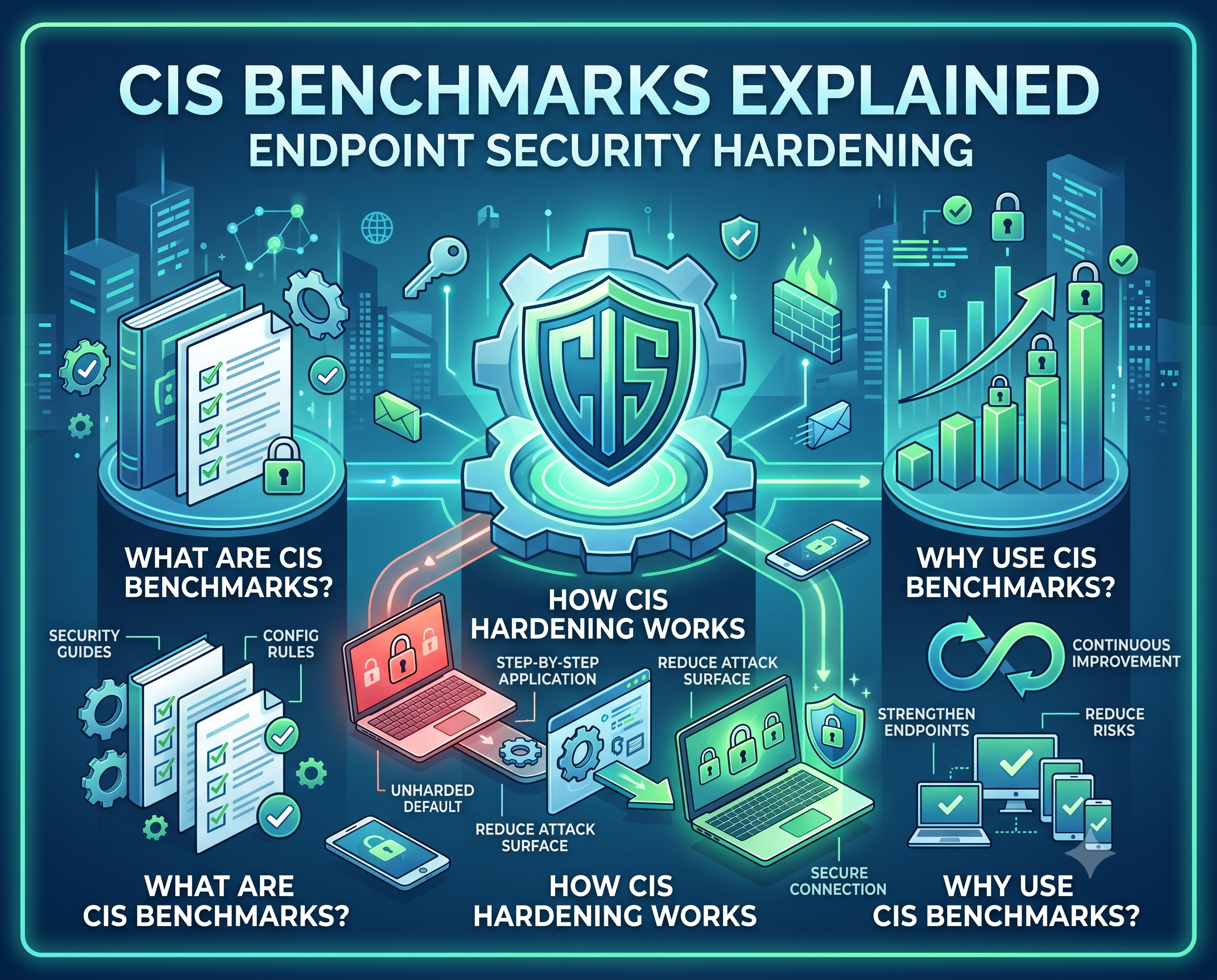
CIS Benchmarks are consensus-based security configuration recommendations designed to help organisations securely configure operating systems, cloud platforms, applications, databases, network devices, and other technologies. They provide specific recommendations that organisations can use to reduce attack surface and establish secure configuration baselines.
Many CIS Benchmarks include multiple configuration profiles. The two profiles most organisations encounter are Level 1 and Level 2. These profiles are not simply different versions of the same security standard. They represent different levels of configuration hardening and different balances between security, usability, operational impact, and business requirements.
CIS Level 1 is designed as a practical starting point for improving security while maintaining normal system functionality. CIS Level 2 provides additional defense in depth for environments where stronger security protections are justified and the organisation can manage the potential operational impact.
What Is a CIS Level 1 Benchmark?
CIS Level 1 is intended to provide a strong security foundation without creating an extensive impact on system performance or normal business operations. The profile focuses on practical configuration changes that reduce common attack surfaces while keeping technology usable.
Level 1 recommendations are generally appropriate for broad deployment because they are designed to provide a clear security benefit without unnecessarily restricting normal business functionality. They can therefore serve as a baseline for endpoints, servers, applications, and other infrastructure.
Main Characteristics of Level 1
- Provides a practical security baseline
- Reduces common attack surfaces
- Focuses on settings with clear security benefits
- Is designed to preserve normal system usability
- Can often be applied across a large portion of an organisation's environment
- Provides a strong foundation for endpoint hardening
- Can be used as a starting point for security configuration monitoring
Why Organisations Start With Level 1
A security baseline is most effective when it can actually be implemented and maintained. Organisations often manage thousands of endpoints across different departments, locations, applications, and business functions. Applying highly restrictive settings everywhere without understanding their operational impact can create unnecessary disruption.
Level 1 provides a practical way to establish a consistent minimum security posture. Once the baseline is implemented, organisations can assess exceptions, measure compliance, and determine where additional Level 2 controls are justified.
What Is a CIS Level 2 Benchmark?
CIS Level 2 extends the security configuration beyond the Level 1 baseline. It is intended for environments where security is particularly important and where additional defense in depth is worth the potential impact on system functionality, performance, or administration.
Level 2 recommendations can introduce stricter configuration requirements. These settings may be highly valuable for systems that process sensitive information, support critical business operations, or represent attractive targets for attackers. However, they should be evaluated and tested before broad deployment.
Main Characteristics of Level 2
- Extends the Level 1 security profile
- Provides additional defense in depth
- Targets environments where security is paramount
- Can introduce stricter security restrictions
- May affect system usability or application functionality
- Can require additional testing and operational planning
- Is particularly useful for higher-risk systems and sensitive workloads
Why Level 2 Requires More Planning
A stronger security configuration is not automatically a better configuration for every system. Some controls can affect application compatibility, administrative workflows, system functionality, or performance. The impact depends on the technology, workload, architecture, and business requirements.
For this reason, Level 2 should be treated as a risk-based hardening decision rather than a setting that organisations automatically apply to every endpoint. Testing and validation are important before implementing Level 2 configurations across production systems.
CIS Level 1 vs Level 2: What Is the Difference?
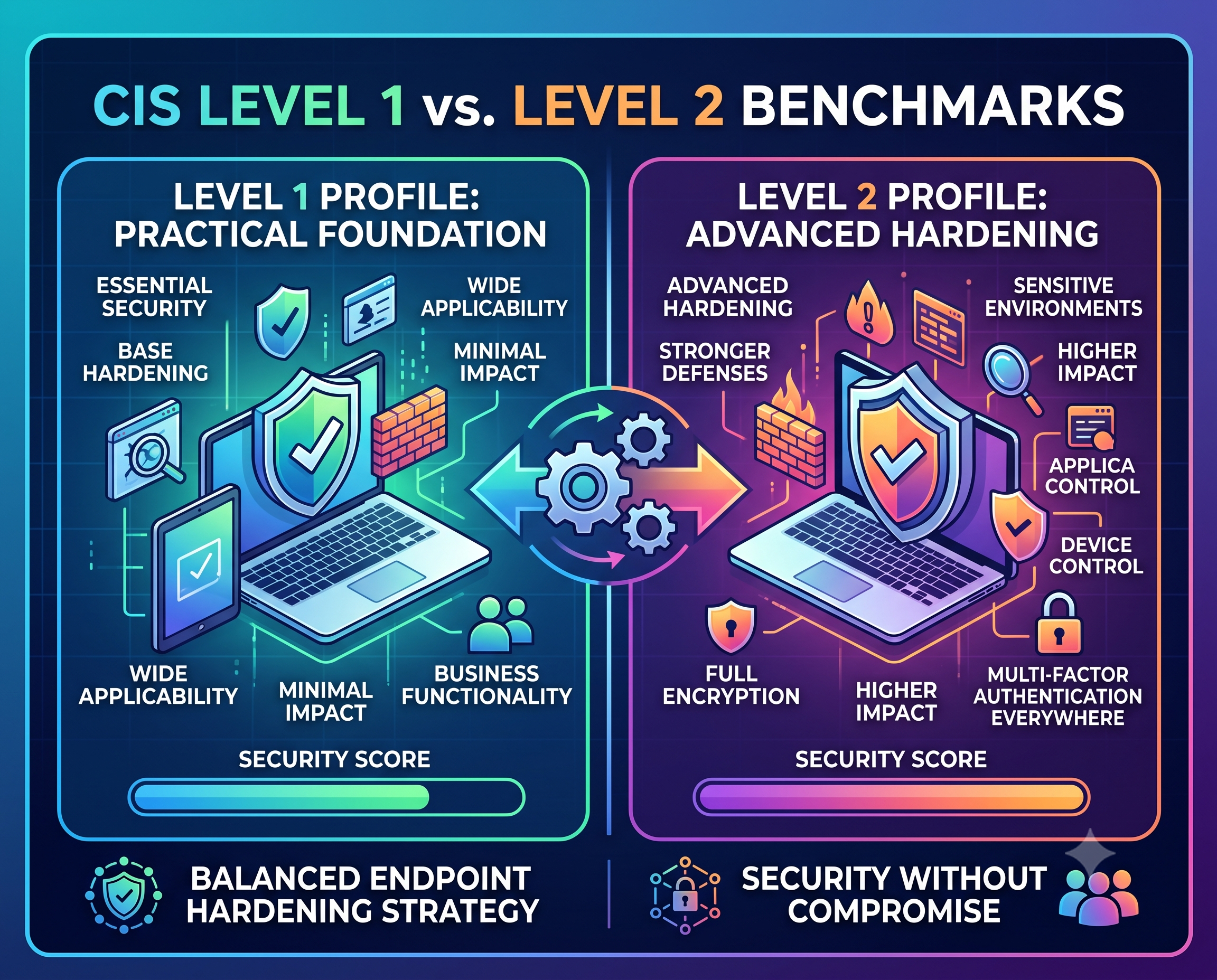
The most important difference between CIS Level 1 and Level 2 is the balance between security strength and operational impact. Level 1 provides a practical baseline intended for broad adoption, while Level 2 adds stronger defense-in-depth protections for environments that require a more restrictive security posture.
- Level 1 focuses on practical baseline security
- Level 2 focuses on stronger defense in depth
- Level 1 is generally designed to minimise operational disruption
- Level 2 may have greater usability or performance implications
- Level 1 is suitable for broad baseline deployment
- Level 2 is better suited to higher-risk or security-sensitive environments
- Level 1 can be the foundation for a broader hardening strategy
- Level 2 can be selectively applied where additional protection is justified
Level 1 vs Level 2: Security and Operational Impact
The decision between Level 1 and Level 2 should consider both cybersecurity risk and operational requirements. An organisation with thousands of endpoints may need a consistent minimum baseline across all systems while applying more restrictive configurations only to systems that require them.
Security Impact
Level 1 reduces common configuration weaknesses and establishes a more secure starting point than default configurations. Level 2 adds additional restrictions that can strengthen defense in depth against threats that may bypass simpler security controls.
Operational Impact
Level 1 is intended to provide security improvements without extensively affecting normal technology usage. Level 2 may require more testing because some recommendations can interfere with applications, administrative workflows, services, or other functionality.
Management Impact
The management effort required for Level 2 can also be greater. Organisations may need additional exception handling, testing, change management, monitoring, and troubleshooting when deploying stricter security configurations.
Should Every Endpoint Use CIS Level 2?
No. Organisations should not assume that every endpoint needs the most restrictive CIS profile available.
A better approach is to establish a practical baseline and then apply stronger security controls according to risk. Level 1 can provide a common minimum security posture across the environment, while Level 2 can be introduced for systems where the additional protection justifies the operational impact.
When Level 1 May Be Appropriate
- Standard employee workstations
- General-purpose laptops and desktops
- Systems with broad application compatibility requirements
- Endpoints where business usability is a major consideration
- Large environments establishing an initial security baseline
- Systems with moderate security requirements
- Environments where configuration standardisation is the immediate priority
When Level 2 May Be Appropriate
- Systems processing highly sensitive information
- Critical infrastructure and high-value systems
- Privileged administrative systems
- Security management infrastructure
- High-risk servers and workloads
- Systems exposed to significant threat activity
- Environments with strict internal security requirements
- Systems where stronger defense in depth justifies additional operational controls
CIS Level 1 vs Level 2 for Endpoint Security
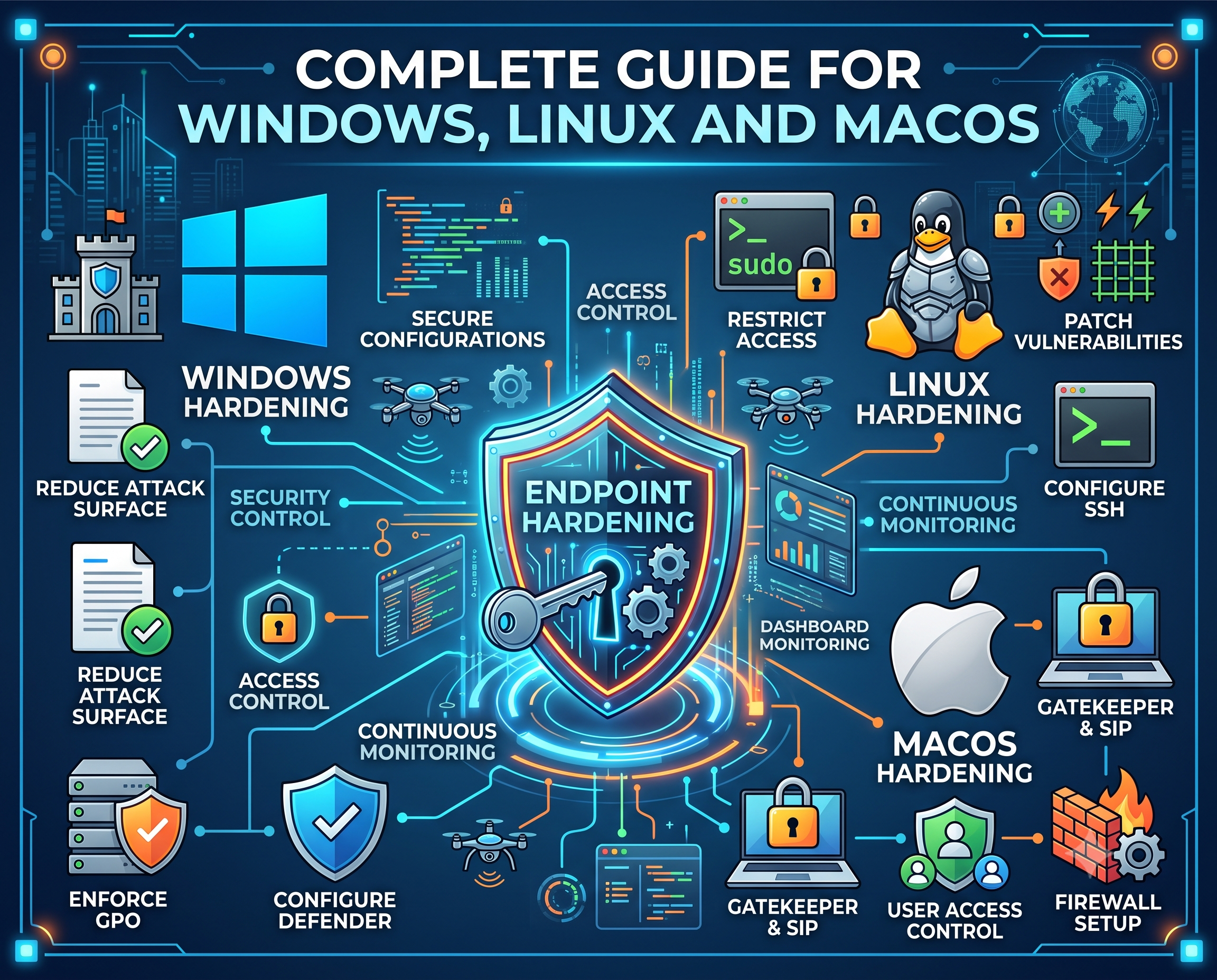
Endpoint security is one of the most common areas where CIS profiles can support a structured hardening strategy. Organisations can use CIS recommendations to establish secure configuration baselines across Windows, Linux, macOS, browsers, applications, servers, and other supported technologies.
A practical endpoint security programme does not need to treat every device identically. Organisations can classify endpoints according to business importance, data sensitivity, exposure, user privileges, and threat level.
A Risk-Based Endpoint Model
- Establish Level 1 as the organisation-wide baseline where appropriate
- Identify high-risk endpoints and sensitive systems
- Evaluate which Level 2 recommendations provide meaningful additional protection
- Test Level 2 configurations against business applications
- Document approved exceptions
- Deploy stronger controls to systems that require them
- Continuously monitor configuration compliance
- Review the security profile as technology and business requirements change
CIS Level 1 vs Level 2 for Servers
Servers often require a more deliberate approach because configuration changes can affect critical applications, databases, services, and integrations. A Level 1 baseline can provide a common starting point, while Level 2 can be considered for high-value or highly sensitive server environments.
Before applying Level 2 recommendations to production servers, organisations should validate application compatibility and understand dependencies. A configuration change that improves security but breaks a critical service can create a different type of operational risk.
Examples of Higher-Risk Server Environments
- Production systems supporting critical business applications
- Database servers containing sensitive information
- Identity and authentication infrastructure
- Privileged management systems
- Internet-facing infrastructure
- Security infrastructure
- Systems supporting regulated or highly sensitive workloads
How to Choose Between CIS Level 1 and Level 2
Choosing a CIS profile should start with risk rather than the assumption that the highest security level is always the correct choice.
Step 1: Identify the System's Risk
Determine what the system does, what information it processes, how exposed it is, and what could happen if it were compromised. Consider data sensitivity, business criticality, user privileges, internet exposure, and the potential impact of an incident.
Step 2: Establish a Baseline
Use Level 1 recommendations to establish a practical minimum configuration standard where appropriate. This creates a consistent security foundation that can be measured across the environment.
Step 3: Identify Systems Requiring Stronger Protection
Classify systems that require additional defense in depth. These may include privileged endpoints, critical servers, sensitive workloads, and systems with higher exposure or greater business impact.
Step 4: Test Level 2 Recommendations
Apply Level 2 recommendations in a controlled test environment before production deployment. Validate operating system behaviour, application compatibility, administrative workflows, performance, and business processes.
Step 5: Document Exceptions
Not every CIS recommendation will be appropriate for every system. Organisations should document justified exceptions, explain the associated risk, and define compensating controls where appropriate.
Step 6: Monitor Compliance
Hardening is not a one-time activity. Systems change through software updates, configuration changes, new applications, administrative actions, and infrastructure modifications. Continuous monitoring helps organisations identify when systems move away from the approved security baseline.
Why Testing Is Critical Before CIS Hardening
CIS recommends applying Benchmark guidance in a test environment first to determine potential impact. This is particularly important for Level 2 recommendations because stronger configuration controls can have a greater effect on functionality and operational behaviour.
A controlled testing process can help identify application compatibility issues, service dependencies, authentication problems, performance concerns, and administrative challenges before the configuration is deployed widely.
Recommended Testing Process
- Select representative systems
- Create a backup or recovery plan
- Apply the selected CIS profile in a test environment
- Run business-critical applications
- Validate system functionality
- Review logs and security events
- Measure performance and operational impact
- Document exceptions and required changes
- Approve the configuration for production
- Monitor the deployed baseline after rollout
Can an Organisation Use Both Level 1 and Level 2?
Yes. Level 1 and Level 2 do not have to be treated as mutually exclusive organisation-wide choices.
A mature security programme can use Level 1 as a broad baseline and Level 2 as an additional hardening layer for selected systems. This approach allows organisations to improve security consistently while avoiding unnecessary restrictions on lower-risk systems.
Example of a Tiered Security Strategy
- Tier 1: General endpoints using the appropriate Level 1 baseline
- Tier 2: Sensitive endpoints with additional Level 2 controls
- Tier 3: Privileged administrative systems with stronger hardening requirements
- Tier 4: Critical infrastructure with tightly controlled and continuously monitored configurations
The exact tier structure should be based on the organisation's risk assessment and the capabilities of the specific technology benchmark.
CIS Level 1 and Level 2 Compliance Monitoring
Selecting a CIS profile is only the first step. Organisations also need to determine whether systems remain compliant with the selected configuration over time.
Configuration drift can occur when administrators change settings, users install software, applications modify configurations, operating system updates introduce changes, or infrastructure is rebuilt. Without ongoing monitoring, an endpoint that was compliant during the initial assessment may gradually become non-compliant.
What Organisations Should Monitor
- CIS recommendation compliance
- Security configuration changes
- Operating system settings
- User and privilege configurations
- Firewall and network settings
- Logging and auditing configuration
- Password and authentication settings
- Application and service configuration
- Exceptions and approved deviations
- Changes to the security baseline
CIS Level 1 vs Level 2 and Configuration Drift
Configuration drift is especially important when organisations use CIS Benchmarks as a security baseline. The effectiveness of a hardened configuration depends on whether the intended settings remain in place.
For example, an endpoint may initially comply with the selected CIS profile but later become non-compliant after a local administrator changes a security setting or an application modifies a system configuration. Continuous configuration assessment can identify these deviations and help security teams investigate and remediate them.
Common Mistakes When Implementing CIS Profiles
Mistake 1: Assuming Level 2 Is Always Better
Level 2 provides stronger defense in depth, but stronger configuration does not automatically mean it is appropriate for every system. Operational requirements and business impact must be considered.
Mistake 2: Applying Level 2 Without Testing
Deploying restrictive configuration changes directly to production can create avoidable compatibility and availability problems. Test configurations before broad deployment.
Mistake 3: Treating CIS Hardening as a One-Time Project
A system can become non-compliant after the initial hardening exercise. Continuous monitoring is necessary to detect configuration changes and maintain the intended baseline.
Mistake 4: Ignoring Business Requirements
Security configurations should support business security rather than unnecessarily disrupt business operations. Security teams should work with infrastructure, application, and business owners when evaluating higher-impact recommendations.
Mistake 5: Applying the Same Profile to Every System
Different systems have different risk levels and business functions. A risk-based approach can provide stronger protection where it matters most while maintaining practical configurations elsewhere.
Best Practices for CIS Level 1 and Level 2 Implementation
- Start with an inventory of systems and technologies
- Select the correct CIS Benchmark for each technology
- Understand the available configuration profiles
- Establish a practical baseline
- Classify systems by risk and business criticality
- Test configuration changes before production deployment
- Use Level 2 selectively where stronger defense in depth is justified
- Document exceptions and compensating controls
- Continuously monitor configuration compliance
- Track configuration drift
- Review benchmark updates and changes
- Integrate CIS assessment into the broader endpoint security programme
How CIS Profiles Fit Into a Broader Security Strategy
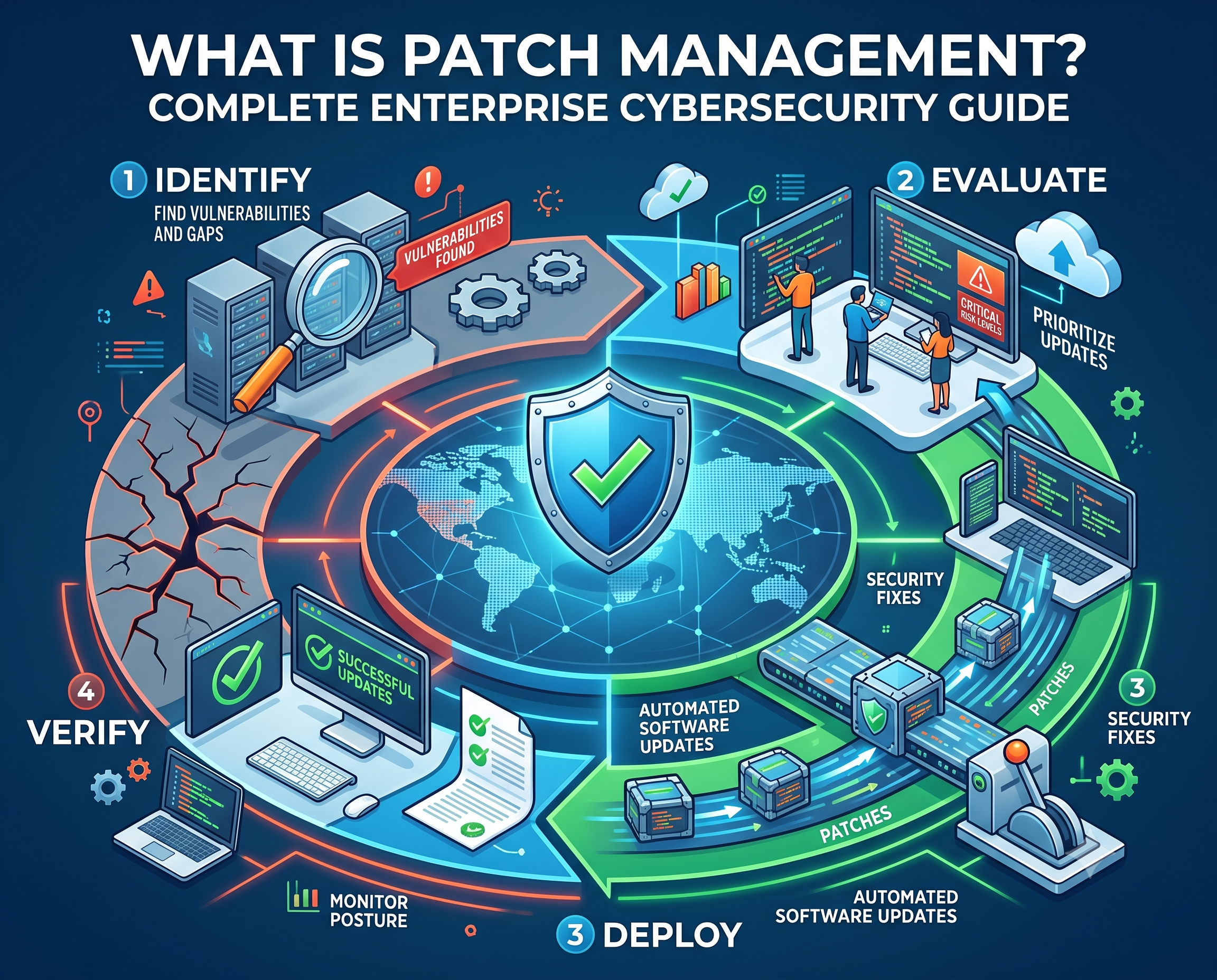
CIS Benchmarks focus on secure configuration, but configuration hardening is only one part of cybersecurity. Organisations should combine secure configuration with vulnerability management, patch management, identity security, endpoint protection, logging, monitoring, incident response, and other appropriate security controls.
The CIS profile therefore should be treated as one component of a broader security architecture rather than a complete cybersecurity programme.
CIS Controls and CIS Benchmarks
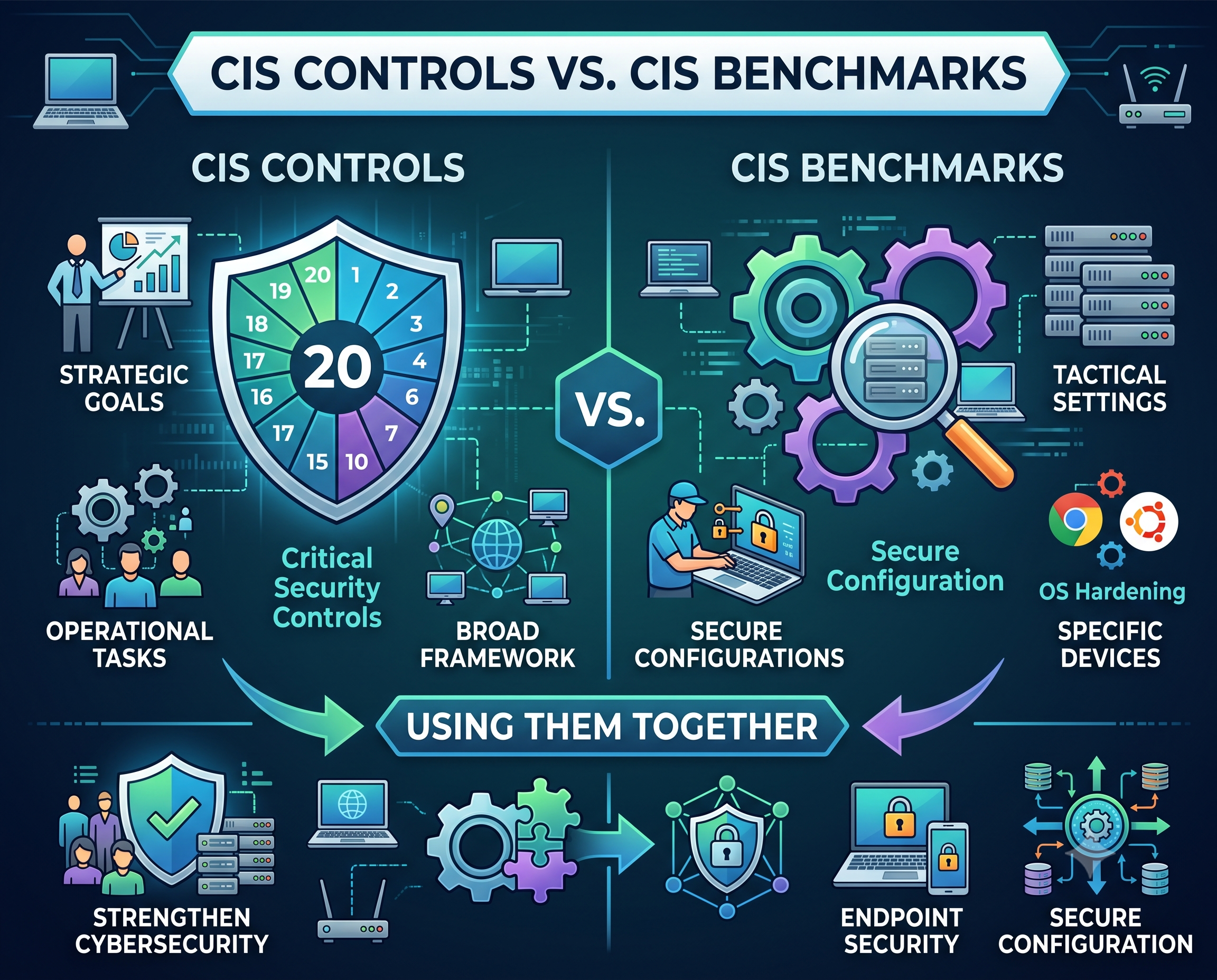
CIS Controls provide a broader set of prioritised cybersecurity safeguards, while CIS Benchmarks provide detailed configuration recommendations for specific technologies. Organisations can use both together to connect strategic security priorities with practical technical configuration.
CIS Benchmarks and Continuous Monitoring
A secure configuration baseline becomes significantly more useful when organisations continuously assess whether systems remain aligned with it. This creates a feedback loop between hardening, monitoring, detection, and remediation.
How Cyber Auditor Can Support CIS Hardening
Organisations managing large endpoint environments need more than a one-time configuration checklist. They need visibility into which systems are compliant, where security configurations deviate from the approved baseline, and which issues require remediation.
Cyber Auditor can be positioned within this workflow as part of an organisation's broader endpoint security and security configuration management strategy. The objective is to help security teams move from manual configuration checks toward measurable and continuously monitored security posture.
A Practical CIS Hardening Workflow
- Define the appropriate CIS Benchmark and profile
- Assess the current endpoint configuration
- Identify non-compliant recommendations
- Prioritise findings based on risk
- Apply approved remediation
- Verify the resulting configuration
- Monitor for future configuration drift
- Generate evidence for security and audit processes
CIS Level 1 vs Level 2: Decision Checklist
- Have we identified the correct CIS Benchmark for the technology?
- Do we understand the business function of the system?
- Have we assessed the system's risk and exposure?
- Can Level 1 provide an appropriate minimum security baseline?
- Does the system require additional Level 2 defense in depth?
- Have Level 2 recommendations been tested?
- Could any recommendation affect business applications?
- Have exceptions been documented?
- Are configuration changes continuously monitored?
- Can we detect configuration drift?
- Can we verify remediation after changes?
- Is the selected security profile reviewed periodically?
Frequently Asked Questions
Is CIS Level 2 more secure than Level 1?
Level 2 provides additional defense in depth compared with Level 1, but the appropriate profile depends on the system, threat environment, business requirements, and operational impact. Level 2 is intended for environments where stronger security is particularly important.
Can Level 2 be used without Level 1?
CIS defines Level 2 as extending Level 1 rather than functioning as an entirely separate baseline. Organisations should therefore understand the relationship between the profiles when planning implementation.
Should all company laptops use CIS Level 2?
Not necessarily. Organisations should evaluate risk, business requirements, application compatibility, and operational impact. Level 1 can provide a practical baseline for broad deployment, while Level 2 can be applied to higher-risk systems where additional protection is justified.
Is CIS Level 1 enough for endpoint security?
Level 1 can provide a strong secure-configuration baseline, but endpoint security requires more than configuration hardening. Patch management, vulnerability management, identity controls, endpoint protection, monitoring, and incident response should also be considered.
Does CIS Level 2 guarantee compliance?
No. CIS Benchmarks provide security configuration recommendations, but compliance with a CIS profile does not automatically mean an organisation satisfies every requirement of a regulatory framework, contractual obligation, or internal security policy.
How often should CIS compliance be checked?
CIS compliance should be assessed regularly and ideally monitored continuously for important systems. Continuous assessment helps detect configuration drift between formal audits or assessment cycles.
Key Takeaways
- CIS Level 1 provides a practical security baseline designed to reduce attack surface while maintaining usability
- CIS Level 2 extends Level 1 with additional defense-in-depth protections
- Level 2 can have greater operational impact and therefore requires careful testing
- Organisations do not need to apply the same profile to every system
- Risk, data sensitivity, business criticality, exposure, and operational requirements should guide profile selection
- Level 1 can serve as a broad baseline while Level 2 can protect higher-risk systems
- Continuous monitoring is important because configurations can drift after hardening
- CIS Benchmarks should be integrated with broader cybersecurity controls and processes
Conclusion
Choosing between CIS Level 1 and Level 2 is not simply a decision between lower and higher security. It is a decision about how much hardening a particular environment requires and what operational impact the organisation is prepared to manage.
CIS Level 1 provides a practical foundation for reducing attack surface and establishing consistent secure configurations. Level 2 adds stronger defense in depth for environments where the additional protection justifies greater configuration restrictions and operational complexity.
For most organisations, the strongest strategy is not to choose one profile blindly for every system. Instead, establish an appropriate baseline, identify higher-risk systems, test stronger configurations, document exceptions, and continuously monitor compliance.
With a risk-based approach to CIS hardening, organisations can strengthen endpoint security while maintaining the availability and functionality required by the business.
Recommended Solution
See how MOBISEC solves this in practice
Topics