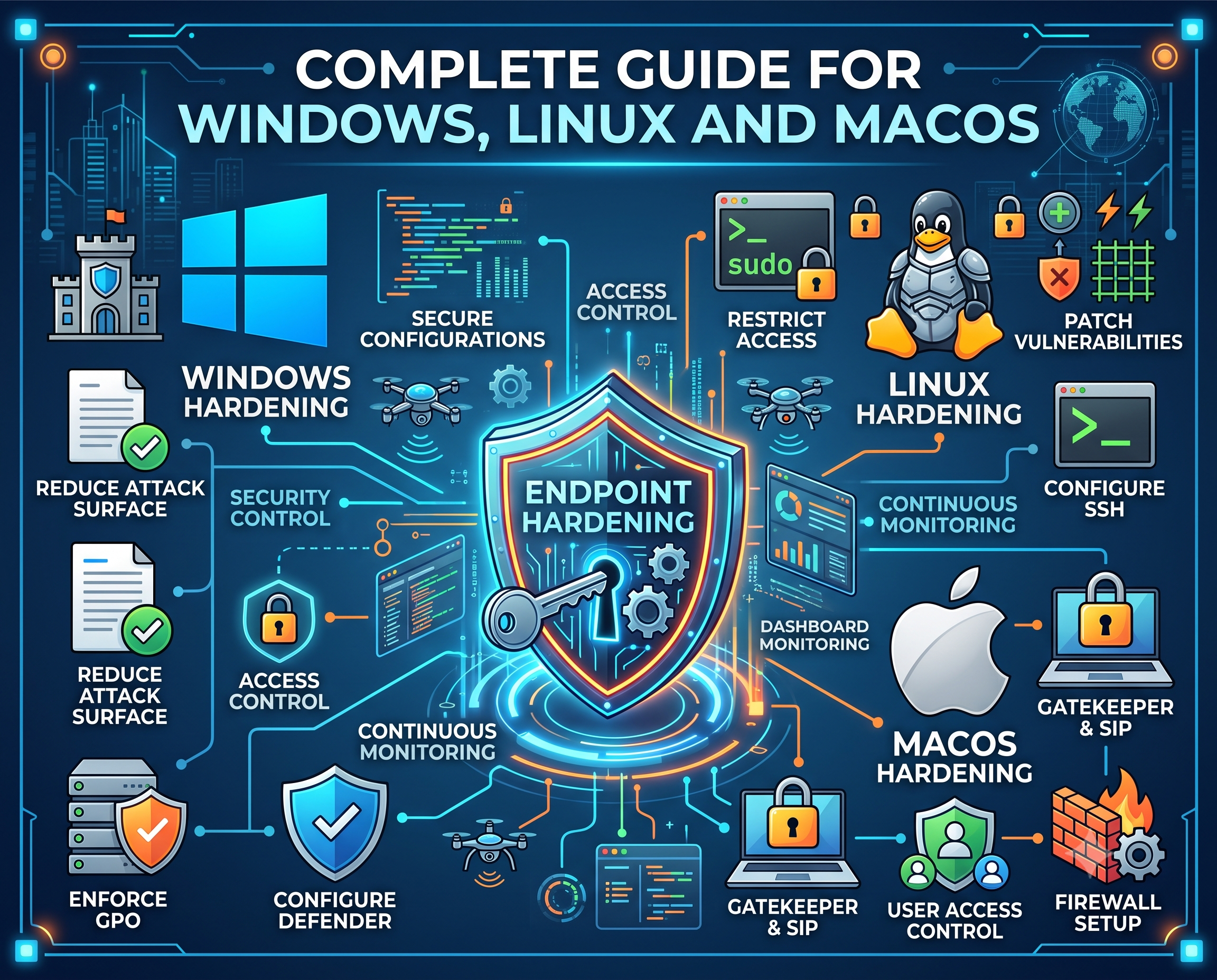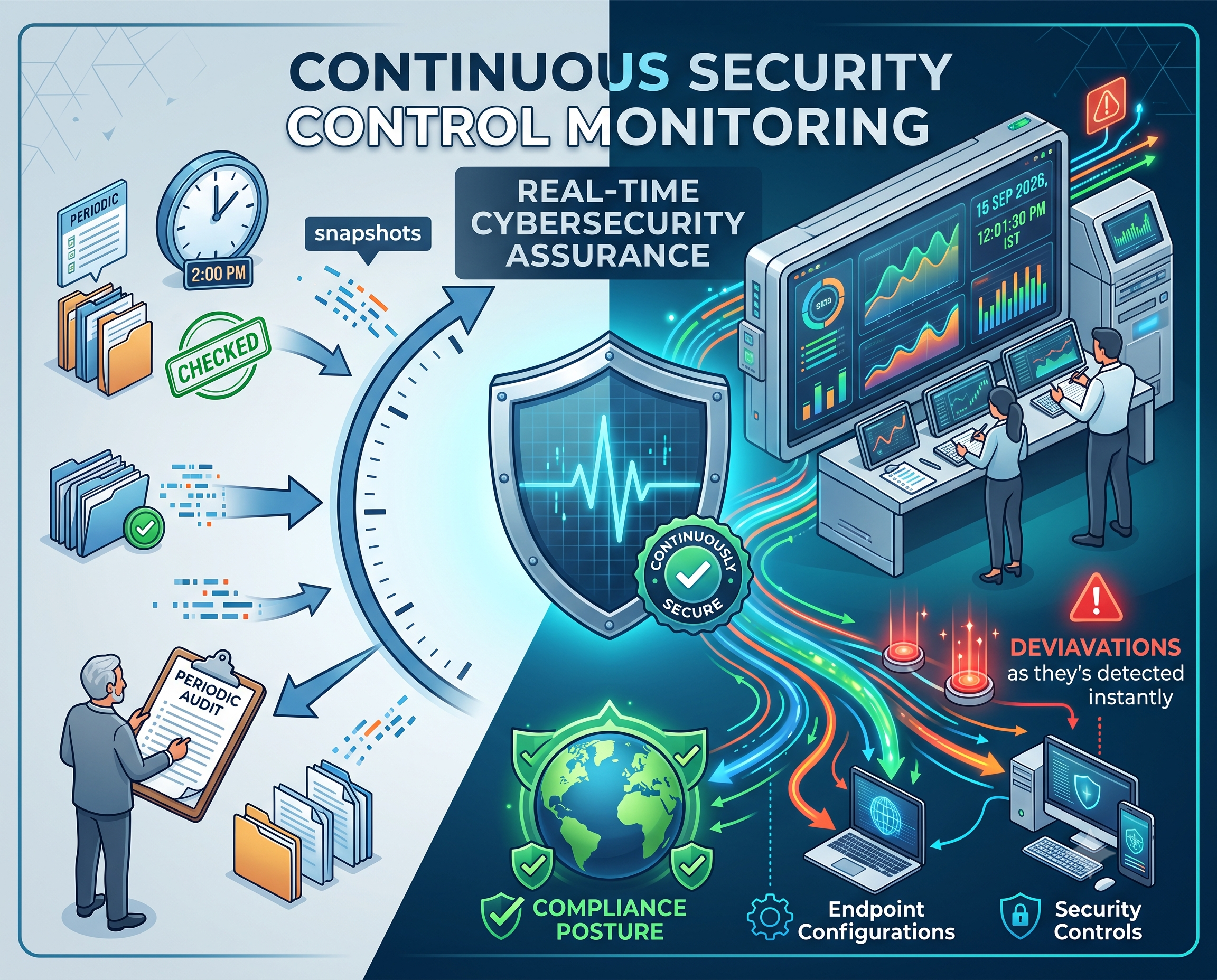
What Is Continuous Security Control Monitoring?
Continuous security control monitoring is the ongoing assessment of security controls, endpoint configurations, policies, and security baselines to determine whether systems remain compliant and secure over time. Instead of checking security controls only during a scheduled audit, organisations continuously monitor whether required security configurations are still present and whether systems have deviated from their approved security posture.
Traditional cybersecurity audits provide an important point-in-time view of an organisation's security posture. However, endpoint configurations can change shortly after an audit because of software installations, administrator activity, operating system updates, policy changes, application deployments, or configuration modifications.
Continuous monitoring addresses this gap by repeatedly assessing security controls and identifying deviations as they occur. This creates a more current view of cybersecurity posture and helps security teams respond before configuration changes become persistent security weaknesses.
Why Periodic Security Audits Are No Longer Enough
Periodic audits are useful for validating security controls, supporting compliance activities, and identifying security weaknesses. The challenge is that an audit represents the state of an environment at a specific point in time.
An endpoint that passes an audit today may no longer satisfy the organisation's security baseline several weeks or even hours later. A local administrator could modify a security setting, a service could become enabled, a required protection could be disabled, or a system could drift away from its approved configuration.
- Periodic audits provide point-in-time visibility
- Security configurations can change between audits
- Configuration drift can remain undetected
- Manual reassessment becomes difficult at scale
- Security teams may discover issues after exposure has already occurred
- Compliance evidence can become outdated quickly
This does not make periodic audits unnecessary. Instead, continuous monitoring complements audits by providing ongoing visibility between formal assessments.
From Point-in-Time Audits to Continuous Assurance
The fundamental difference between periodic auditing and continuous security control monitoring is the frequency and operational purpose of assessment.
- Periodic audit: evaluates security posture at scheduled intervals
- Continuous monitoring: repeatedly evaluates security posture over time
- Periodic audit: produces a snapshot of compliance
- Continuous monitoring: tracks changes and deviations
- Periodic audit: often depends on manual evidence collection
- Continuous monitoring: can automate assessment and reporting
- Periodic audit: identifies issues during the audit window
- Continuous monitoring: can identify issues closer to when they occur
Continuous cybersecurity assurance does not mean that every security decision must be automated. It means organisations have a mechanism for continuously understanding whether important security controls remain effective and whether systems continue to meet defined security requirements.
What Security Controls Should Be Monitored Continuously?
Not every security control requires the same monitoring frequency. Organisations should prioritise controls that have a significant effect on endpoint security, attack surface, compliance, and security posture.
- Operating system security configurations
- Firewall and network protection settings
- Endpoint protection configurations
- Password and authentication policies
- User privilege configurations
- Remote access settings
- Security logging configurations
- Encryption settings
- Unnecessary services and protocols
- Application security configurations
- Browser security settings
- System hardening controls
- CIS Benchmark recommendations
- Organisational security baselines
The exact controls will vary depending on the organisation, operating systems, applications, regulatory requirements, and risk profile. A mature monitoring strategy therefore begins by defining which controls are critical and what their expected state should be.
How Continuous Security Control Monitoring Works
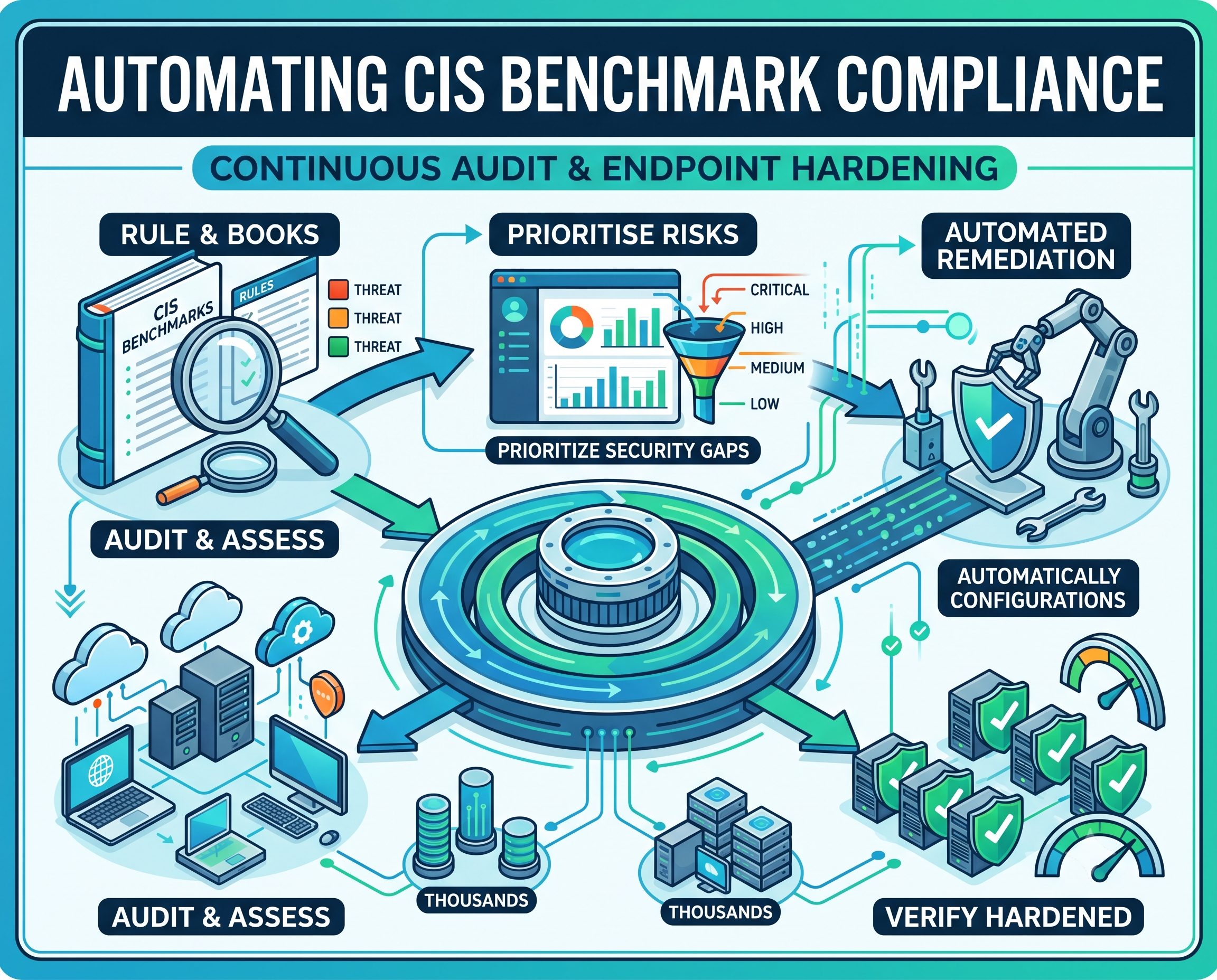
An effective continuous monitoring process typically combines endpoint inventory, security baseline definition, automated assessment, deviation detection, prioritisation, remediation, and verification.
Step 1: Discover and Inventory Endpoints
The first requirement is knowing which endpoints and systems are part of the environment. Security teams cannot reliably monitor controls on systems that are unknown, unmanaged, or missing from their inventory.
A centralised endpoint inventory can provide information about operating systems, device ownership, software, configuration state, and other attributes required for security assessment.
Step 2: Define Security Controls and Baselines
Continuous monitoring requires a clearly defined expected state. This can be based on organisational security policies, CIS Benchmarks, internal hardening standards, regulatory requirements, or other security frameworks.
The baseline should define which configurations are required, which settings are prohibited, and which exceptions are formally approved.
Step 3: Assess Endpoint Configuration
Endpoints are then assessed against the defined security controls. Automated assessment can identify whether required configurations are present and whether systems have deviated from the expected baseline.
- Identify compliant endpoints
- Identify non-compliant endpoints
- Detect missing security configurations
- Detect insecure settings
- Identify configuration deviations
- Record assessment results
- Track changes over time
Step 4: Detect Security Control Deviations
A deviation occurs when the current state of an endpoint no longer matches the expected security baseline. These deviations can indicate configuration drift, administrative changes, failed policies, or other changes that affect security posture.
Continuous monitoring makes these deviations visible without requiring security teams to wait for the next scheduled audit.
Step 5: Prioritise Security Findings
Not every deviation represents the same level of risk. Security teams should prioritise findings according to business impact, exploitability, affected systems, control importance, exposure, and the potential consequences of leaving the issue unresolved.
- Critical security control failures
- High-risk configuration changes
- Internet-facing endpoint exposure
- Disabled security protections
- Excessive administrative privileges
- Non-compliant security configurations
- Repeated configuration drift
- Large numbers of affected endpoints
Step 6: Remediate and Verify
After a security control deviation is identified, organisations can investigate and remediate the issue. Depending on the control, remediation may involve changing a configuration, enabling a security feature, removing an unnecessary service, modifying permissions, or restoring an approved security baseline.
Verification is equally important. A system should not simply be marked as remediated because an action was attempted. The endpoint should be assessed again to confirm that the expected security state has actually been restored.
Continuous Monitoring and Configuration Drift
Configuration drift is one of the strongest reasons to adopt continuous security control monitoring. Configuration drift occurs when systems gradually move away from their approved security configuration.
Drift can happen through routine administrative work, software installation, troubleshooting, policy changes, application updates, operating system changes, or user activity.
- A secure setting is changed
- A required protection is disabled
- A prohibited service becomes active
- A security policy is modified
- An endpoint receives a configuration outside the approved baseline
- A previously remediated issue returns
Without continuous monitoring, these changes may remain undetected until the next audit or security investigation.
Continuous Monitoring for CIS Benchmark Compliance
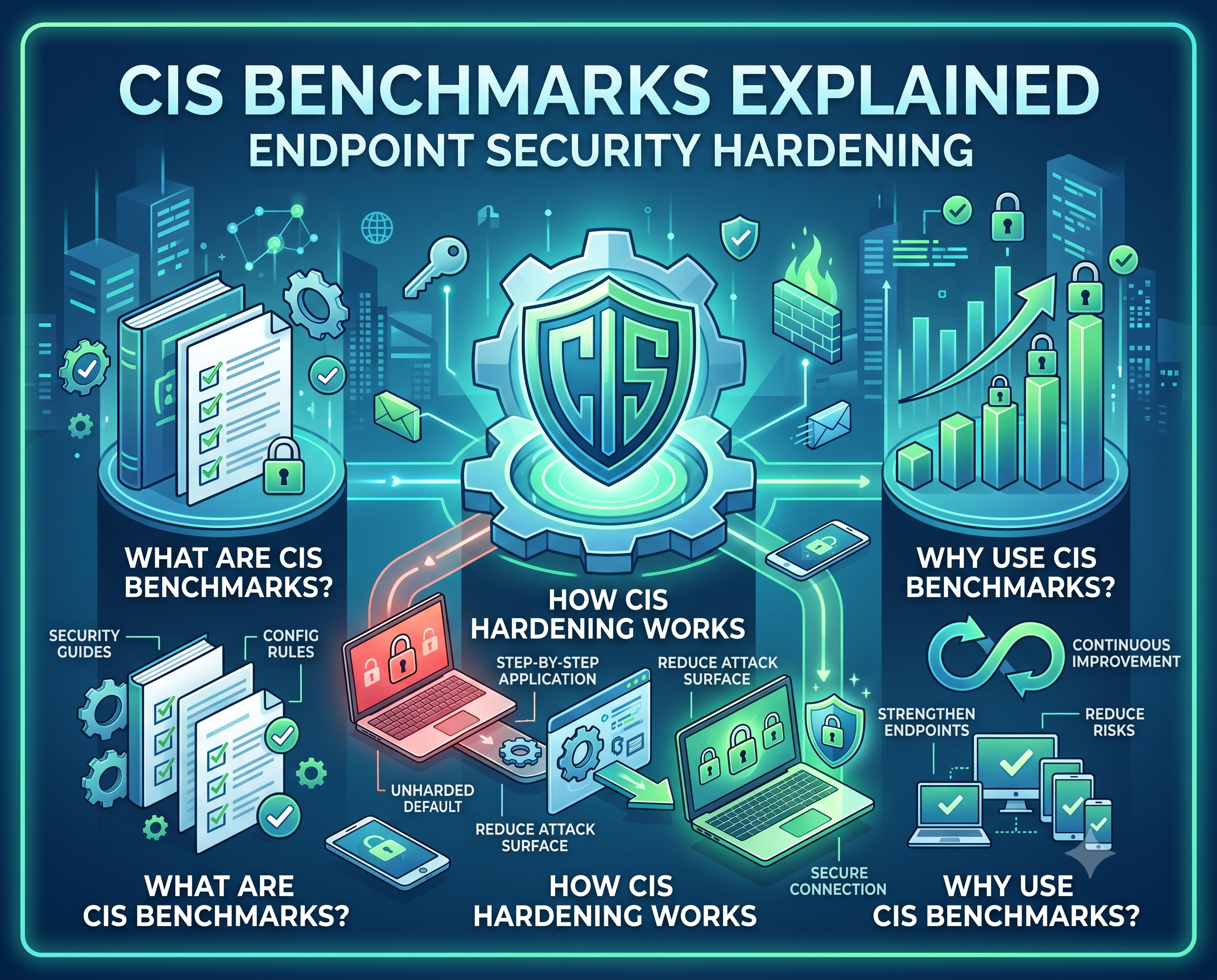
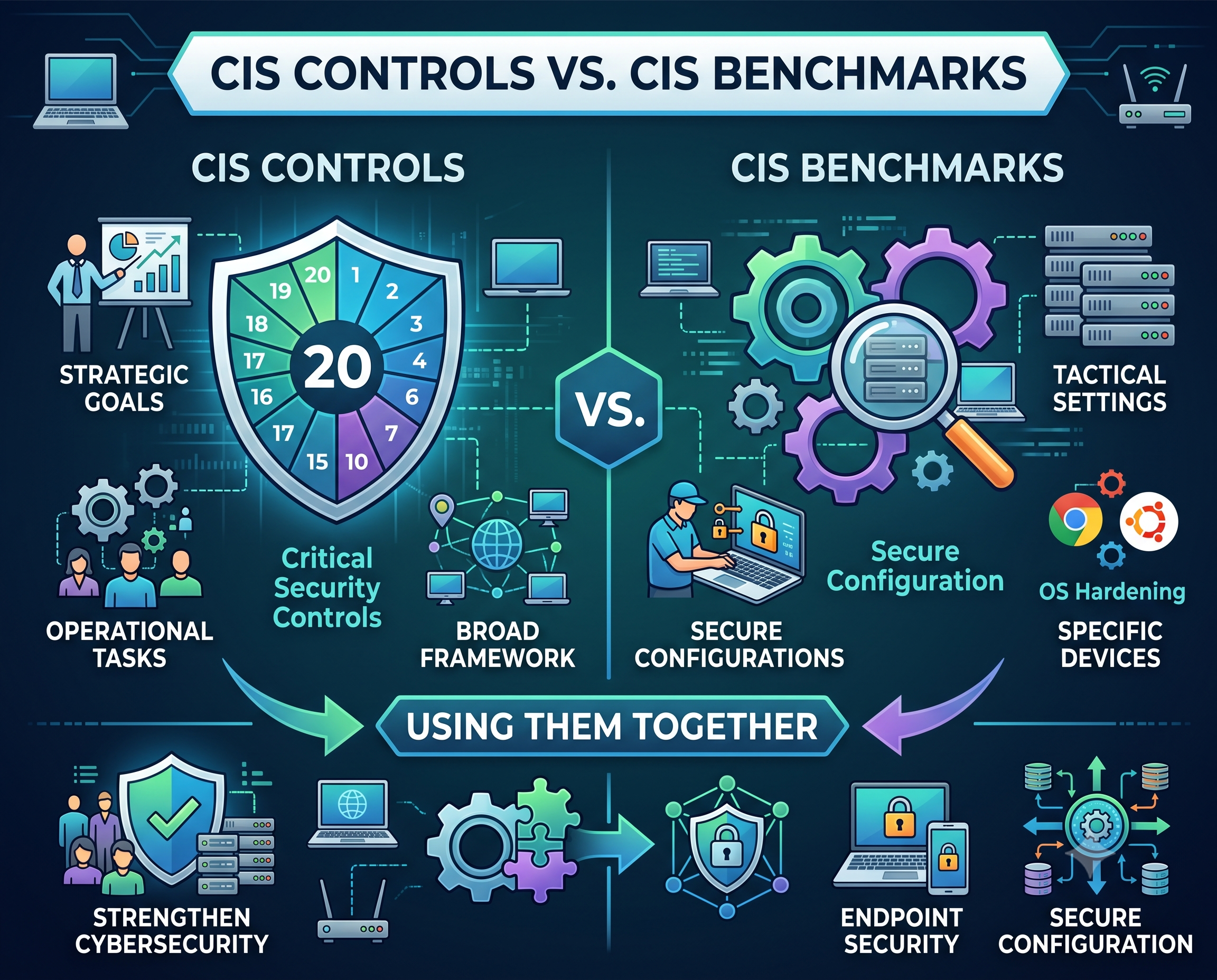
CIS Benchmarks provide secure configuration recommendations that organisations can use when establishing security baselines for supported technologies. Continuous monitoring can help organisations assess whether endpoints remain aligned with selected Benchmark recommendations after initial hardening.
This creates an ongoing compliance workflow rather than treating CIS compliance as a one-time configuration exercise.
- Select the appropriate CIS Benchmark
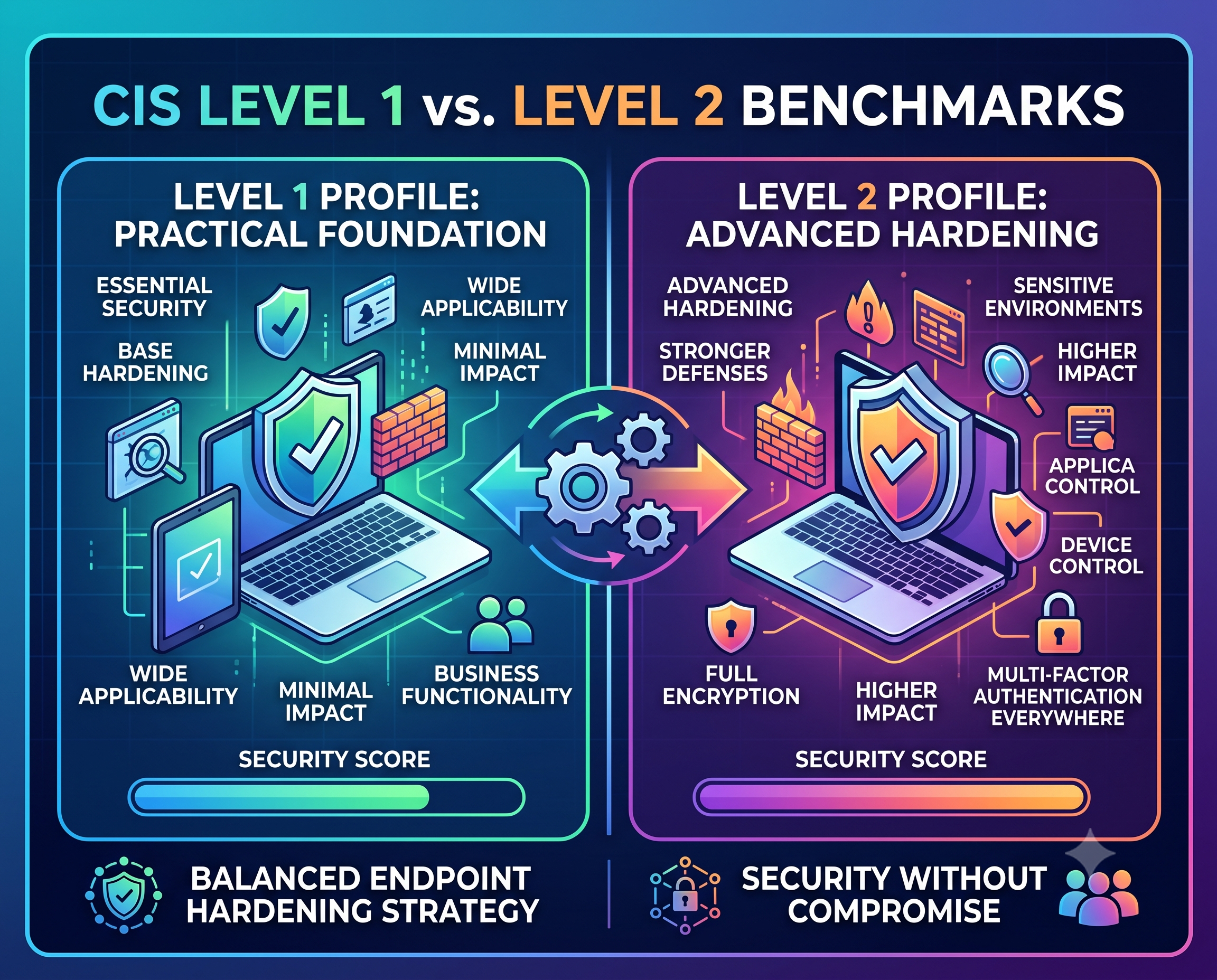
- Define applicable security profiles
- Assess endpoint configurations
- Identify failed recommendations
- Prioritise important deviations
- Remediate configuration issues
- Reassess the endpoint
- Track compliance over time
Organisations should also account for approved exceptions. Some systems may require configuration differences because of application compatibility, operational requirements, or other legitimate business constraints. These exceptions should be documented, reviewed, and monitored rather than simply ignored.
Continuous Security Control Monitoring vs Continuous Security Monitoring
Continuous security control monitoring and continuous security monitoring are related but not identical concepts.
- Security control monitoring focuses on whether defined controls and configurations remain effective
- Security monitoring can include broader activity such as events, alerts, logs, network activity, and threat indicators
- Control monitoring helps validate security posture
- Security monitoring helps identify potentially suspicious or malicious activity
- Control monitoring is closely connected to configuration and compliance
- Security monitoring can cover a broader detection and response function
An effective cybersecurity programme can use both approaches. Continuous security control monitoring helps ensure that preventive and configuration-based controls remain in place, while broader security monitoring helps identify suspicious activity and potential threats.
Why Continuous Security Control Monitoring Matters for Endpoint Security
Endpoints are frequently changed as part of normal business operations. New applications are installed, users receive additional privileges, configurations are modified, and systems are updated.
This operational flexibility can create security gaps if changes are not continuously evaluated against security requirements.
- Reduces visibility gaps between audits
- Detects configuration drift
- Improves endpoint security posture
- Supports continuous compliance
- Provides current security control status
- Helps prioritise remediation
- Creates historical evidence of security posture
- Reduces dependence on manual assessment
The objective is not to prevent all configuration changes. The objective is to ensure that security teams can identify important changes and determine whether those changes are acceptable.
How Continuous Monitoring Supports Security Assurance
Cybersecurity assurance requires more than proving that controls existed during a previous audit. Organisations need confidence that important controls continue to operate as intended.
Continuous security control monitoring contributes to assurance by providing evidence of current security state, identifying deviations, tracking remediation, and showing whether security controls remain aligned with organisational requirements.
- Define security requirements
- Establish approved security baselines
- Continuously assess relevant endpoints
- Detect deviations
- Prioritise risk
- Remediate security gaps
- Verify remediation
- Track security posture over time
This creates a repeatable feedback loop between security policy and actual endpoint configuration.
Centralised Monitoring Across Thousands of Endpoints
Manual security control verification becomes increasingly difficult as organisations grow. A security team may need to monitor hundreds or thousands of laptops, desktops, servers, and other managed systems across offices, remote locations, and distributed environments.
A centralised monitoring approach can provide a consolidated view of security control status across the environment.
- Number of compliant endpoints
- Number of non-compliant endpoints
- Failed security controls
- Affected devices
- Repeated configuration deviations
- Remediation status
- Security posture trends
- Exceptions requiring review
This allows security teams to focus attention on the systems and controls that require action instead of manually reviewing every endpoint.
Continuous Monitoring for Remote and Distributed Workforces
Remote and distributed endpoints create additional challenges for periodic security audits. Devices may spend significant amounts of time outside corporate offices and may connect from different networks and locations.
A continuous monitoring approach can provide greater visibility into endpoint security posture without depending entirely on periodic physical or network-based assessment activities.
This is particularly important for organisations with hybrid workforces, distributed branches, field teams, and large numbers of remote endpoints.
The Role of Automation in Continuous Security Control Monitoring
Automation is a major enabler of continuous monitoring. Without automation, repeatedly assessing large numbers of systems and tracking configuration changes can create significant operational overhead.
- Automated endpoint assessment
- Automated baseline comparison
- Automated finding collection
- Automated prioritisation
- Automated remediation workflows
- Automated verification
- Automated compliance reporting
- Automated security posture tracking
Automation should still operate within clearly defined policies and governance. High-impact changes may require approval or additional testing before remediation is applied.
Continuous Monitoring and Automated Remediation
Detection is only one part of the security control lifecycle. Once a deviation has been identified, organisations need a reliable way to investigate and resolve it.
Automated remediation can be used for selected controls where the desired corrective action is well understood and has been tested. After remediation, the endpoint should be reassessed to confirm that the expected state has been restored.
- Detect the failed control
- Identify affected endpoints
- Assess the risk
- Determine the approved remediation
- Apply remediation where appropriate
- Verify the resulting configuration
- Record the remediation outcome
- Continue monitoring for recurrence
This approach creates a closed-loop security process rather than a system that simply generates alerts.
Continuous Security Control Monitoring and Vulnerability Management
Vulnerability management and security control monitoring address different but complementary aspects of endpoint security.
Vulnerability management focuses primarily on identifying and reducing weaknesses associated with vulnerable software, operating systems, and applications. Security control monitoring focuses on whether security configurations and required controls remain in the expected state.
- Vulnerability management identifies vulnerable software and systems
- Control monitoring identifies configuration and control deviations
- Patch management helps remediate applicable software vulnerabilities
- Endpoint hardening reduces insecure configurations
- Continuous monitoring helps verify that required controls remain in place
Combining these capabilities gives security teams a broader understanding of endpoint risk.
Continuous Monitoring and Security Baseline Management
A security baseline defines the expected security configuration for a system, device group, or environment. Continuous monitoring provides a mechanism for checking whether endpoints continue to conform to that baseline.
Baselines should be versioned and reviewed as organisational requirements, technology, and threat conditions change.
- Define the baseline
- Test the baseline
- Deploy the baseline
- Monitor compliance
- Review deviations
- Approve justified exceptions
- Update the baseline when requirements change
A baseline should not become a static document that is never reviewed. It should evolve alongside the environment while maintaining clear governance.
What Metrics Should Organisations Track?
Metrics help security teams understand whether continuous monitoring is improving security posture and reducing persistent control failures.
- Overall endpoint compliance rate
- Number of failed security controls
- Number of critical control failures
- Mean time to remediate
- Number of recurring deviations
- Configuration drift rate
- Number of approved exceptions
- Remediation success rate
- Number of endpoints without recent assessment
- Security posture trend over time
Metrics should focus on actionable security outcomes rather than simply measuring the volume of alerts generated by a monitoring system.
Common Challenges in Continuous Security Control Monitoring
Implementing continuous monitoring can introduce operational and governance challenges. Organisations should address these issues during planning rather than treating monitoring as a purely technical deployment.
- Poor endpoint inventory
- Undefined security baselines
- Too many low-value alerts
- Uncontrolled automated remediation
- Insufficient exception management
- Lack of ownership for security controls
- Inconsistent endpoint configurations
- Incomplete assessment coverage
- Failure to verify remediation
- Outdated security policies
Best Practices for Continuous Security Control Monitoring
- Start with the most critical security controls rather than monitoring everything immediately
- Maintain an accurate and continuously updated endpoint inventory
- Use clearly defined and documented security baselines
- Align important configuration checks with recognised security guidance where appropriate
- Prioritise findings according to risk and business impact
- Separate detection from automated remediation when risk requires additional approval
- Test remediation actions before applying them broadly
- Track exceptions with owners and review dates
- Verify remediation instead of assuming that an action succeeded
- Measure recurring configuration drift and unresolved findings
- Review baselines periodically
- Use historical data to identify recurring security problems
How Cyber Auditor Can Support Continuous Security Control Monitoring
Cyber Auditor can support organisations that want to move from periodic endpoint assessments toward a more continuous approach to security posture management.
A centralised workflow can help security teams assess endpoint configurations, identify security control deviations, understand non-compliant systems, prioritise remediation, and verify improvements across the environment.
- Centralised endpoint security visibility
- Security configuration assessment
- Security baseline monitoring
- CIS Benchmark-oriented assessment
- Endpoint hardening support
- Configuration deviation detection
- Remediation workflows
- Security posture reporting
- Compliance visibility across endpoints
The value of continuous monitoring comes from connecting assessment, prioritisation, remediation, and verification into an ongoing security process rather than treating each audit as an isolated activity.
Periodic Audits and Continuous Monitoring Should Work Together
Moving toward continuous security control monitoring does not mean abandoning periodic audits. Both approaches serve important purposes.
- Periodic audits provide formal assessment and governance
- Continuous monitoring provides ongoing visibility
- Audits can validate the effectiveness of security programmes
- Continuous monitoring can identify deviations between audits
- Audits support compliance and assurance activities
- Continuous monitoring supports day-to-day security operations
The strongest model combines formal audits with continuous monitoring. Audits provide structured checkpoints, while continuous monitoring helps ensure that security posture does not significantly degrade between those checkpoints.
Continuous Security Control Monitoring Checklist
- Maintain an accurate endpoint inventory
- Identify critical security controls
- Define approved security baselines
- Map applicable controls to systems and devices
- Automate recurring configuration assessment
- Detect configuration drift
- Prioritise high-risk deviations
- Establish remediation workflows
- Verify remediation results
- Track exceptions
- Monitor compliance trends
- Review recurring failures
- Measure remediation performance
- Periodically review and update security baselines
Frequently Asked Questions
What is continuous security control monitoring?
Continuous security control monitoring is the ongoing assessment of security controls, configurations, and security baselines to identify deviations from an approved security posture.
How is continuous monitoring different from a security audit?
A security audit generally evaluates security posture during a defined assessment period, while continuous monitoring repeatedly evaluates selected controls over time and helps identify changes between formal audits.
Can continuous monitoring help with CIS compliance?
Yes. Continuous monitoring can repeatedly assess endpoint configurations against applicable CIS Benchmark recommendations and help identify when systems deviate from their approved security configuration.
What is configuration drift?
Configuration drift occurs when a system gradually moves away from its approved or intended configuration. Continuous monitoring can help detect this deviation and support remediation.
Can continuous monitoring automatically fix security issues?
It can support automated remediation for selected controls where the corrective action is well understood, tested, and appropriate. High-impact changes may require approval or additional safeguards.
Does continuous monitoring replace cybersecurity audits?
No. Continuous monitoring complements periodic audits by providing ongoing visibility into security posture between formal assessments.
What endpoints can be continuously monitored?
The specific endpoints depend on the monitoring platform and organisational environment. Common targets include managed Windows, Linux, and macOS systems, as well as other supported enterprise endpoints and servers.
Key Takeaways
- Periodic audits provide valuable but point-in-time visibility
- Continuous security control monitoring helps identify deviations between audits
- Configuration drift is a major reason for ongoing security assessment
- Security baselines define the expected state of endpoints
- CIS Benchmarks can help establish secure configuration requirements
- Automation makes continuous assessment more practical at scale
- Remediation should be followed by verification
- Exception management is important for operational environments
- Continuous monitoring and periodic audits should work together
- Real-time cybersecurity assurance requires ongoing visibility, not only occasional assessment
Conclusion
Periodic cybersecurity audits remain an important part of security governance, compliance, and assurance. However, modern endpoint environments change continuously, making it difficult for a scheduled assessment to provide a complete picture of security posture throughout the year.
Continuous security control monitoring provides a practical way to close this visibility gap. By continuously assessing security configurations, detecting configuration drift, identifying failed controls, prioritising risks, and verifying remediation, organisations can maintain a more current understanding of endpoint security posture.
The goal is not simply to run more security checks. The goal is to create an ongoing security assurance process in which security requirements are defined, endpoint configurations are continuously evaluated, deviations are addressed, and improvements are verified.
For organisations managing large and distributed endpoint environments, moving from periodic audits toward continuous security control monitoring can provide stronger visibility, faster identification of security gaps, and a more sustainable approach to maintaining secure and compliant endpoints.
Recommended Solution
See how MOBISEC solves this in practice
Topics