What Is MHA NISPG?
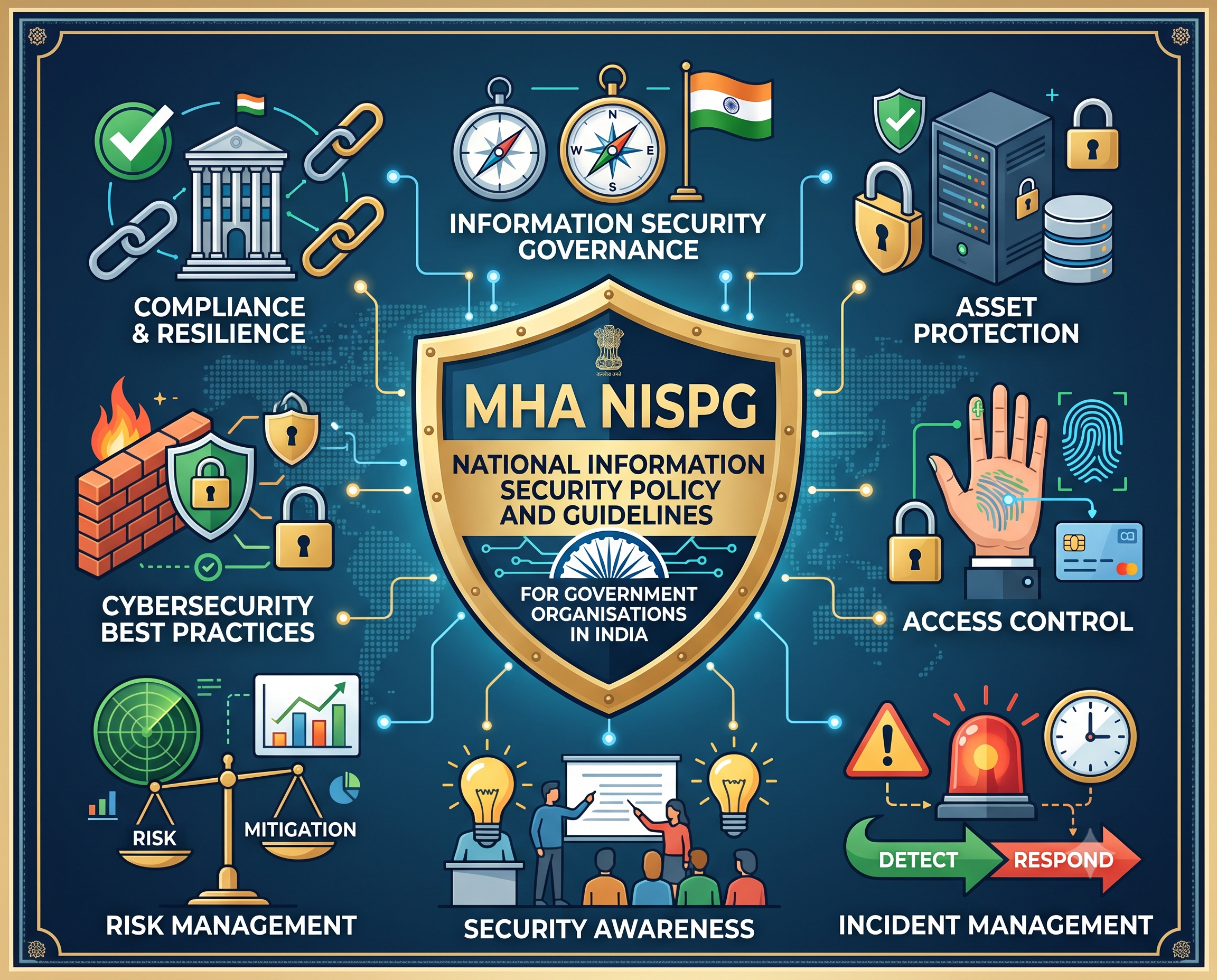
NISPG stands for National Information Security Policy and Guidelines. It is an information security policy and guidance framework associated with the Ministry of Home Affairs for strengthening information security and addressing cyber risks within the government environment.
The Ministry of Home Affairs Cyber and Information Security Division is responsible for matters relating to Cyber Security, Cyber Crime, National Information Security Policy and Guidelines and implementation of NISPG. MHA documentation also identifies NISPG 2019 as having been issued to help prevent information security breaches and cyber incidents.
NISPG provides a structured way for government organisations to approach information security by establishing security practices, responsibilities, controls and processes for protecting information and information systems.
Why Was NISPG Introduced?
Government organisations increasingly depend on information technology for administration, citizen services, communication, databases, financial operations and critical government functions.
As the dependence on digital systems increases, the impact of information security incidents also increases. A compromised government system can result in data exposure, service disruption, unauthorised access, operational disruption or compromise of sensitive information.
NISPG provides an information security foundation intended to help government organisations establish appropriate security practices and reduce information security risks.
- Protect government information
- Reduce information security breaches
- Improve protection of information systems
- Establish security responsibilities
- Strengthen security governance
- Improve cyber risk management
- Promote secure technology practices
- Improve incident preparedness
- Create security awareness
- Support continuous improvement
Who Is NISPG Relevant To?
NISPG is particularly relevant to government organisations and government departments that are responsible for information systems and information assets.
The MHA Cyber and Information Security Division specifically handles implementation of NISPG by government ministries and related government environments. Organisations should determine the exact NISPG requirements applicable to their specific department, system and operational environment rather than assuming that every organisation has identical obligations.
NISPG and Government Cybersecurity
NISPG should be viewed as part of a broader government information security ecosystem. It focuses on protecting information and information systems through governance, security controls, responsible use of technology and preparedness for security incidents.
The objective is not simply to deploy cybersecurity products. Effective information security requires policies, people, processes and technology to work together.
- Information security governance
- Risk management
- Asset management
- Access control
- Data protection
- Network security
- Endpoint security
- Application security
- Security monitoring
- Incident management
- Business continuity
- Security awareness
- Audit and assessment
Information Security Governance
Strong governance is the foundation of an effective information security programme. Government organisations should establish clear responsibility for information security and ensure that security decisions are aligned with organisational objectives.
Information security should not be treated as the responsibility of only the technical team. Department leadership, system owners, administrators, employees and other stakeholders all have responsibilities for protecting information.
- Define information security responsibilities
- Establish security policies
- Assign system and information owners
- Define accountability
- Review security risks
- Monitor compliance
- Provide appropriate security resources
- Review security incidents
- Update security practices
Information Security Policy
A formal information security policy provides the foundation for implementing security controls across an organisation.
The policy should explain how information is classified, protected, accessed, processed, transmitted and disposed of. It should also establish responsibilities for employees, administrators, contractors and other users.
Security policies should be reviewed periodically so that they remain aligned with changes in technology, threats, organisational requirements and applicable government directions.
Information Asset Management
An organisation cannot adequately protect information that it does not know exists. Asset management is therefore an important part of an information security programme.
Government organisations should maintain an understanding of their information assets, applications, databases, servers, endpoints, network infrastructure and other systems used to process or store information.
- Maintain an inventory of information assets
- Identify system owners
- Identify critical systems
- Identify sensitive information
- Document system dependencies
- Classify information
- Track hardware and software
- Identify unsupported systems
- Review assets periodically
- Remove or secure obsolete assets
Information Classification
Information should be protected according to its sensitivity, value and business or government importance.
Information classification helps determine which security controls should be applied to different categories of information.
- Identify sensitive information
- Define information classifications
- Assign information owners
- Apply appropriate access controls
- Restrict information sharing
- Protect sensitive information during transmission
- Protect stored information
- Control copying and distribution
- Define retention requirements
- Securely dispose of information when no longer required
Access Control Under Information Security Guidelines
Access control ensures that users can access only the information and systems required for their legitimate responsibilities.
Weak access controls can allow compromised accounts, insiders or attackers to gain access to sensitive government systems. Access should therefore be based on defined roles and business requirements.
- Use role-based access
- Follow least-privilege principles
- Review user accounts
- Control privileged accounts
- Remove unnecessary accounts
- Disable inactive accounts
- Review access periodically
- Separate administrative accounts
- Monitor sensitive access
- Maintain access records
Privileged Access Management
Administrative accounts have elevated permissions and therefore require stronger security controls.
A compromised administrator account can allow an attacker to modify systems, create accounts, access sensitive information or disable security controls.
- Maintain an inventory of privileged accounts
- Limit administrative privileges
- Use separate administrative accounts
- Apply stronger authentication
- Monitor administrator activity
- Review privileged access regularly
- Remove unnecessary privileges
- Log sensitive administrative actions
Authentication and Password Security
Authentication controls help ensure that only authorised users can access information systems.
Government organisations should establish strong authentication practices appropriate to the sensitivity and criticality of systems.
- Use strong passwords
- Protect authentication credentials
- Avoid password sharing
- Disable default credentials
- Review inactive accounts
- Use multi-factor authentication where appropriate
- Protect privileged accounts
- Monitor suspicious authentication activity
Network Security
Government information systems depend on network infrastructure to communicate between users, applications, databases, offices and external services.
Network security controls should reduce the risk of unauthorised access, interception, malicious traffic and lateral movement.
- Segment sensitive networks
- Control network access
- Secure internet-facing services
- Monitor network traffic
- Restrict unnecessary ports
- Protect network devices
- Secure remote access
- Review firewall rules
- Monitor suspicious connections
- Maintain network documentation
Endpoint Security
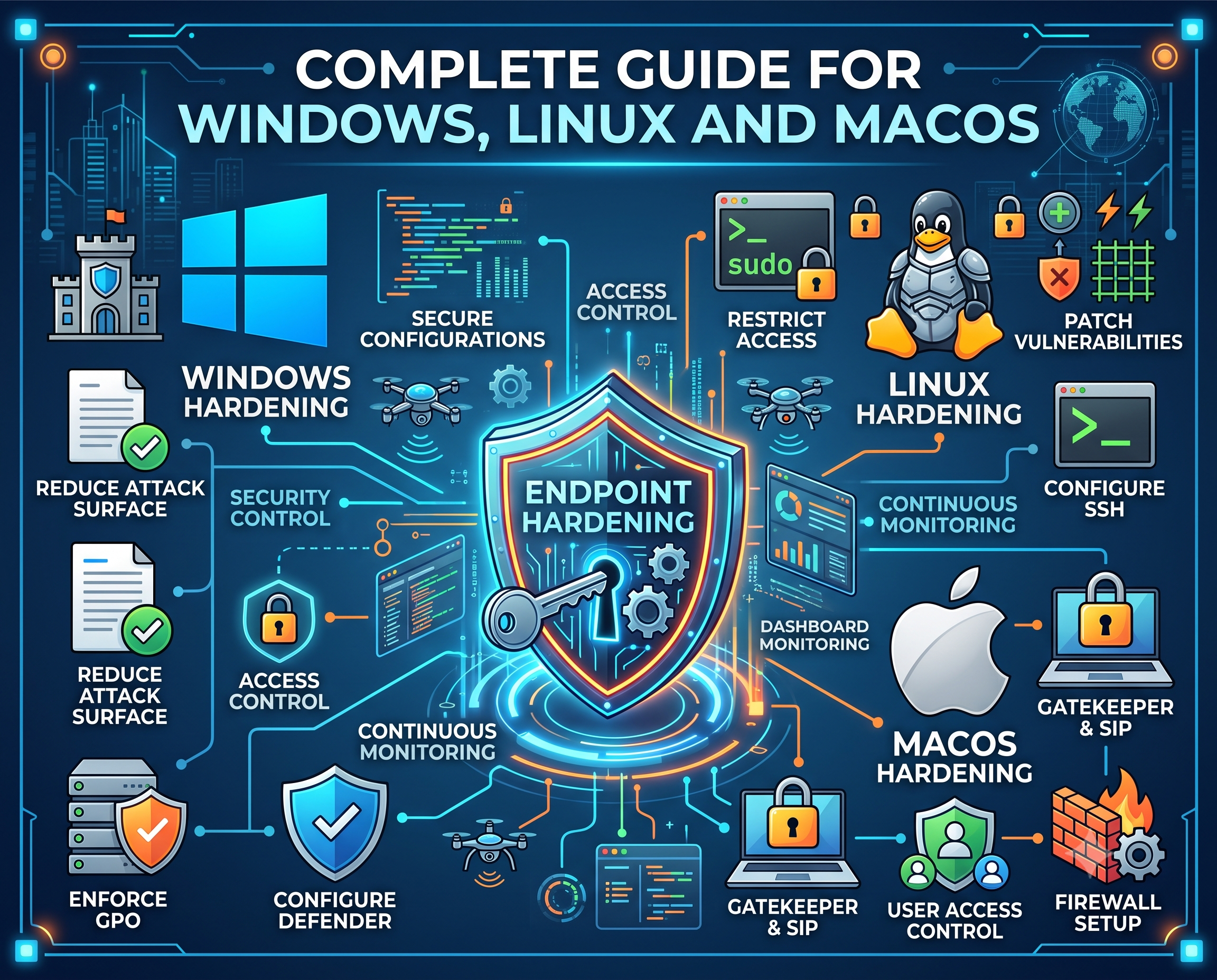
Endpoints such as desktops, laptops and other computing devices can become entry points for attackers.
Endpoint security should therefore form part of the organisation's overall information security programme.
- Maintain endpoint inventory
- Keep operating systems updated
- Apply security patches
- Deploy appropriate endpoint protection
- Restrict unauthorised software
- Control removable media
- Monitor endpoint activity
- Encrypt sensitive devices where appropriate
- Secure remote devices
- Remove unsupported software
Application Security
Applications that process government information should be developed and maintained with security considerations throughout their lifecycle.
Security should be considered during requirements, design, development, testing, deployment and maintenance.
- Perform security requirements analysis
- Use secure development practices
- Validate user input
- Protect authentication
- Protect sessions
- Implement appropriate access control
- Conduct vulnerability assessments
- Perform security testing
- Remediate identified vulnerabilities
- Review applications after major changes
Vulnerability Management
Cybersecurity vulnerabilities can provide attackers with opportunities to compromise government systems. Vulnerability management should therefore be a continuous process.
Organisations should identify vulnerabilities, assess their severity, prioritise remediation and verify that corrective actions have been completed.
- Discover systems and applications
- Identify vulnerabilities
- Assess risk and severity
- Prioritise vulnerabilities
- Apply patches or compensating controls
- Document remediation
- Retest corrected systems
- Track unresolved risks
- Review recurring vulnerabilities
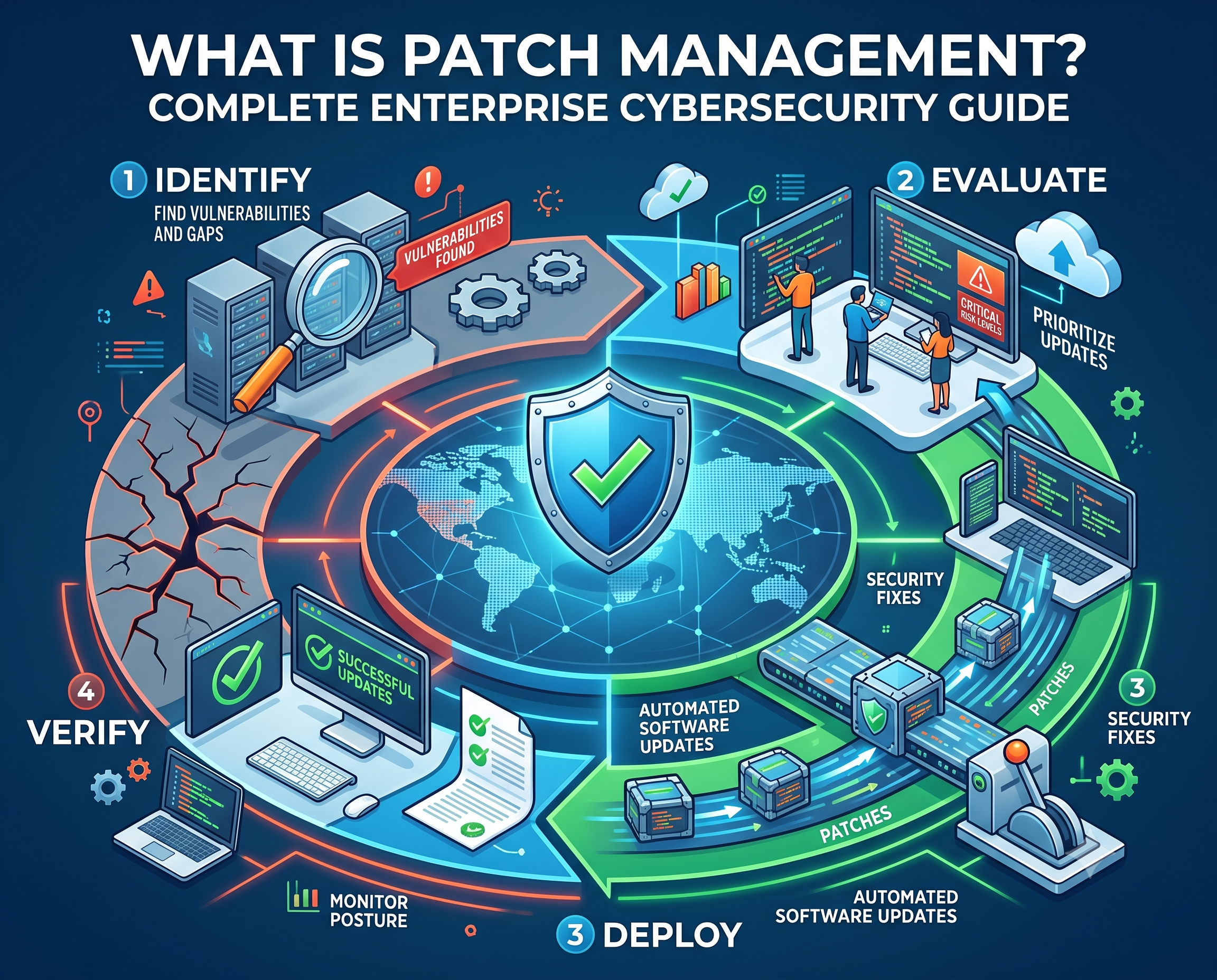
Patch Management
Security patches address known vulnerabilities and reduce exposure to attacks. Organisations should maintain a structured process for identifying, testing and deploying relevant security updates.
- Monitor vendor security updates
- Identify affected systems
- Prioritise critical patches
- Test updates where required
- Deploy patches within defined timelines
- Verify successful installation
- Track failed updates
- Monitor unsupported systems
- Document exceptions
Security Monitoring
Security monitoring helps organisations detect suspicious activities that may indicate unauthorised access, malware, data theft or other security incidents.
Monitoring should focus on systems and events that are important to the organisation's security posture.
- Monitor authentication events
- Monitor privileged activity
- Monitor critical systems
- Monitor network activity
- Monitor security alerts
- Review suspicious behaviour
- Maintain relevant logs
- Investigate security events
- Escalate significant incidents
Logging and Audit Trails
Security logs provide evidence of activity occurring within information systems. They can help organisations detect attacks, investigate incidents and understand how an event occurred.
Logs should be protected against unauthorised modification and retained according to organisational, operational and applicable regulatory requirements.
- Authentication logs
- Administrative activity logs
- System logs
- Application logs
- Network security logs
- Security alerts
- Configuration changes
- Incident-related records
- Log access records
Incident Response Under NISPG
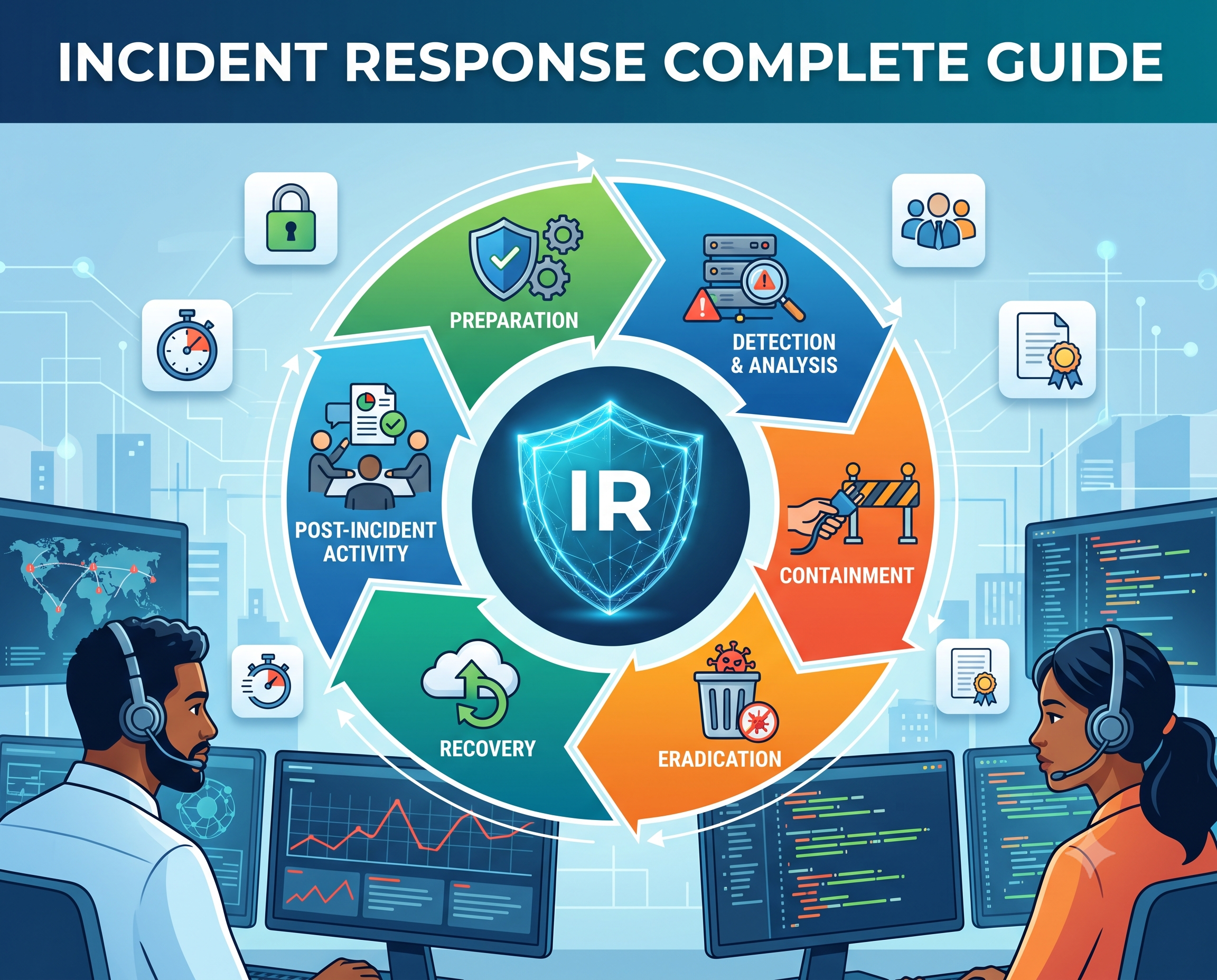
Information security incidents should be handled through a defined incident response process. Organisations should be prepared to identify, analyse, contain, eradicate and recover from security incidents.
An incident response plan should clearly identify responsibilities, escalation procedures, communication channels and recovery processes.
- Detect the incident
- Validate the security event
- Classify the incident
- Identify affected systems
- Contain the incident
- Investigate the cause
- Remove malicious activity
- Restore affected systems
- Validate system security
- Document the incident
- Implement corrective actions
- Review lessons learned
Cyber Incident Preparedness
Effective incident response begins before an attack occurs. Organisations should maintain the people, processes, technology and information needed to respond quickly.
- Maintain an incident response plan
- Define incident categories
- Assign response responsibilities
- Maintain escalation contacts
- Prepare investigation procedures
- Maintain relevant logs
- Protect evidence
- Conduct response exercises
- Review previous incidents
- Update response procedures
Data Security
Protecting information is a central objective of information security. Government organisations may handle personal information, operational information, confidential records and other sensitive data.
Data security controls should protect information from unauthorised access, modification, disclosure, destruction and loss.
- Classify sensitive data
- Restrict access
- Protect data during transmission
- Protect stored data
- Monitor sensitive-data access
- Secure databases
- Control data transfers
- Protect backups
- Control removable media
- Securely dispose of sensitive information
Encryption and Cryptographic Protection
Encryption can reduce the impact of unauthorised access by protecting information while it is stored or transmitted.
Organisations should establish appropriate cryptographic standards and manage encryption keys securely.
- Protect sensitive information
- Use appropriate encryption mechanisms
- Secure communications
- Protect cryptographic keys
- Restrict access to keys
- Rotate keys where required
- Monitor certificate validity
- Avoid obsolete cryptographic mechanisms
Email and Internet Security
Email and internet services are common attack vectors for phishing, malware, credential theft and social engineering.
Security controls should reduce the likelihood that malicious content reaches users or that users unintentionally expose organisational information.
- Use email security controls
- Filter malicious attachments
- Block suspicious links
- Protect email credentials
- Monitor suspicious activity
- Train users to identify phishing
- Restrict risky downloads
- Secure web browsing
- Report suspicious messages
Security Awareness and User Training
Employees are an important component of information security. A technically secure environment can still be compromised through phishing, social engineering, weak passwords or accidental disclosure.
Security awareness should therefore be continuous and relevant to the responsibilities of different users.
- Information security awareness
- Phishing awareness
- Password security
- Social engineering awareness
- Secure remote working
- Data handling
- Incident reporting
- Removable media security
- Acceptable technology use
- Administrator security awareness
Third Party and Outsourced Service Security
Government organisations may depend on vendors, contractors, cloud providers, managed service providers and other external parties.
Third-party relationships can introduce additional security risks because external personnel and systems may have access to organisational information or infrastructure.
- Assess vendor security risks
- Define security responsibilities
- Control third-party access
- Include security requirements in contracts
- Review vendor access
- Monitor critical service providers
- Protect shared information
- Manage vendor accounts
- Review third-party incidents
- Plan for service termination
Physical and Environmental Security
Information security also depends on protecting physical infrastructure. Servers, network equipment, storage systems and other technology assets should be protected from unauthorised physical access and environmental threats.
- Restrict access to server rooms
- Maintain visitor controls
- Protect network equipment
- Monitor physical access
- Protect power infrastructure
- Maintain environmental controls
- Secure backup media
- Protect equipment during relocation
- Maintain physical asset records
Backup and Recovery
Backups provide an important layer of protection against accidental deletion, hardware failure, system corruption and cyber incidents.
Backups should be protected against unauthorised access and regularly tested to confirm that information can actually be recovered.
- Identify critical information
- Define backup requirements
- Protect backup copies
- Restrict backup access
- Monitor backup jobs
- Test restoration
- Maintain appropriate retention
- Protect offline or isolated backups where appropriate
- Document recovery procedures
Business Continuity and Disaster Recovery
Information security incidents can affect the availability of critical government services. Business continuity and disaster recovery planning help organisations maintain or restore important operations during disruptions.
Plans should identify critical services, dependencies, recovery priorities, responsible teams and recovery procedures.
- Identify critical services
- Identify supporting systems
- Assess disruption scenarios
- Define recovery priorities
- Establish recovery procedures
- Maintain backup infrastructure
- Test recovery processes
- Conduct exercises
- Document test results
- Remediate identified gaps
Risk Management Under NISPG
Information security risks should be identified and managed according to their potential impact on organisational operations and information assets.
Risk management should not be a one-time exercise. Technology environments and cyber threats change continuously, requiring periodic reassessment.
- Identify information assets
- Identify threats
- Identify vulnerabilities
- Assess likelihood
- Assess potential impact
- Determine risk level
- Assign risk ownership
- Implement controls
- Monitor residual risk
- Review risks periodically
Security Assessment and Audit
Security assessments and audits provide assurance that information security policies and controls are being implemented effectively.
An assessment can identify gaps between documented policies and actual security practices.
- Review security policies
- Review asset inventory
- Assess access controls
- Review vulnerability management
- Review patch management
- Review logging
- Assess incident response
- Review backup and recovery
- Assess third-party security
- Review security awareness
- Track audit findings
- Verify remediation
NISPG and CERT-In Requirements
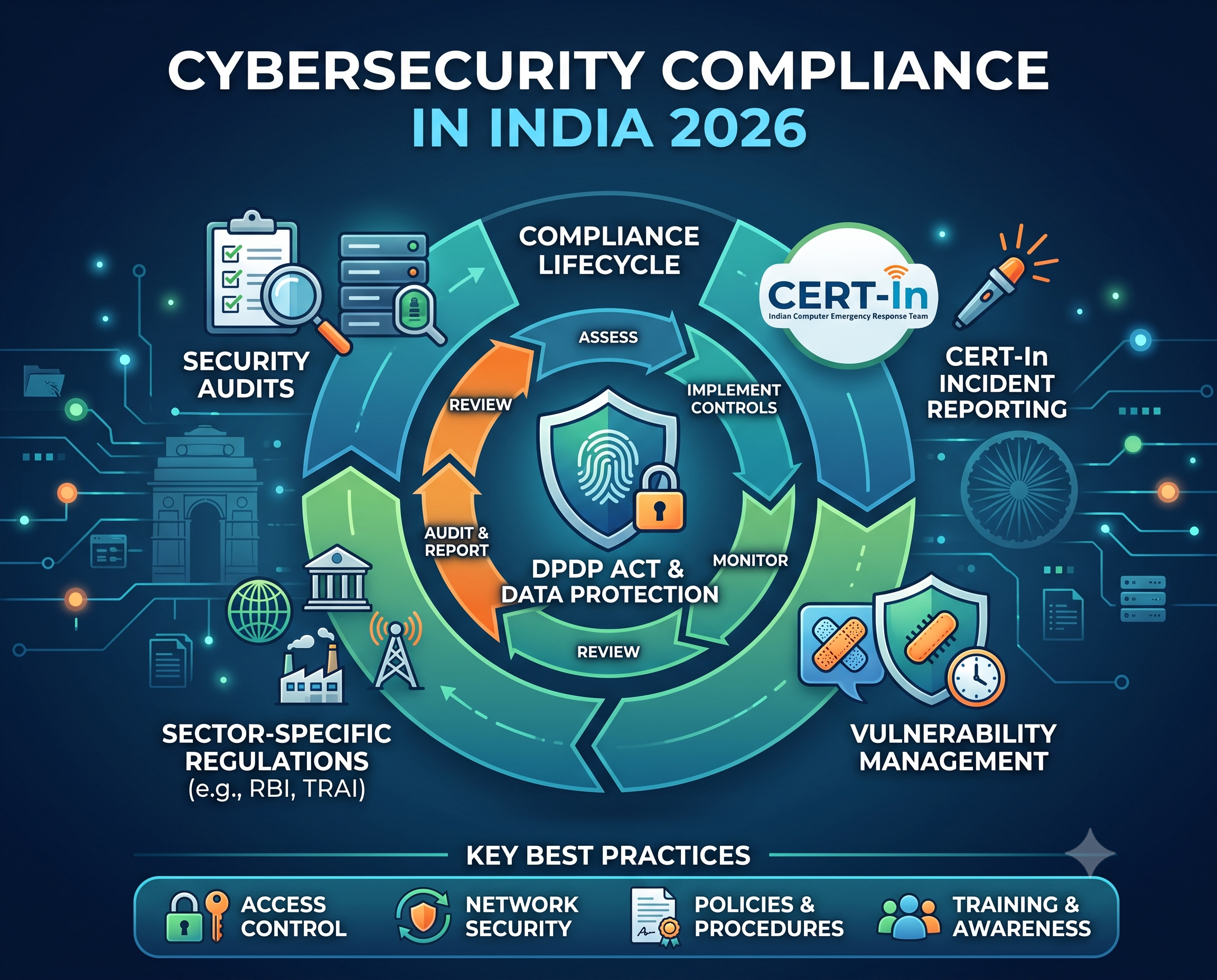
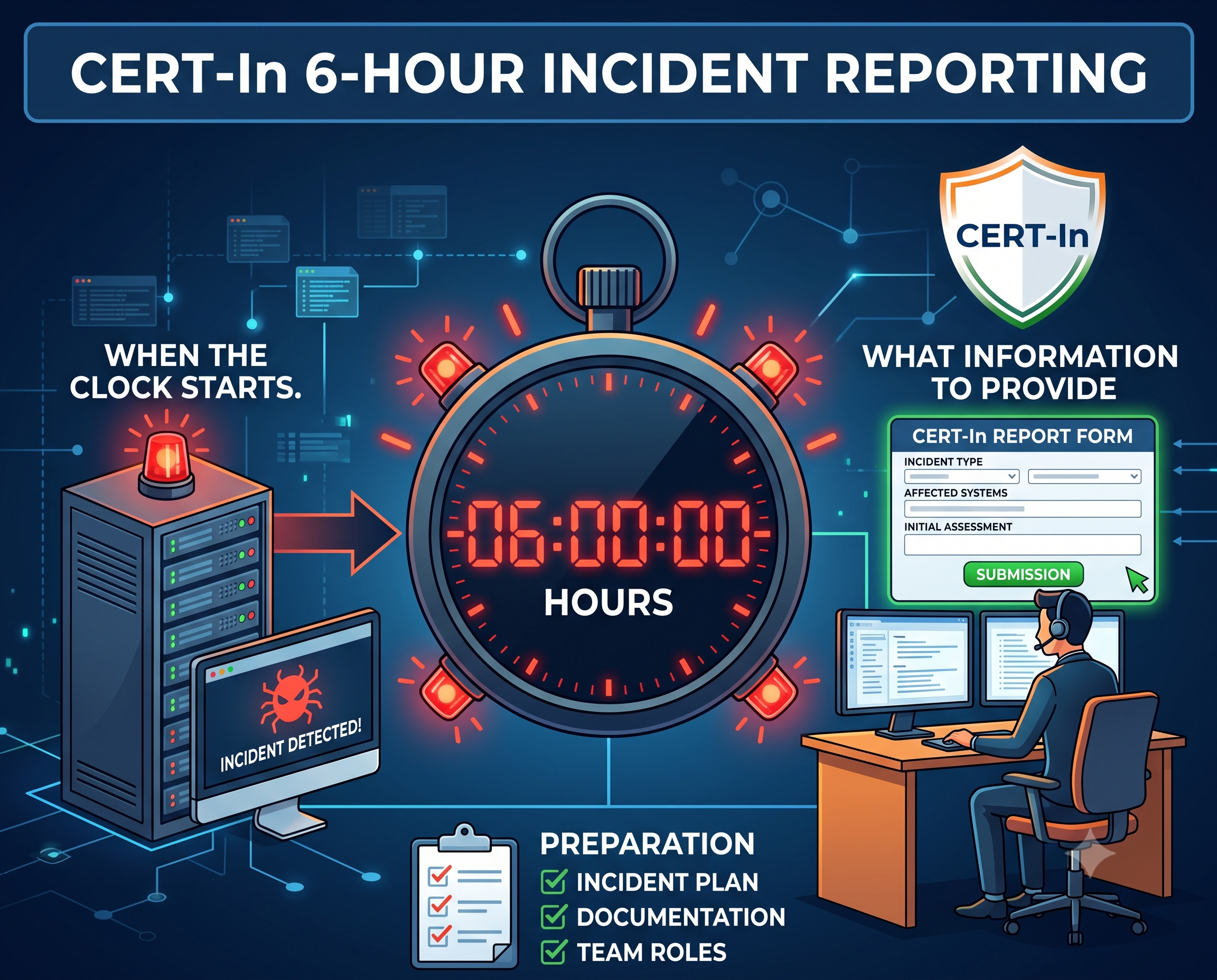
NISPG should not be treated as a replacement for other applicable Indian cybersecurity requirements. Government organisations may also need to consider CERT-In directions and other applicable policies, standards and sector-specific requirements.
MHA's information security guidance should therefore be mapped with the organisation's broader cybersecurity and incident management framework.
A coordinated compliance programme can help avoid disconnected security processes and provide a common view of risks, controls and responsibilities.
NISPG and Cybersecurity Frameworks
Organisations can use established security frameworks and standards to strengthen implementation of NISPG-related security practices.
Frameworks such as ISO 27001 and recognised security-control frameworks can provide structured approaches to governance, risk management, access control, security monitoring and continuous improvement. However, using a framework does not automatically establish compliance with NISPG or any specific Indian government requirement.
NISPG Implementation Checklist
- Identify applicable NISPG requirements
- Establish information security governance
- Assign information security responsibilities
- Maintain information asset inventory
- Classify sensitive information
- Identify critical systems
- Establish access control
- Protect privileged accounts
- Strengthen authentication
- Implement vulnerability management
- Maintain patch management
- Secure applications
- Protect networks and endpoints
- Enable appropriate security logging
- Implement security monitoring
- Maintain incident response procedures
- Protect backups
- Test recovery procedures
- Assess third-party risks
- Conduct security awareness training
- Perform security assessments
- Track security findings
- Review and update policies
Common Information Security Gaps
Organisations may have cybersecurity technologies deployed but still have weaknesses in governance, processes and operational security.
- Incomplete asset inventory
- Unclear information ownership
- Excessive user privileges
- Unmanaged privileged accounts
- Weak authentication
- Unsupported systems
- Unpatched vulnerabilities
- Poor log management
- Insufficient security monitoring
- Incomplete incident response procedures
- Untested backups
- Outdated recovery procedures
- Weak vendor controls
- Insufficient security awareness
- Missing security documentation
- Unresolved audit findings
How to Implement NISPG Security Practices
- Identify the systems and information that require protection
- Determine the applicable NISPG and government security requirements
- Establish information security governance
- Assign information and system owners
- Perform an information security risk assessment
- Classify information assets
- Review access controls
- Assess technical vulnerabilities
- Implement security controls
- Establish security monitoring
- Create and test incident response procedures
- Review backup and disaster recovery capabilities
- Assess third-party security
- Conduct security assessments and audits
- Document gaps and risks
- Prioritise remediation
- Track corrective actions
- Review the security programme periodically
Frequently Asked Questions
What does NISPG stand for?
NISPG stands for National Information Security Policy and Guidelines.
What is MHA NISPG?
MHA NISPG refers to the National Information Security Policy and Guidelines associated with the Ministry of Home Affairs and its Cyber and Information Security Division. MHA identifies NISPG and its implementation among the responsibilities of the Cyber and Information Security Division.
Who is NISPG intended for?
NISPG is primarily relevant to government organisations and government information systems. The exact implementation requirements should be determined according to the applicable government organisation, system and security environment.
Is NISPG a cybersecurity product?
No. NISPG is an information security policy and guidelines framework. It provides direction for establishing and improving information security practices rather than being a cybersecurity software product.
Is NISPG the same as CERT-In guidelines?
No. NISPG and CERT-In requirements are separate government cybersecurity instruments with different roles. Organisations should determine which requirements apply to their systems and map them together as part of a broader cybersecurity programme.
Does NISPG require cybersecurity audits?
Security assessment and audit are important mechanisms for validating information security controls. The exact audit and assessment obligations should be determined from the applicable NISPG requirements and the organisation's specific government environment.
Why is information asset inventory important for NISPG?
An accurate asset inventory helps an organisation understand what information, systems and infrastructure need protection. It also supports risk assessment, vulnerability management, access control, monitoring and incident response.
How does NISPG help prevent cyber incidents?
NISPG promotes structured information security practices covering governance, risk management, access control, technical security, awareness, monitoring, incident preparedness and other security measures. These practices help reduce security weaknesses and improve an organisation's ability to respond to incidents.
Key Takeaways
- NISPG stands for National Information Security Policy and Guidelines
- MHA's Cyber and Information Security Division handles matters relating to NISPG and its implementation
- NISPG is particularly relevant to government organisations and government information systems
- Information security requires governance, people, processes and technology
- Asset inventory and information classification provide the foundation for security
- Access control and privileged-account management are critical
- Vulnerability and patch management should be continuous
- Security logging and monitoring support detection and investigation
- Incident response should be planned and tested
- Backups and disaster recovery support operational resilience
- Third-party security should be managed
- Security awareness is an important part of cyber hygiene
- Security assessments help identify and remediate gaps
- NISPG should be considered alongside other applicable Indian cybersecurity requirements
Conclusion
MHA NISPG provides an important information security foundation for government organisations in India. Its focus on information security policy, governance, risk management, protection of information assets, access control, security awareness and incident preparedness reflects the need for a structured approach to government cybersecurity.
Effective implementation should not be treated as a one-time compliance exercise. Government organisations need to continuously identify information security risks, strengthen technical controls, monitor systems, train users, test incident response and validate recovery capabilities.
The strongest approach is to integrate NISPG practices into the organisation's wider cybersecurity programme while also considering applicable CERT-In requirements, sector-specific requirements and other government security policies.
As government services become increasingly digital, maintaining strong information security governance and continuously improving cyber resilience are essential for protecting information, systems and public services.
Recommended Solution
See how MOBISEC solves this in practice
Topics