Why Continuous Endpoint Security Monitoring Matters
Endpoints are one of the most important components of an organisation's technology environment. Laptops, desktops, workstations, and servers regularly change as users, administrators, applications, and operating systems interact with them.
An endpoint that is securely configured today may become less secure tomorrow because of a configuration change, software installation, policy modification, disabled security control, or other operational activity.
This is why endpoint security cannot depend entirely on a one-time audit or initial hardening exercise. Organisations need continuous visibility into important security controls so that deviations can be detected and addressed before they create larger security problems.
Continuous endpoint monitoring helps security teams answer important questions: Are endpoints still following the approved security baseline? Are critical controls enabled? Has configuration drift occurred? Are security policies being maintained? Are previously remediated findings returning?
What Should Endpoint Security Monitoring Measure?
Effective endpoint monitoring should focus on security controls that directly influence the system's attack surface, access security, configuration, compliance, and ability to detect suspicious activity.
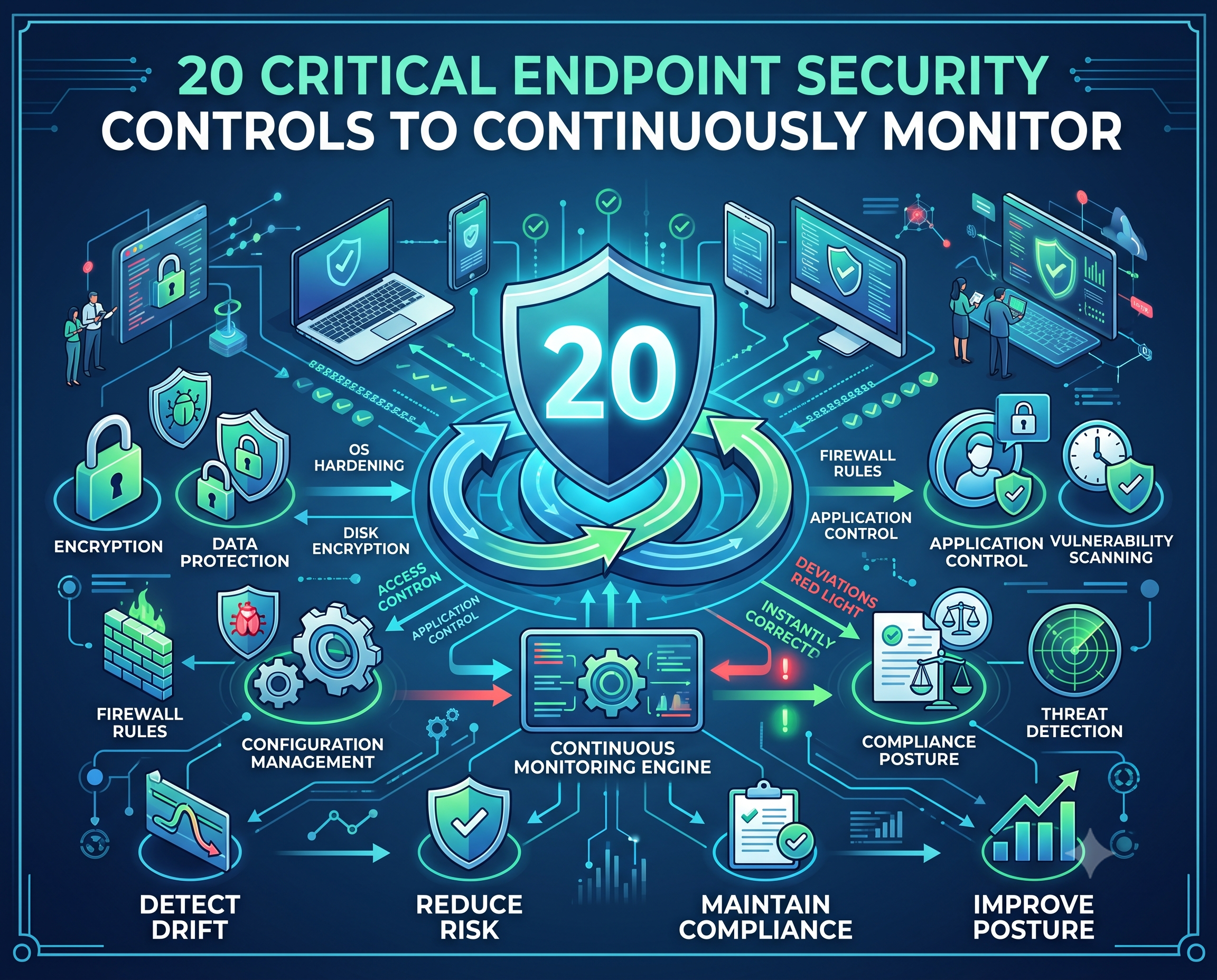
The exact controls will vary depending on the operating system, business role, regulatory requirements, and security architecture. However, the following 20 controls provide a practical foundation for continuous endpoint security monitoring.
Firewall Configuration
Host-based firewalls help control network traffic entering and leaving endpoints. Security teams should continuously monitor whether firewall protection is enabled and whether important firewall policies remain aligned with the approved security baseline.
- Firewall enabled status
- Inbound rules
- Outbound rules
- Unexpected rule changes
- Unapproved exceptions
- Firewall policy compliance
Unexpected firewall changes can increase an endpoint's network exposure and should be investigated according to organisational policy.
2. Antivirus and Endpoint Protection
Endpoint protection controls should be monitored to ensure that security software remains installed, active, and configured according to organisational requirements.
- Security software availability
- Protection status
- Policy configuration
- Protection service status
- Security engine status
- Unauthorised changes
Monitoring these controls helps identify endpoints that may have lost an important layer of protection.
3. Security Updates and Patch Status
Unpatched operating systems and applications can leave known security weaknesses unresolved. Continuous monitoring should therefore track whether endpoints are receiving required security updates.
- Operating system patch status
- Security update status
- Missing critical updates
- Patch age
- Update failures
- Unsupported software versions
Patch monitoring should be considered alongside vulnerability management because patch status alone does not represent the complete security condition of an endpoint.
4. Password and Authentication Policies
Authentication controls determine how users access endpoints and can significantly influence the risk associated with compromised credentials.
Organisations should monitor approved authentication settings and identify deviations from security requirements.
- Password policy
- Password length requirements
- Password complexity
- Account lockout settings
- Password expiration requirements where applicable
- Authentication configuration
5. Local Administrator Privileges
Excessive administrative privileges can increase the potential impact of compromised accounts or malicious software.
Security teams should monitor which accounts have administrative privileges and whether those privileges match approved access requirements.
- Local administrator membership
- Unexpected privileged accounts
- Changes to privileged groups
- Unapproved privilege escalation
- Administrative account status
Changes to privileged access should receive appropriate scrutiny because administrative permissions can significantly increase endpoint risk.
6. User Account Configuration
Endpoint user accounts should be monitored for unexpected changes that could weaken access security.
- Account creation
- Account deletion
- Account enablement
- Account disablement
- Unexpected account changes
- Inactive accounts
- Privileged account modifications
Continuous account monitoring can help organisations identify changes that do not align with established endpoint security policies.
7. Remote Access Configuration
Remote access technologies can provide legitimate administrative and business functionality but can also increase exposure when incorrectly configured.
Security teams should monitor approved remote access controls and identify unexpected changes.
- Remote Desktop configuration
- Remote access status
- Allowed users
- Remote access policies
- Network-level authentication settings
- Unauthorised remote access configuration
8. Security Auditing
Security auditing provides visibility into important system and user activities. Organisations should monitor whether required audit policies remain enabled and configured correctly.
- Audit policy status
- Authentication event auditing
- Account management auditing
- Privilege-related events
- Policy change auditing
- System event auditing
If important auditing is disabled or incorrectly configured, security teams may lose valuable visibility during investigations.
9. Logging Configuration
Endpoint logs provide information that can support security monitoring, troubleshooting, investigations, and compliance activities.
Continuous monitoring should verify that required logging controls remain enabled and that important log sources are configured according to organisational requirements.
- System logging
- Security logs
- Application logs
- Log generation
- Log retention configuration
- Logging policy compliance
10. Security Baseline Compliance
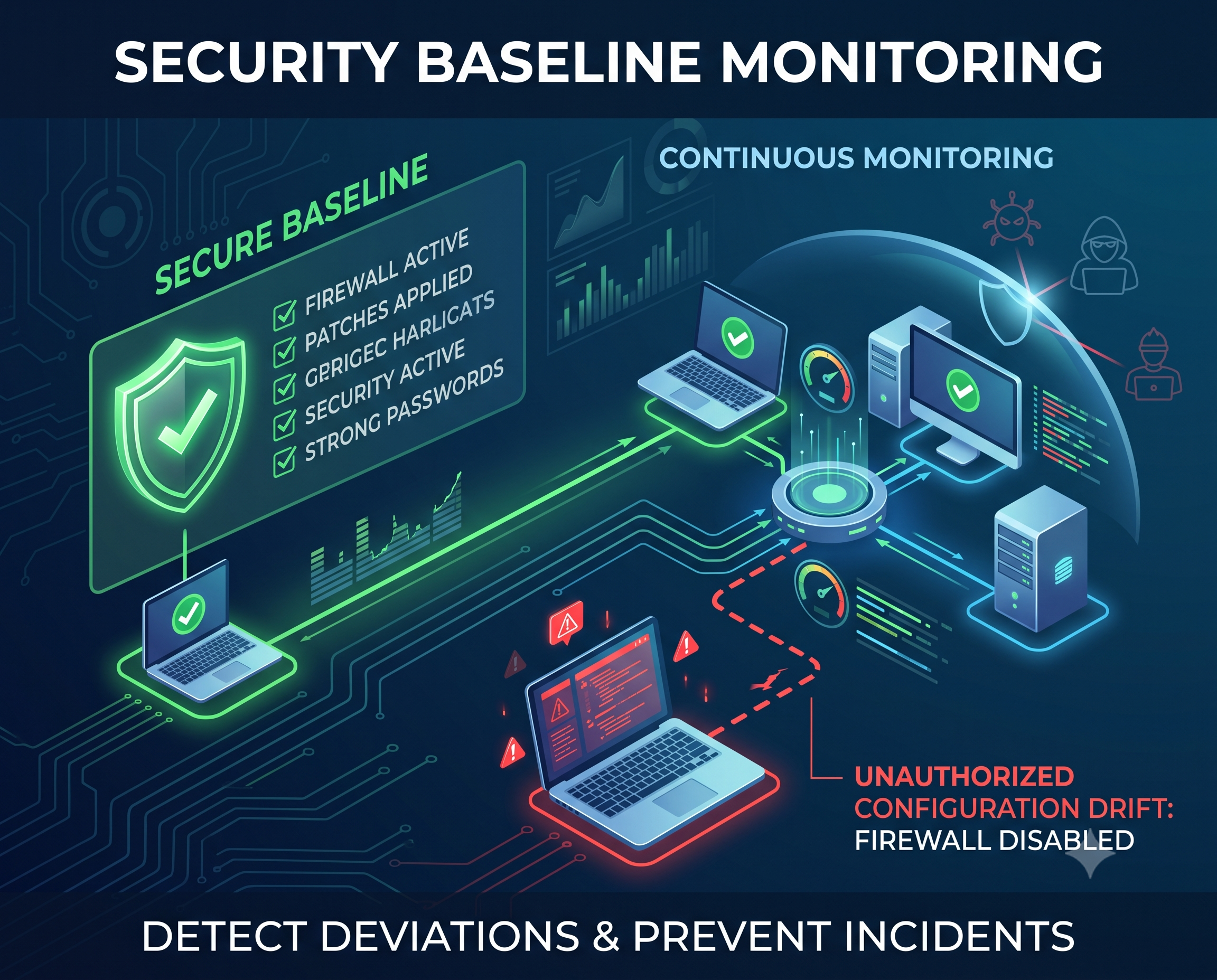
A security baseline defines the expected configuration for an endpoint or endpoint group. Continuous baseline monitoring identifies when the actual system configuration moves away from the approved state.
Baseline monitoring should cover important security requirements rather than relying on a single configuration value.
- Baseline compliance status
- Failed security controls
- New deviations
- Resolved deviations
- Repeated deviations
- Endpoint compliance percentage
A continuously monitored baseline provides a foundation for detecting configuration drift.
11. Configuration Drift
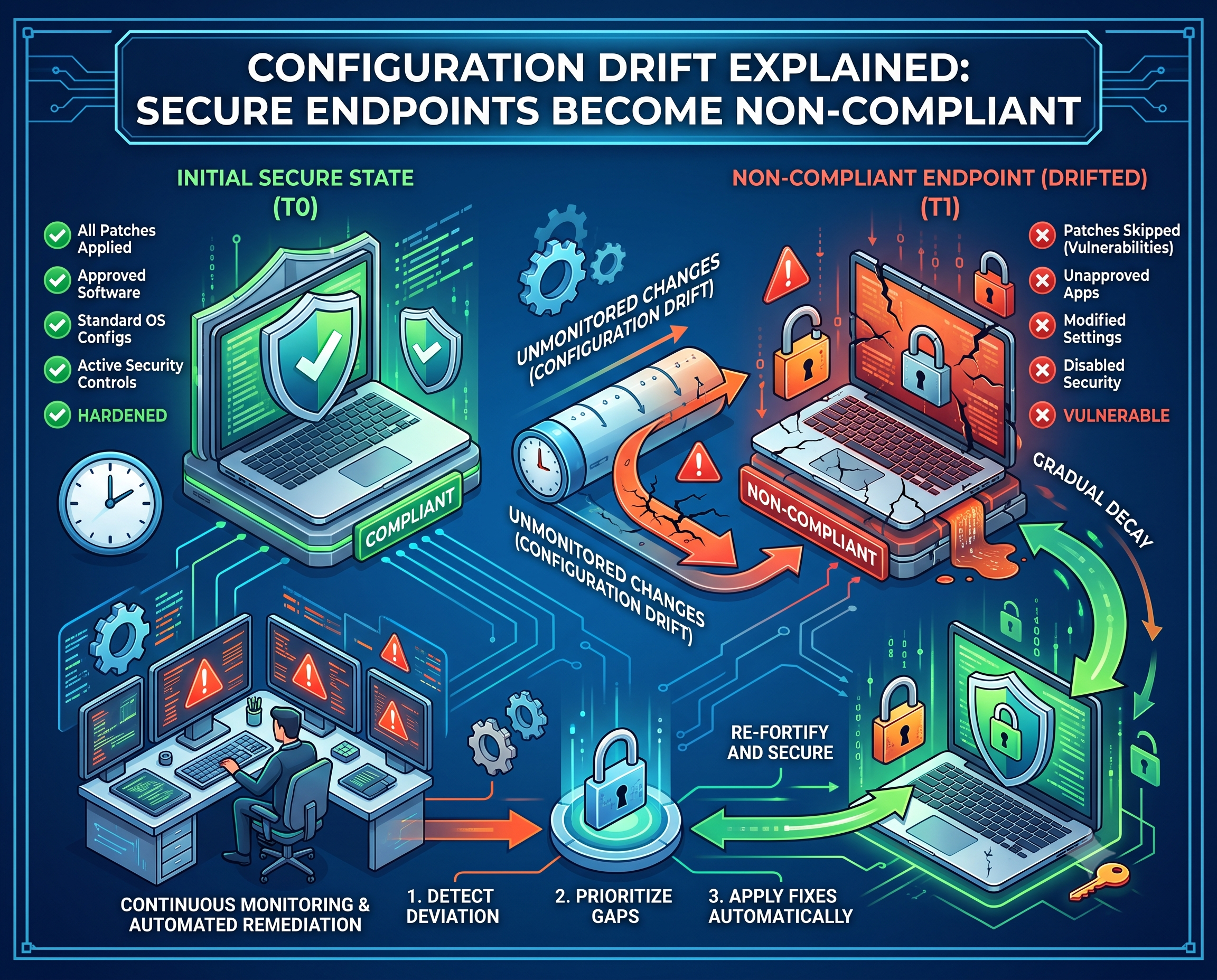
Configuration drift occurs when an endpoint gradually moves away from its approved security configuration.
Drift can happen because of administrator changes, application installations, policy changes, troubleshooting activities, software updates, or other operational events.
- New configuration deviations
- Previously remediated settings
- Repeated deviations
- Unexpected policy changes
- Changes to security controls
- Changes from approved baseline
Monitoring configuration drift helps organisations identify security weaknesses that may develop after an endpoint has been hardened.
12. Operating System Security Configuration
Operating system security settings form the foundation of endpoint protection. Organisations should continuously assess important operating system configurations against their approved security baseline.
- Security policies
- System security settings
- Privilege-related configurations
- Network security settings
- System services
- Operating system security options
The exact settings should be defined according to the operating system and the organisation's security requirements.
13. Unnecessary Services
Every active service can introduce additional functionality and potentially increase the attack surface of an endpoint.
Security teams should monitor services and identify unexpected or unnecessary services that may violate the approved security baseline.
- Service status
- New services
- Disabled required services
- Unexpected services
- Service configuration changes
- Unapproved service dependencies
14. Application Inventory and Unauthorised Software
Applications installed on endpoints can introduce vulnerabilities, configuration risks, or unwanted functionality.
Continuous application monitoring helps security teams identify software that is not approved or that requires additional security review.
- Installed applications
- New software
- Removed software
- Unapproved applications
- Outdated applications
- Application version changes
15. USB and Removable Media Controls
Removable media can introduce security risks when devices are connected without appropriate controls.
Organisations should monitor their approved policies for USB and removable media usage, particularly in environments with strict data protection or endpoint security requirements.
- USB policy status
- Removable media restrictions
- Policy deviations
- Unauthorised device activity
- Endpoint group exceptions
16. Network Configuration
Endpoint network configurations influence how systems communicate with internal and external resources.
Security teams should monitor important network settings and identify unexpected configuration changes.
- Network interfaces
- DNS configuration
- Proxy settings
- Network security configuration
- Unexpected network changes
- Approved network policies
17. Secure Remote Shell and Administrative Access
Administrative access mechanisms should be configured according to the organisation's security requirements. This is particularly important for Linux and other systems where remote administrative access may be provided through secure shell services.
Monitoring should identify unexpected changes to remote administrative access configurations.
- Remote administration status
- Allowed administrative users
- Authentication configuration
- Remote access policies
- Unexpected configuration changes
- Privileged remote access
18. Security Policy and Configuration Changes
Security policies can change the behaviour of endpoint operating systems and security controls. Unexpected policy changes can weaken security even when other controls remain correctly configured.
Continuous monitoring should identify important policy changes and determine whether they were authorised.
- Security policy changes
- Configuration policy changes
- Endpoint management policies
- Local policy modifications
- Unexpected policy changes
- Policy compliance
19. Endpoint Encryption
Encryption helps protect information stored on endpoints, particularly when devices are lost, stolen, or accessed without appropriate authorisation.
Organisations should monitor whether required endpoint encryption controls remain enabled and compliant with internal security requirements.
- Encryption status
- Encryption compliance
- Encryption policy
- Recovery configuration
- Policy deviations
- Non-compliant endpoints
Encryption monitoring is especially important for mobile and remote workforces where devices may operate outside traditional corporate environments.
20. Privileged and Security-Sensitive Configuration Changes
Security-sensitive configuration changes can have a significant impact on endpoint security. These changes should be monitored continuously and investigated according to their risk.
Examples include changes to authentication, firewall, privilege, security software, auditing, remote access, and other critical controls.
- Privileged configuration changes
- Security control changes
- Firewall changes
- Authentication changes
- Audit policy changes
- Remote access changes
- Security software changes
- Administrative policy changes
Monitoring security-sensitive changes provides an additional layer of visibility into how endpoint security posture changes over time.
How These 20 Controls Work Together
The value of continuous monitoring increases when individual controls are viewed as part of an integrated security posture rather than as isolated checks.
For example, a disabled firewall may be more significant when combined with an exposed remote access service and excessive administrative privileges. Similarly, an unpatched endpoint may present greater risk when it also contains unnecessary services or weakened security policies.
Continuous monitoring allows security teams to identify individual control failures while also understanding broader patterns across endpoint groups.
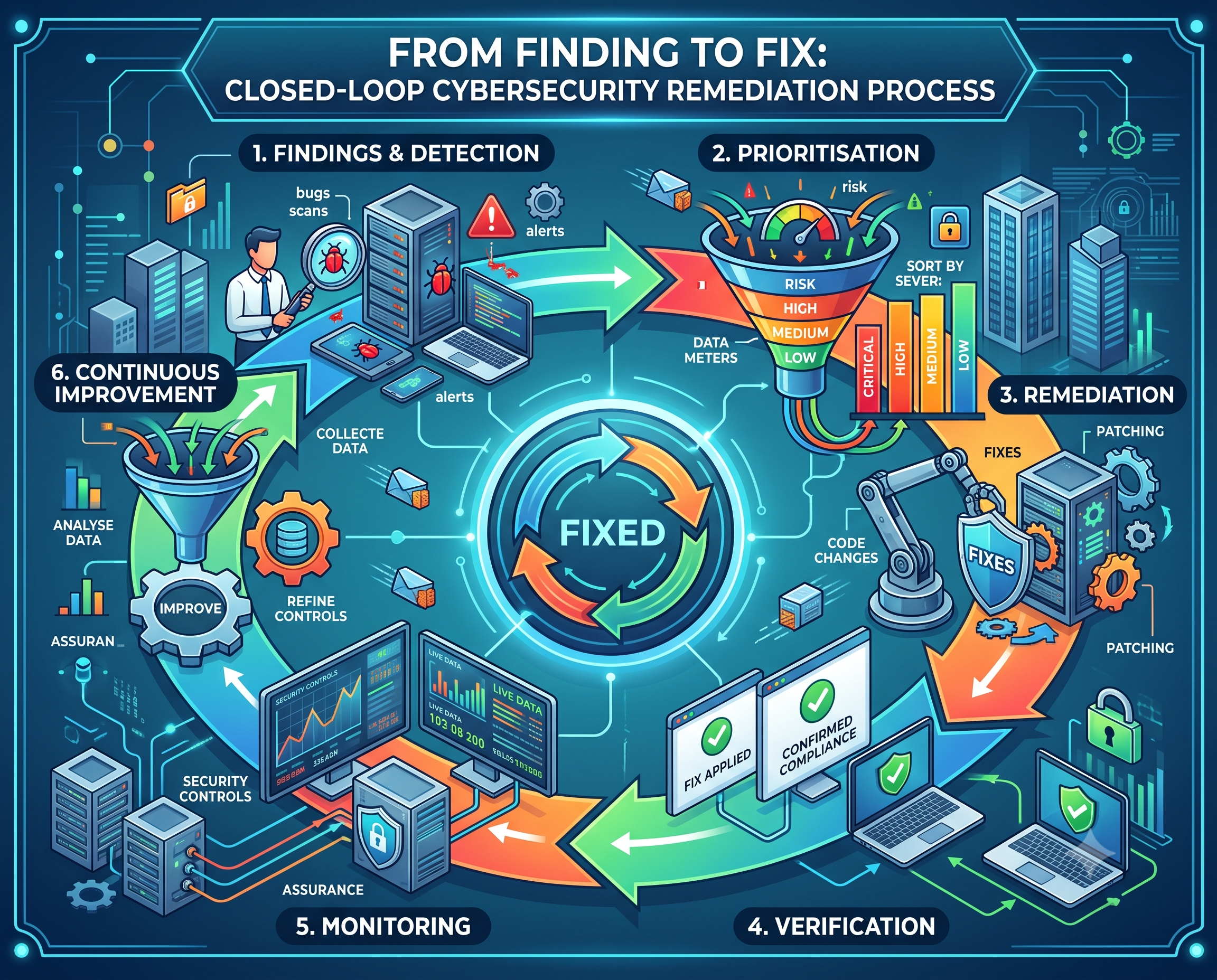
- Monitor endpoint configurations
- Detect control deviations
- Correlate related findings
- Assess security risk
- Prioritise important issues
- Remediate approved findings
- Verify the security state
- Continue monitoring
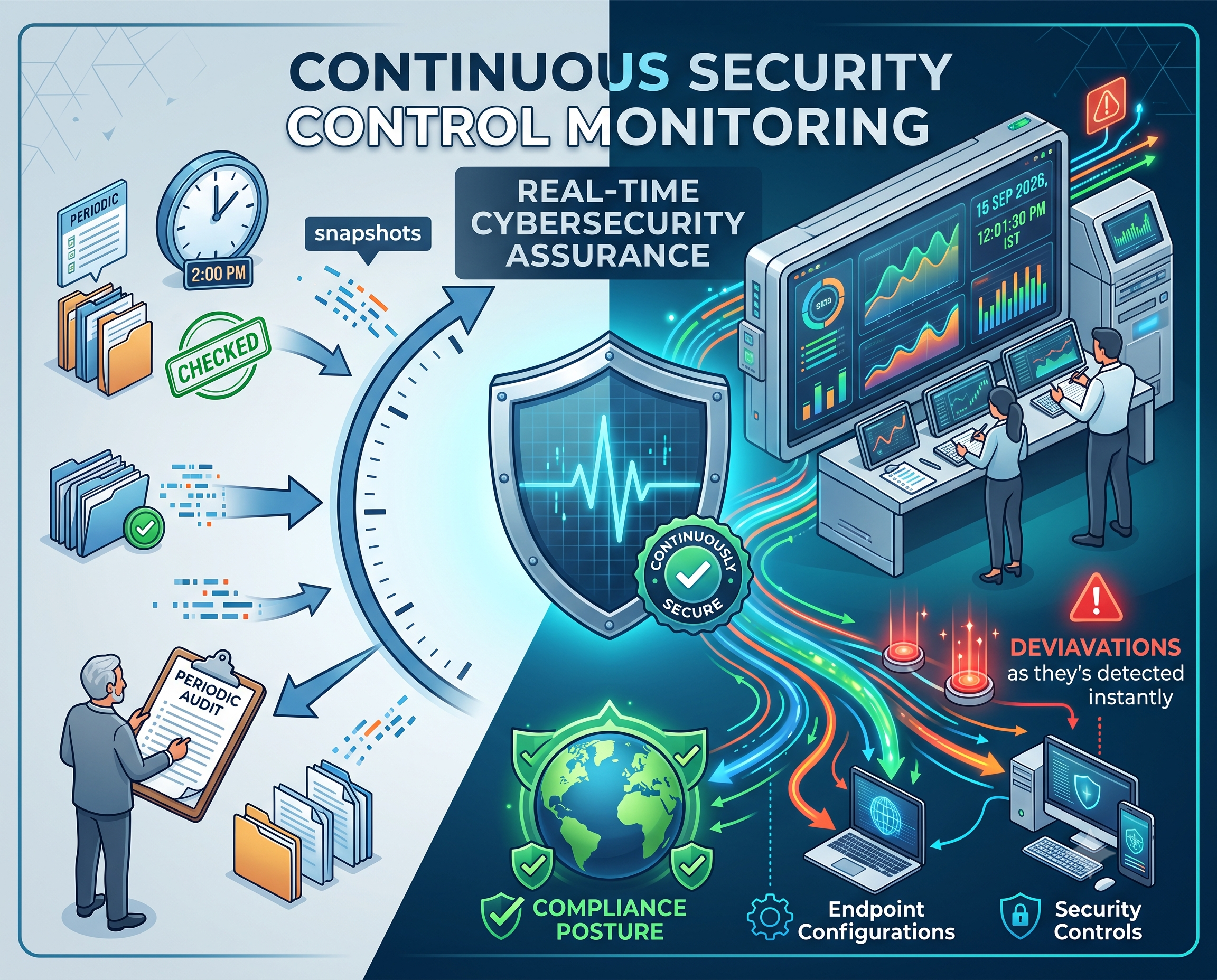
Continuous Monitoring vs Periodic Security Audits
Periodic audits provide valuable snapshots of an organisation's security state. However, endpoint configurations can change shortly after an assessment has been completed.
Continuous monitoring complements periodic audits by providing visibility between formal assessments.
- Periodic audit provides a point-in-time assessment
- Continuous monitoring identifies changes between assessments
- Periodic audit supports formal assurance
- Continuous monitoring supports operational security
- Both approaches can work together
Organisations should not treat continuous monitoring as a replacement for all formal audits. Instead, it should provide ongoing visibility that strengthens the broader security assurance process.
Endpoint Monitoring and Configuration Drift
Configuration drift is one of the main reasons continuous endpoint monitoring is important.
An endpoint can pass a security assessment today and fail the same assessment weeks later. Monitoring important security controls helps identify these changes earlier.
A mature monitoring workflow should distinguish between expected changes and unexpected deviations.
- Approved configuration change
- Unauthorised configuration change
- Temporary operational change
- Security baseline deviation
- Known exception
- Recurring configuration drift
How to Prioritise Endpoint Security Control Failures
Continuous monitoring can generate a significant amount of information. Security teams should therefore prioritise control failures according to risk.
- Critical security control failures
- Privileged endpoint deviations
- Internet-facing systems
- Business-critical devices
- Large numbers of affected endpoints
- Controls associated with known vulnerabilities
- Repeated configuration failures
- Lower-risk configuration deviations
Risk-based prioritisation helps prevent security teams from treating every finding with the same urgency.
Automated Remediation for Endpoint Security Controls
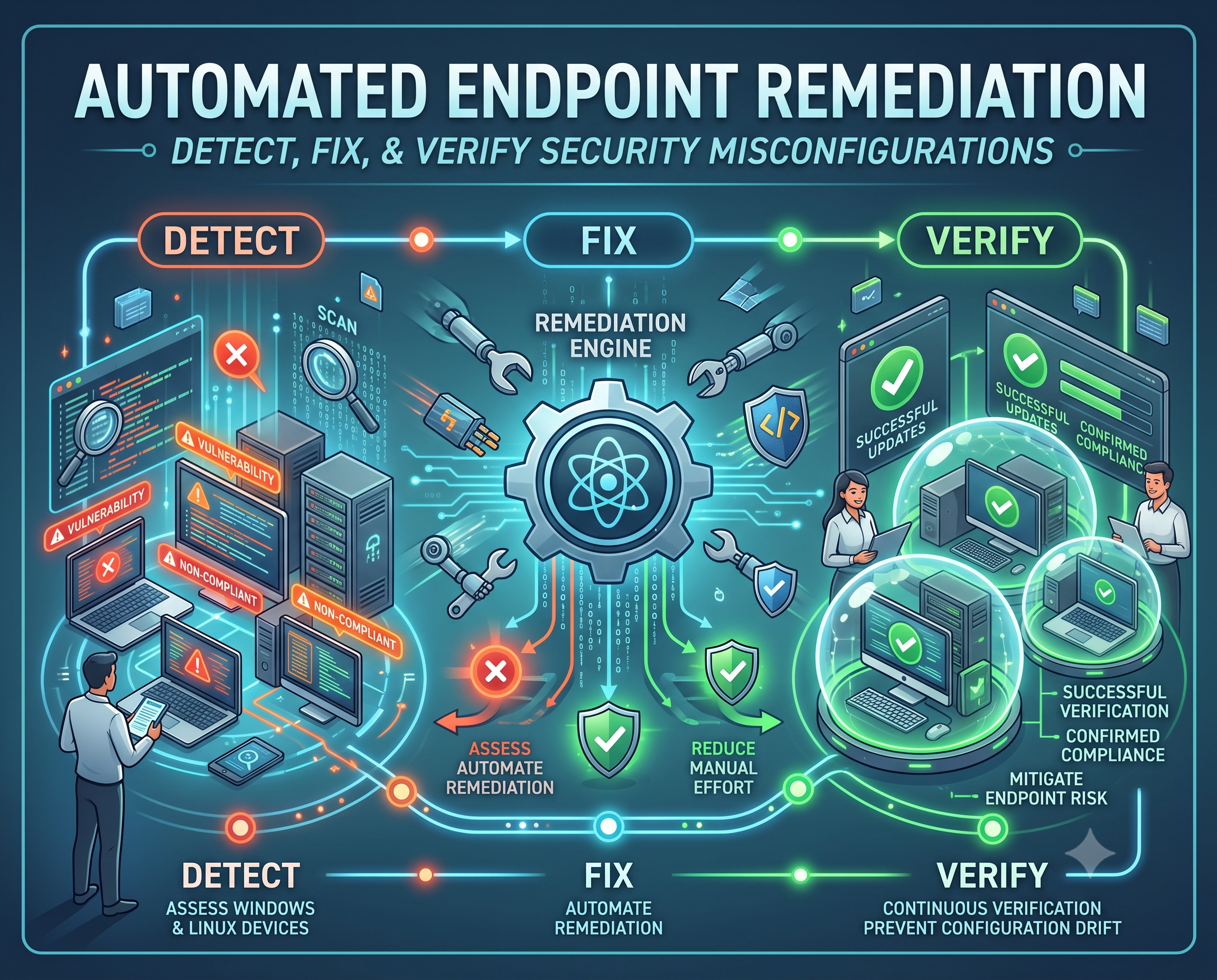
Monitoring becomes significantly more effective when it is connected to a controlled remediation process.
For approved and well-understood findings, automation can help restore the endpoint to its required security state.
- Detect the control failure
- Validate the finding
- Prioritise the risk
- Select an approved remediation
- Apply the corrective action
- Verify the result
- Record the outcome
- Continue monitoring
Not every security control should be automatically changed. High-impact settings may require testing, approval, or manual review before remediation.
Monitoring Security Controls Across Thousands of Endpoints
Large organisations cannot realistically depend on manual inspection of every endpoint. Centralised monitoring allows security teams to assess large endpoint populations using consistent security requirements.
Endpoints can be grouped according to operating system, department, business role, location, risk level, or other organisational requirements.
- Windows endpoints
- Linux endpoints
- Servers
- Remote devices
- Privileged systems
- Business-critical endpoints
- Development systems
- High-risk endpoint groups
Centralised monitoring also makes it easier to identify patterns, compare endpoint groups, and prioritise large-scale security issues.
Using CIS Benchmarks for Endpoint Monitoring
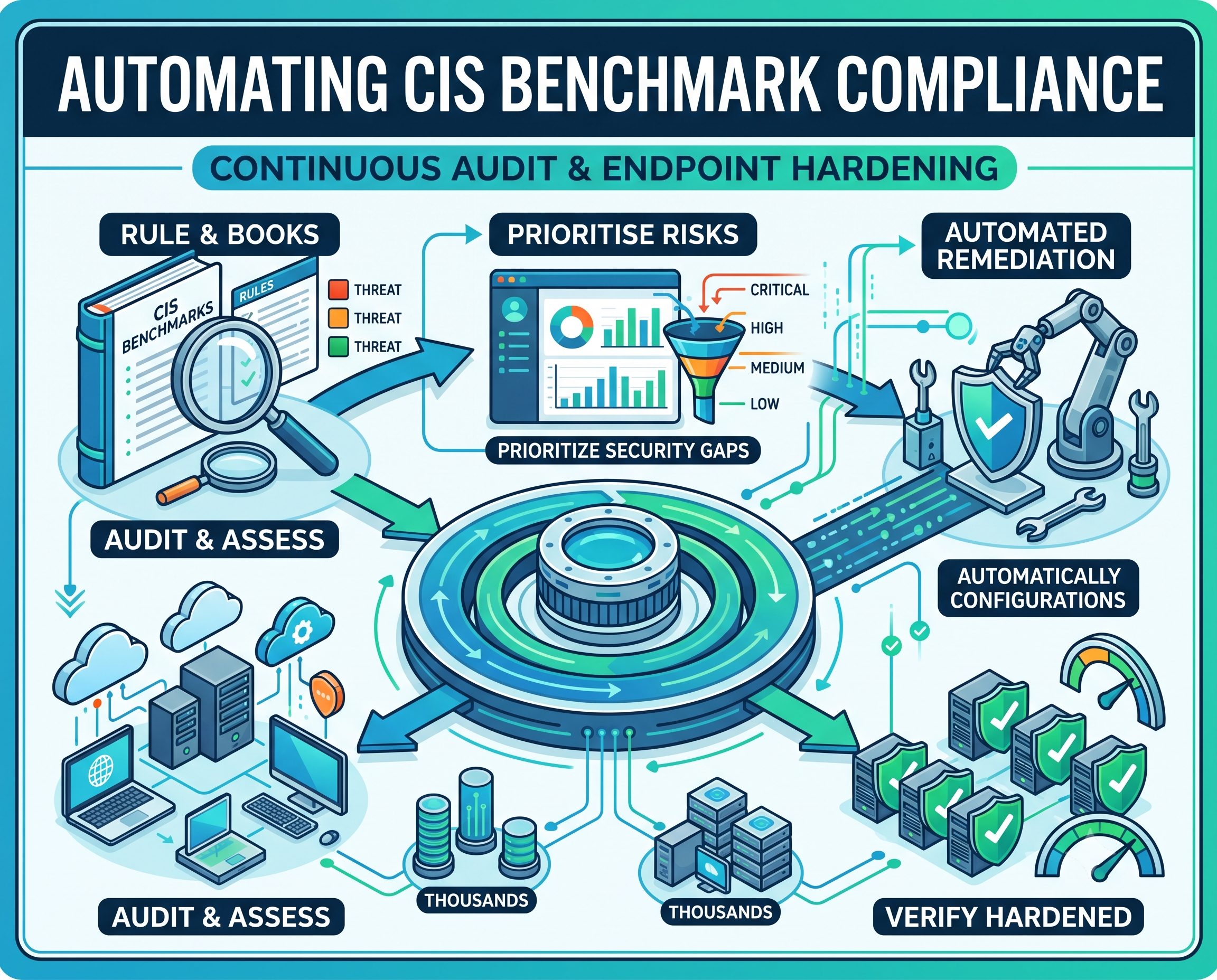
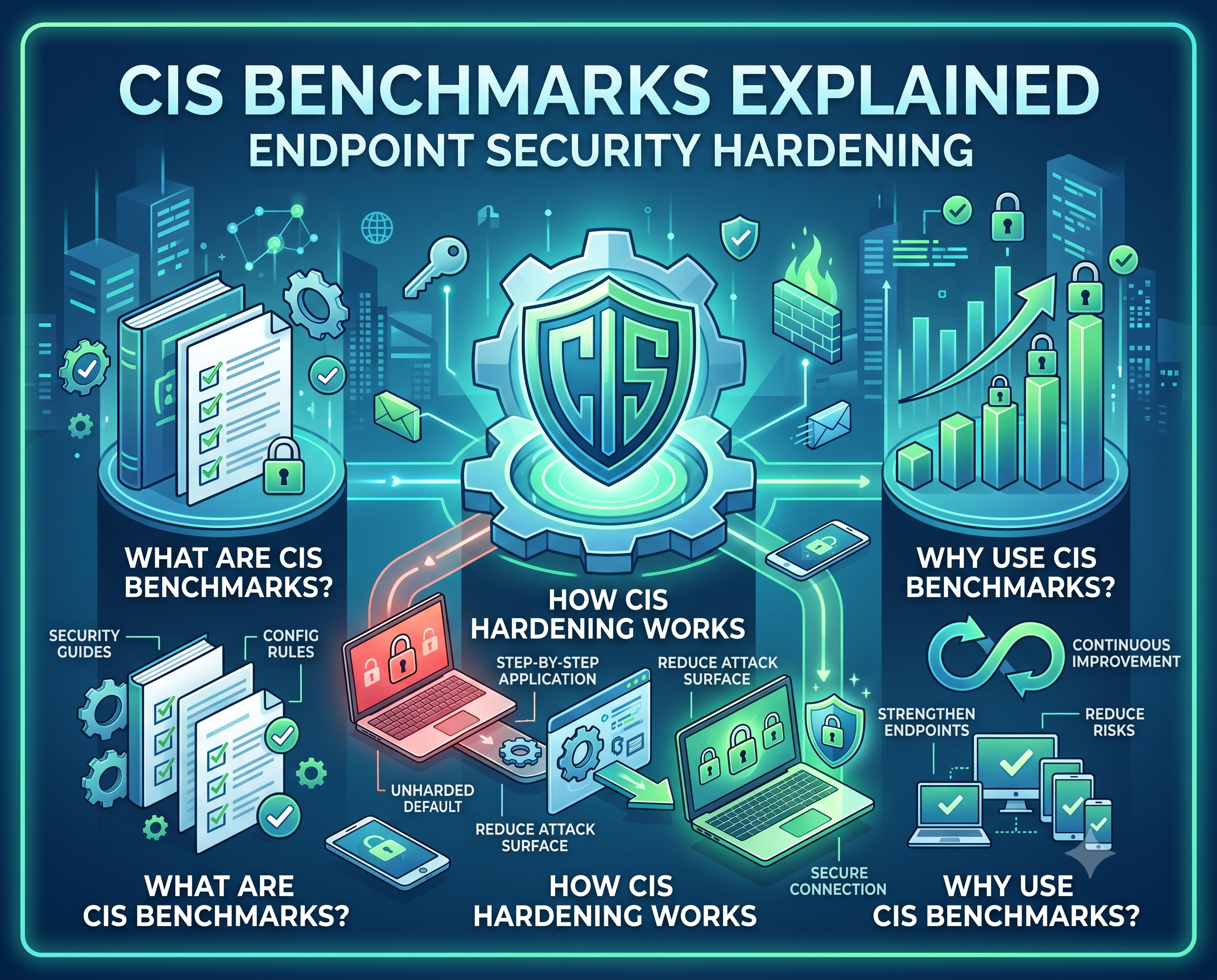
CIS Benchmarks can provide a structured foundation for secure configuration assessment. Organisations can use applicable Benchmark recommendations alongside their own security requirements to define endpoint security baselines.
Continuous monitoring can then identify whether endpoints remain aligned with those approved configurations.
The resulting process can connect secure configuration guidance with operational monitoring.
- Define applicable security requirements
- Create an approved baseline
- Assess endpoint configurations
- Detect deviations
- Prioritise findings
- Remediate appropriate findings
- Verify remediation
- Monitor continuously
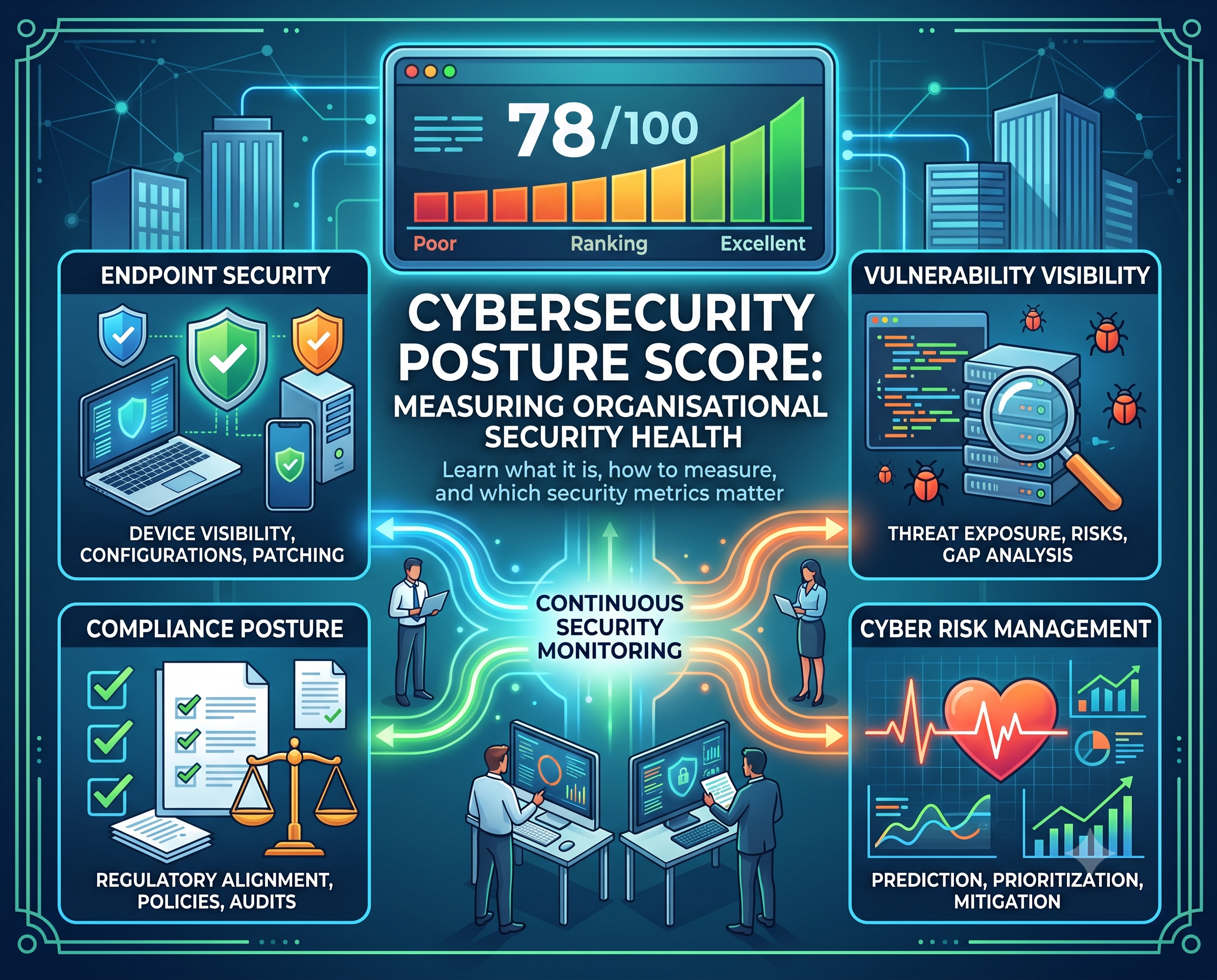
Endpoint Security Monitoring Metrics
Security teams should track meaningful metrics to understand whether continuous monitoring is improving endpoint security.
- Endpoint baseline compliance percentage
- Number of failed security controls
- Number of critical deviations
- Number of affected endpoints
- Configuration drift events
- Average remediation time
- Verified remediation percentage
- Recurring findings
- Security control failure rate
- Number of approved exceptions
Trend analysis is particularly useful because a single security score may hide recurring problems or gradual deterioration in endpoint security posture.
Common Mistakes in Endpoint Security Monitoring
- Monitoring too many low-value settings
- Ignoring critical security controls
- Relying only on periodic audits
- Failing to investigate configuration drift
- Automatically remediating every finding
- Not verifying remediation
- Ignoring security exceptions
- Failing to track recurring findings
- Not assigning ownership
- Collecting data without actionable workflows
Effective monitoring should focus on controls that matter to security risk and should connect findings with clear response processes.
Best Practices for Continuous Endpoint Security Monitoring
- Define a clear endpoint security baseline
- Identify the most important security controls
- Monitor critical configurations continuously
- Use risk-based prioritisation
- Separate expected changes from security deviations
- Connect monitoring with remediation workflows
- Verify important remediation actions
- Track configuration drift
- Document approved exceptions
- Monitor privileged configuration changes
- Measure security control compliance
- Review recurring findings
- Use endpoint groups and risk categories
- Regularly update security baselines
- Maintain audit-ready records
How Cyber Auditor Can Support Endpoint Security Monitoring
Cyber Auditor can support organisations that need centralised visibility into endpoint security configurations, security control compliance, configuration deviations, and overall security posture.
A centralised security assessment and monitoring approach can help teams identify control failures, understand affected endpoints, prioritise security issues, and track improvements over time.
When monitoring is connected with remediation and verification workflows, security teams can move from simply observing endpoint security conditions to actively maintaining a more consistent security state.
Endpoint Security Monitoring Checklist
- Monitor firewall configuration
- Monitor endpoint protection status
- Monitor patch and update status
- Monitor authentication policies
- Monitor local administrator privileges
- Monitor user account changes
- Monitor remote access configuration
- Monitor security auditing
- Monitor logging configuration
- Monitor security baseline compliance
- Monitor configuration drift
- Monitor operating system security settings
- Monitor unnecessary services
- Monitor application inventory
- Monitor USB and removable media controls
- Monitor network configuration
- Monitor secure administrative access
- Monitor security policy changes
- Monitor endpoint encryption
- Monitor security-sensitive configuration changes
Frequently Asked Questions About Endpoint Security Controls
What are endpoint security controls?
Endpoint security controls are security measures and configurations designed to protect devices such as laptops, desktops, workstations, and servers from security threats and unauthorised activity.
Why should endpoint security controls be continuously monitored?
Endpoint configurations can change after initial hardening or security assessment. Continuous monitoring helps detect security deviations, configuration drift, and compliance gaps as they occur.
What are the most important endpoint security controls to monitor?
Important controls include firewall configuration, endpoint protection, patch status, authentication, administrator privileges, remote access, auditing, logging, security baselines, configuration drift, applications, encryption, and other security-sensitive configurations.
Can endpoint security monitoring detect configuration drift?
Yes. Continuous comparison between the current endpoint configuration and an approved security baseline can help identify configuration drift and other deviations.
Should endpoint security monitoring be automated?
Automation can make continuous monitoring more practical across large endpoint environments. It can collect configuration information, identify deviations, prioritise findings, and connect suitable findings with remediation workflows.
How does endpoint monitoring support compliance?
Continuous endpoint monitoring helps organisations demonstrate whether systems remain aligned with defined security requirements and approved configurations. It can also provide evidence of deviations, remediation, and compliance status.
Key Takeaways
- Endpoint security requires continuous visibility
- One-time hardening does not guarantee long-term security
- Firewall and endpoint protection status should be monitored
- Patch and authentication configurations require continuous assessment
- Privileged access should be closely monitored
- Remote access settings can significantly affect endpoint exposure
- Auditing and logging provide important security visibility
- Security baselines help identify configuration deviations
- Configuration drift can cause previously secure endpoints to become non-compliant
- Application and service changes can increase endpoint attack surface
- Encryption status should be monitored where required
- Security-sensitive configuration changes deserve additional attention
- Automated remediation can help address suitable findings
- Risk-based prioritisation helps security teams focus on important issues
- Continuous monitoring strengthens overall security posture
Conclusion
Endpoint security is not a one-time configuration exercise. Security controls can change continuously as users, administrators, applications, policies, and operating systems interact with endpoint devices.
Monitoring the right controls gives security teams ongoing visibility into whether endpoints remain aligned with approved security requirements. Firewall configuration, endpoint protection, patching, authentication, privileges, remote access, auditing, logging, security baselines, configuration drift, applications, encryption, and other security-sensitive controls all contribute to the overall endpoint security posture.
The most effective approach combines continuous monitoring with risk-based prioritisation, controlled remediation, verification, and ongoing assessment.
By continuously detecting changes in critical endpoint security controls, organisations can identify configuration weaknesses earlier, reduce security drift, maintain compliance, and build a stronger and more measurable cybersecurity posture.
Recommended Solution
See how MOBISEC solves this in practice
Topics